


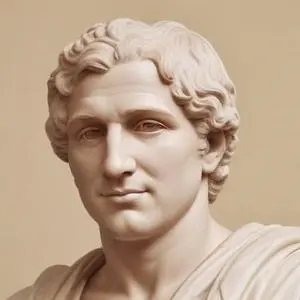
A renowned Neoclassicist sculptor, he created exquisite, emotionally charged works that captured the essence of ancient Greek and Roman art, influencing generations of artists.
Antonio Canova is renowned for his breathtakingly beautiful marble sculptures that epitomize the Neoclassical style, earning him the title of the greatest Neoclassical artist of all time. With a career spanning over four decades, Canova's work continues to inspire and awe art enthusiasts to this day, leaving an indelible mark on the world of art.
Born on November 1, 1757, in Possagno, a small town in the Venetian Republic, Canova was exposed to the world of art from a very young age. His father, Pietro Canova, a stonemason, and his grandfather, Pasino Canova, a sculptor, played a significant role in nurturing his talent. After his father's death in 1761, Canova's mother remarried, and he was placed under the care of his paternal grandfather, who taught him the art of sculpting.
Before the age of 10, Canova began creating models in clay and carving marble. His early works include two small shrines made of Carrara marble, which are still extant. He continued to hone his skills under his grandfather's guidance, eventually becoming an apprentice to Giuseppe Bernardi and later to Giovanni Ferrari. In 1779, he enrolled at the Accademia di Belle Arti di Venezia, where he won several prizes, solidifying his reputation as a rising star in the art world.
Canova's big break came in 1777 when Senator Giovanni Falier commissioned him to create statues of Orpheus and Eurydice for his garden at Villa Falier in Asolo. The two works, begun in 1775, showcased Canova's mastery of the late Rococo style and were exhibited in Piazza San Marco during the Feast of the Ascension. The public's response was overwhelmingly positive, catapulting Canova to fame and recognition in the art world.
Canova's most famous works include:
Throughout his career, Canova received numerous commissions from European royalty and aristocrats, solidifying his status as the leading sculptor of his time.
Canova's artistic philosophy was rooted in his deep respect for classical antiquity and his commitment to reviving the spirit of ancient Greece and Rome. He believed in the importance of simplicity, proportion, and precision in art, rejecting the excessive ornamentation of the Baroque style. His work embodied the Neoclassical ideals of beauty, harmony, and balance.
Canova's influence on modern art is immeasurable. He inspired a generation of artists, including Bertel Thorvaldsen and John Gibson, and his work paved the way for the development of Romanticism and Realism. Today, his sculptures can be found in museums and galleries around the world, including the Vatican Museums, the Louvre, and the Metropolitan Museum of Art.
Antonio Canova's legacy extends beyond the art world. He was a true innovator, and his dedication to his craft has inspired countless individuals to pursue their passions. As we gaze upon his magnificent sculptures, we are reminded of the transformative power of beauty and the enduring legacy of a true master.
Antonio Canova's remarkable life and work continue to captivate art lovers today. As we celebrate his genius, we are reminded of the importance of beauty, creativity, and innovation in shaping our world.
Born in 1769
A French military leader who rose to prominence during the French Revolution and became Emperor of France, known for his military conquests and reorganization of Europe. He is also famous for his Napoleonic Code, which remains a foundation of modern law.
Born in 1780
Napoleon's sister, a beautiful and fashionable woman, was a prominent figure in French high society and a muse for many artists, including the famous sculptor Canova. She was known for her extravagant lifestyle and numerous love affairs.
Born in 1770
A renowned Danish sculptor and academic, he is most known for his exquisite neoclassical sculptures that adorned European palaces and museums, showcasing his mastery of classical forms and techniques.
Born in 1788
Romantic poet and playwright celebrated for passionate, expressive works that explored themes of love, freedom, and the human condition.
Born in 1717
A pioneer in art history and archaeology, he's credited with founding the discipline of art history and shaping our understanding of ancient Greek and Roman art and culture.
Born in 1763
A Polish military leader who played a key role in the Napoleonic Wars, earning the title of Marshal of France and becoming a national hero. He's revered for his bravery and tactical genius on the battlefield.
