


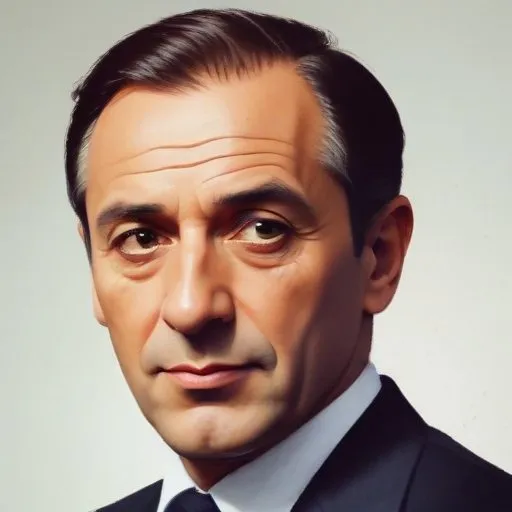
Prolific filmmaker behind numerous sci-fi, horror, and adventure movies, often blending genres and pushing boundaries. Known for his visually stunning and entertaining films that have become cult classics.
Antonio Margheriti, aka Anthony M. Dawson, was an Italian filmmaker renowned for his eclectic repertoire of science fiction, sword and sandal, horror, Eurospy, Spaghetti Western, and action films that captivated a broad international audience. With a career spanning over five decades, Margheriti left an indelible mark on the cinematic landscape, earning a reputation as a master of genre-hopping and stylistic innovation.
Born on September 19, 1930, in Rome, Italy, Margheriti was the son of a railroad engineer. His fascination with film began in 1950, when he collaborated with Mario Serandrei, an esteemed Italian filmmaker. This marked the beginning of his journey in the film industry, which would eventually lead him to become a prolific director, screenwriter, and special effects expert.
Margheriti's directorial debut, SpaceMen (1960), was a science fiction film that showcased his affinity for the genre. This was followed by Battle of the Worlds (1961), starring Claude Rains, and The Golden Arrow (1962), featuring Tab Hunter. These films demonstrated Margheriti's ability to effortlessly transition between genres, as he went on to direct a series of peplum films, including The Fall of Rome (1963) and Giants of Rome (1964).
In the mid-1960s, Margheriti ventured into the realm of horror with films like Castle of Blood (1964) and The Long Hair of Death (1964). He also experimented with the Eurospy genre, directing films such as Bob Fleming... Mission Casablanca (1966) and Operazione Goldman (1966). These films showcased Margheriti's versatility and willingness to explore various genres.
In the late 1960s, Margheriti developed the Gamma I series, which was initially produced for Italian television but later released theatrically. This series marked a return to science fiction, a genre that remained close to his heart. The 1970s saw Margheriti directing a string of Westerns, including Take a Hard Ride (1975) and And God Said to Cain (1976), further expanding his oeuvre.
In the 1980s, Margheriti's films were influenced by the success of Platoon (1986) and Raiders of the Lost Ark (1981). He went on to direct films like The Last Hunter (1980) and Hunters of the Golden Cobra (1982), which demonstrated his ability to adapt to changing cinematic trends. Margheriti's legacy as a filmmaker lies in his capacity to seamlessly transition between genres, leaving behind a body of work that continues to inspire and entertain audiences.
Antonio Margheriti's contributions to the film industry are multifaceted and far-reaching. He was a pioneer of genre-bending cinema, effortlessly merging elements of science fiction, horror, and action to create a unique visual style. His influence can be seen in the work of contemporary filmmakers, who continue to draw inspiration from his innovative approach to storytelling. As a testament to his enduring legacy, Margheriti's films remain a staple of cult cinema, cherished by fans and scholars alike.
97 Years Old
A master of Spaghetti Westerns, he crafted iconic films like "The Good, the Bad and the Ugly" and "Once Upon a Time in the West", redefining the genre with his distinctive style and direction.
Born in 1920
Visionary filmmaker behind surreal, poetic, and deeply personal cinematic masterpieces that blur the lines between reality and fantasy.
Born in 1901
A renowned filmmaker and actor, known for directing poignant, neorealist classics like "Bicycle Thieves" and "Umberto D.", which still influence world cinema today.
Born in 1906
Acclaimed Italian filmmaker renowned for lavish, visually stunning productions that often explored themes of social class, morality, and the human condition. His cinematic masterpieces continue to influence filmmakers today.
Born in 1922
A provocative and influential artist who explored the intersection of politics, religion, and sexuality through his films, which often featured vivid imagery and unflinching social commentary.
Born in 1912
A pioneering filmmaker who explored the human condition through visually stunning and psychologically complex movies, often focusing on alienation and social isolation.
Born in 1916
Italian comedy mastermind behind iconic films like "The Easy Life" and "A Very Special Day", crafting witty social commentaries that still resonate today.
97 Years Old
Acclaimed filmmaker behind socially conscious, visually striking movies that critiqued Italian society and politics, earning him international recognition and numerous awards.
