


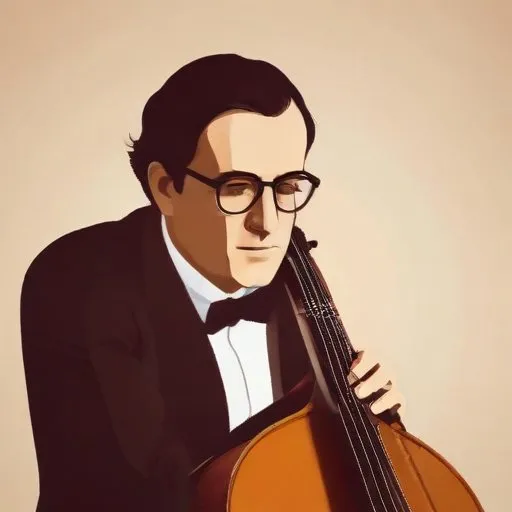
A renowned 17th-century cellist and composer, he was a prominent figure in the development of the cello concerto, leaving a lasting impact on classical music. His works showcased exceptional technical skill and emotional depth.
Antonio Maria Bononcini was an Italian cellist and composer, known for his exceptional talent and contributions to the world of Baroque music. While he may not be as well-known as his brother Giovanni, Antonio Maria left an indelible mark on the music scene of his time, composing over 40 cantatas and numerous operas that still resonate with audiences today.
Born on June 18, 1677, in Modena, Italy, Antonio Maria began his musical journey under the guidance of Giovanni Paolo Colonna. His early life was marked by his involvement in the orchestra of Cardinal Pamphili, where he honed his skills as a cellist between 1690 and 1693.
In 1698, Antonio Maria composed an allegory, La fama eroica, which premiered in Rome to great acclaim. This success led to his appointment as Kapellmeister to the future Holy Roman Emperor Charles VI in 1705, where he worked alongside his brother Giovanni in the court orchestra at Vienna.
In 1713, Antonio Maria returned to Italy, where he spent the next several years working in Milan, Naples, and Modena. During this period, he composed some of his most renowned works, including operas such as Tigrane, re d'Armenia and Il tiranno eroe.
Antonio Maria's compositional talents extended beyond the realm of opera, as he created numerous sacred works, including a Mass in G minor, a Stabat Mater in C Minor, and a Salve Regina. These pieces showcase his mastery of sacred music and his ability to evoke the sublime.
Some of Antonio Maria's most notable operas include:
Antonio Maria Bononcini's contributions to Baroque music are a testament to his innovative spirit and artistic genius. Though he may not have achieved the same level of fame as his brother Giovanni, his music continues to enchant audiences and inspire future generations of composers.
Today, Antonio Maria's legacy lives on, a reminder of the power of music to transcend time and touch the human soul.
Born in 1678
A virtuosic violinist and prolific composer, he crafted over 400 concertos, including "The Four Seasons," which remains a beloved and iconic masterpiece of classical music.
Born in 1653
A virtuosic violinist and composer who revolutionized the concerto grosso form, creating a new era of classical music. His influential works elevated the violin to a solo instrument, shaping the course of Western classical music.
Born in 1692
A virtuosic violinist and composer who wrote over 150 concertos and sonatas, known for his technically demanding and expressive works that showcased his mastery of the instrument.
Born in 1782
A virtuosic violinist and composer who revolutionized the instrument's technical possibilities, leaving an indelible mark on classical music.
Born in 1809
A renowned 19th-century musician who masterfully blended classical and romantic styles, creating iconic works like the "Wedding March" and "Elijah" oratorio. His compositions continue to inspire and influence generations of artists.
Born in 1833
A renowned pianist and composer, he crafted complex, expressive works that blended traditional and innovative techniques, leaving an indelible mark on classical music.
Born in 1810
A renowned Romantic-era composer and influential music critic, known for his expressive and emotionally charged works, including symphonies, piano music, and art songs.
Born in 1811
A virtuosic pianist and composer who revolutionized classical music with his technically demanding and emotionally expressive works, blending Hungarian folk influences with Romantic-era drama.
