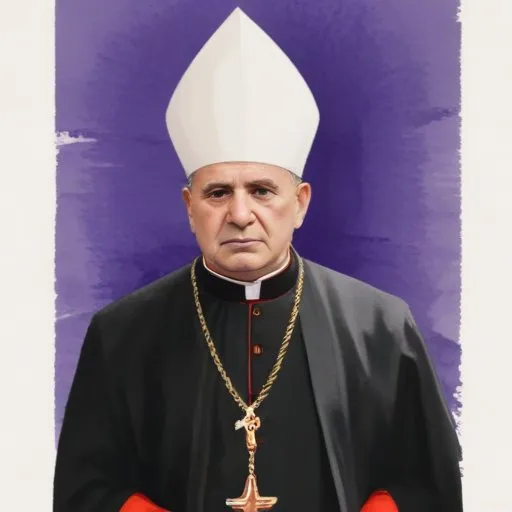
Antun Vrani: A Croatian Prelate, Writer, and Diplomat of the 16th Century
Antun Vrani, also known as Antonius Verantius, was a prominent Croatian prelate, writer, and diplomat who served as the Archbishop of Esztergom in the 16th century. He was a multifaceted personality who made significant contributions to the fields of literature, diplomacy, and religion, earning him a revered place in Croatian history.
Early Life and Family Origins
Born on May 30, 1504, in the Dalmatian town of Šibenik, modern-day Croatia, Vrani hailed from a noble family that originally recorded their surname as Wranijchijch, Wranchijch, and Veranchijch. According to historical records, the family was ennobled with lilies in their coat of arms by
Louis I of Hungary, with their noble status confirmed in the 16th century.
Early Years and Education
Vrani's early life was marked by a strong inclination towards education and learning. He pursued his studies in various European cities, including Venice, Padua, and Rome, where he honed his skills in theology, philosophy, and languages. His proficiency in languages, including Croatian, Hungarian, Italian, and Latin, would later serve him well in his diplomatic endeavors.
Diplomatic Career
Vrani's diplomatic career spanned several decades, during which he played a crucial role in fostering relationships between Croatia and other European powers. He served as a diplomat in Venice, Rome, and Vienna, and was involved in several key negotiations, including the Council of Trent. In 1559, he was appointed as the Archbishop of Esztergom, a position that cemented his influence in Hungarian and Croatian politics.
Literary Contributions
Vrani was a prolific writer who made significant contributions to Croatian literature. His works include several treatises on theology, philosophy, and history, as well as poetry and epistolary writings. His most notable work, "De Origine Successorumque Croatorum" (On the Origin and Successors of the Croats), is a historical treatise that explores the origins and development of the Croatian people.
Philosophical Contributions
Vrani's philosophical contributions were deeply rooted in his theological and literary pursuits. He was heavily influenced by the writings of St. Augustine and Thomas Aquinas, and his own works reflect a strong emphasis on reason, faith, and morality. His philosophical ideas were shaped by his experiences as a diplomat and prelate, and he often drew parallels between the pursuit of knowledge and the pursuit of faith.
Personal Milestones and Key Life Events
- In 1559, Vrani was appointed as the Archbishop of Esztergom, a position that marked the pinnacle of his diplomatic career.
- In 1563, he participated in the Council of Trent, where he played a key role in shaping the Catholic Church's response to the Protestant Reformation.
- Vrani was known for his close relationships with prominent figures of the time, including Emperor Ferdinand I and King Philip II of Spain.
Legacy and Impact
Antun Vrani's legacy extends far beyond his own lifetime. He played a crucial role in shaping the course of Croatian history, and his literary and philosophical works continue to influence Croatian thought and culture. His diplomatic efforts helped to foster greater understanding and cooperation between Croatia and other European powers, paving the way for future generations of diplomats and statesmen. Today, Vrani is remembered as a towering figure in Croatian history, a testament to the power of faith, knowledge, and diplomacy.
FAQ
What was Antun Vrančićs role in the Catholic Church?
Antun Vrančić was a Croatian archbishop, diplomat, and politician, serving as the Archbishop of Esztergom and the Primate of Hungary.
What were Antun Vrančićs accomplishments?
Antun Vrančić accomplished significant literary and historical works, including the first Croatian edition of the Bible and a notable book on the history of the Ottoman Empire.
What were Antun Vrančićs views on the Ottoman Empire?
Antun Vrančić was a vehement opponent of the Ottoman Empire, advocating for a united Christian front against the perceived Ottoman threat.
What was Antun Vrančićs relationship like with the Habsburgs?
Antun Vrančić had a close relationship with the Habsburgs, serving as a diplomat and advisor to the royal court and negotiating on their behalf.
What was Antun Vrančićs legacy?
Antun Vrančićs legacy is marked by his significant cultural and literary contributions, as well as his diplomatic efforts to unite Christian forces against the Ottoman Empire.