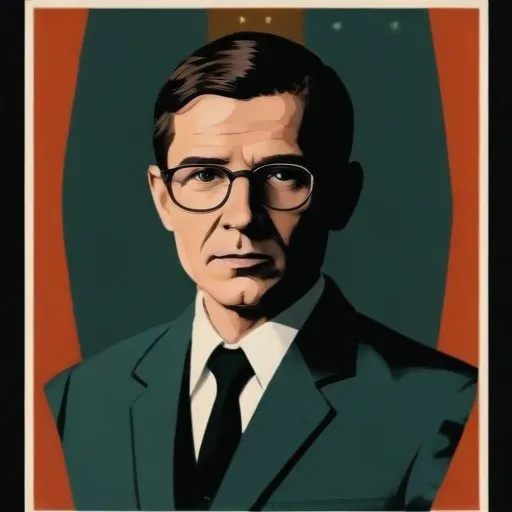
Archer John Porter Martin: The Pioneer of Partition Chromatography
A Revolutionary Method in Chemical Separation
Archer
John Porter Martin, a British chemist, is renowned for his groundbreaking work in developing partition chromatography, a technique that has revolutionized the field of chemical separation. In collaboration with
Richard Laurence Millington Synge, Martin designed and demonstrated the first practical application of partition chromatography, earning them the Nobel Prize in Chemistry in 1952.
Early Life and Education
Born on March 1, 1910, in London, England, Martin was the son of a physician. He developed an interest in chemistry at an early age, which led him to pursue a degree in chemistry from Cambridge University. Martin's academic excellence earned him a fellowship at Cambridge, where he worked under the guidance of renowned chemists, including Frederick G. Mann and Eric Rideal.
Career Highlights and Major Works
Martin's research career was marked by significant contributions to the field of chemistry. His work on partition chromatography, a technique that separates mixtures based on differences in their partition coefficients, has had a profound impact on various fields, including biochemistry, pharmaceuticals, and biotechnology. Some of his notable works include:
- Development of the first gas-liquid chromatograph, which enabled the separation of complex mixtures of volatile compounds.
- Application of partition chromatography to the separation of amino acids, paving the way for advancements in protein chemistry.
- Studies on the mechanism of chromatographic separation, which led to a deeper understanding of the underlying principles.
Awards and Honors
Martin's pioneering work in partition chromatography earned him numerous awards and honors, including:
- Nobel Prize in Chemistry (1952)
- Royal Medal (1950)
- Fellow of the Royal Society (1948)
- John Scott Award (1951)
Influence on Modern Society
The impact of Martin's work extends beyond the realm of chemistry, influencing various aspects of modern society. Partition chromatography has:
- Enabled the development of new pharmaceuticals and diagnostic tools.
- Played a crucial role in the discovery of new biomarkers and disease targets.
- Facilitated the analysis of environmental pollutants and toxins.
Personal Milestones and Key Life Events
Martin's personal life was marked by significant events that shaped his career and personal growth. These include:
- Marriage to Judith Bagenal, a biochemist, in 1943.
- Appointment as the Director of the Lister Institute of Preventive Medicine in 1953.
- Election as the President of the Royal Society of Chemistry in 1961.
Historical Context and Legacy
Martin's work on partition chromatography must be viewed within the historical context of the mid-20th century, a time when the understanding of molecular interactions was still in its infancy. His pioneering work laid the foundation for the development of various chromatographic techniques, which have become essential tools in modern chemical research. Martin's legacy continues to inspire new generations of scientists, who are pushing the boundaries of chemical separation and analysis.
Comparative Analysis with Contemporaries
Martin's work on partition chromatography can be compared to the contemporaneous efforts of other notable chemists, such as:
- Richard Laurence Millington Synge, Martin's collaborator and co-awardee of the Nobel Prize.
- Frederick Sanger, who developed the dideoxy chain termination method for DNA sequencing.
These comparisons highlight the significance of Martin's contributions and the cumulative efforts of scientists during the mid-20th century, which have transformed our understanding of molecular interactions and chemical separation.
FAQ
What was Archer John Porter Martins most famous discovery?
Archer John Porter Martin was a Nobel Prize-winning chemist who made numerous groundbreaking discoveries, including the development of gas-liquid chromatography, a technique still widely used today.
What was Archer John Porter Martins role in analytical chemistry?
Archer John Porter Martin was a pioneer in analytical chemistry, known for his innovative approaches to separation and identification of chemical compounds.
Did Archer John Porter Martin receive any awards for his work?
Archer John Porter Martin was awarded the Nobel Prize in Chemistry in 1952, as well as numerous other honors and awards for his contributions to chemistry and science.
What was Archer John Porter Martins relationship with his research team?
Archer John Porter Martin was known for his collaborative approach to research, working closely with his team to achieve scientific breakthroughs and pushing the boundaries of what was thought possible in chemistry.
What is Archer John Porter Martins legacy in chemistry?
Archer John Porter Martins legacy in chemistry is that of a visionary and a pioneer, who revolutionized the field of analytical chemistry and opened up new avenues of research for generations of scientists.