


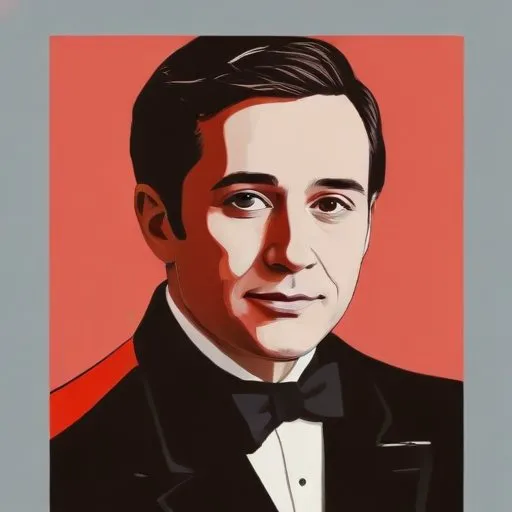
A renowned German pianist and composer, celebrated for his intense, expressive performances and innovative compositions that blend modernism with romanticism.
Aribert Reimann is renowned for his innovative and poignant literary operas, which have captivated audiences worldwide. Among his most celebrated works is Lear, an opera based on Shakespeare's King Lear, written at the suggestion of the legendary baritone Dietrich Fischer-Dieskau, who performed the title role.
Born on March 4, 1936, in Berlin, Germany, Reimann was immersed in music from a young age. His father, Wolfgang Reimann, was the conductor of the Berliner Dom choir, and his mother was an oratorio singer and voice teacher. This rich musical environment inspired Reimann to pursue a career in music.
Reimann studied at the Musikhochschule Berlin, where he honed his skills in composition and counterpoint under the guidance of Boris Blacher and Ernst Pepping. He also studied piano with Otto Rausch. During his studies, he worked as a répétiteur at the Städtische Oper, further refining his craft.
Reimann's first appearances as a pianist and accompanist date back to 1957. His collaboration with esteemed singers such as Catherine Gayer, Brigitte Fassbaender, and Dietrich Fischer-Dieskau deepened his understanding of the human voice and its potential. This experience would later inform his operatic compositions.
In 1958, Reimann moved to Vienna to study musicology, where he began to develop his unique style. His first work for the stage, the ballet Stoffreste, was premiered in 1959, showcasing his fledgling talent as a composer.
Reimann's breakthrough opera, Ein Traumspiel, was premiered in 1965 at the Opernhaus Kiel. Based on August Strindberg's A Dream Play, it marked the beginning of his fascination with literary operas.
The crowning jewel of Reimann's operatic oeuvre is undoubtedly Lear, which has enjoyed over 30 productions worldwide since its premiere in 1978. This masterpiece cemented his reputation as a master of literary operas, capable of distilling complex literary works into poignant and powerful music.
In 2010, Reimann's opera Medea, based on Franz Grillparzer's play, premiered at the Vienna State Opera, further solidifying his position as a leading composer of literary operas.
In recognition of his contributions to music, Reimann was awarded the prestigious Ernst von Siemens Music Prize in 2011 for his lifetime achievements.
Aribert Reimann's innovative approach to literary operas has left an indelible mark on the world of classical music. His commitment to exploring the human condition through music has inspired generations of composers, singers, and musicians.
Through his work, Reimann has not only enriched the operatic canon but has also forged a new path for literary operas, ensuring a lasting legacy that will continue to captivate audiences for years to come.
Born in 1926
A renowned composer and educator, he is celebrated for his innovative and eclectic style, blending modernist and traditional elements in his operas, symphonies, and chamber music.
97 Years Old
A pioneer of electronic and avant-garde music, this composer pushed boundaries with unconventional sounds and performances, influencing generations of musicians and artists.
Born in 1925
A renowned French musician who revolutionized classical music with his avant-garde compositions and innovative conducting style, pushing boundaries and redefining the genre.
Born in 1925
An Italian maestro who blended classical and avant-garde styles, creating innovative compositions that pushed musical boundaries. He's renowned for his bold, eclectic works that challenged traditional conventions.
87 Years Old
A renowned oboist, composer, and conductor, celebrated for his virtuosic performances and innovative compositions that blended classical and modern styles. He's a leading figure in contemporary classical music.
Born in 1923
A visionary composer and educator who pushed the boundaries of classical music with his avant-garde and innovative works, blending dissonance and harmony in unique ways.
Born in 1913
A Polish composer and conductor who blended modernist and neoromantic styles, creating complex yet accessible orchestral works, including symphonies and concertos.
Born in 1908
A pioneering composer of modern classical music, known for his complex and innovative works that pushed the boundaries of harmony and rhythm.
