


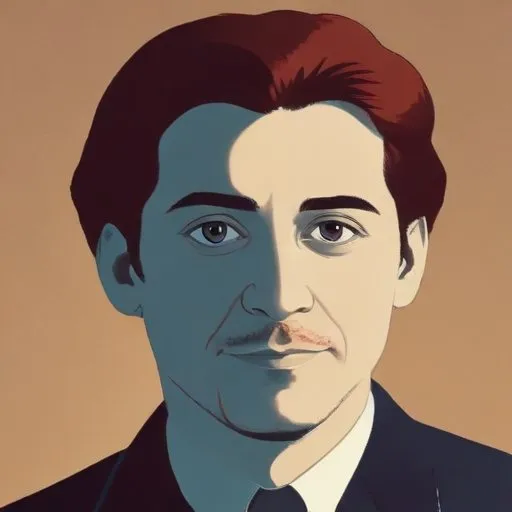
A renowned writer and playwright, known for his critically acclaimed works that often explore themes of social justice, human rights, and political activism, particularly in the context of Latin American politics.
Ariel Dorfman is a name synonymous with human rights activism, literary excellence, and cultural critique. As a renowned novelist, playwright, essayist, and academic, Dorfman has left an indelible mark on the literary world, using his words to challenge power structures, question dominant narratives, and celebrate the richness of Latin American culture.
Born in Buenos Aires, Argentina in 1942, Dorfman's life has been a testament to the power of cultural fusion and the resilience of the human spirit. The son of a Jewish family from Odessa, Dorfman's family relocated to the United States when he was just a child, and later settled in Chile in 1954. This nomadic existence would shape his writing, as he drew upon his experiences of living between cultures to craft works that are both deeply personal and universally relatable.
Dorfman's literary career spans over five decades, with landmark works that have reshaped the literary landscape. His 1971 critique of North American cultural imperialism, How to Read Donald Duck, co-authored with Armand Mattelart, is a seminal work that exposed the ideological underpinnings of Disney's iconic character. This was followed by his powerful memoir, Heading South, Looking North, which details his life of exile and bicultural living, and has been praised by luminaries such as Elie Wiesel and Nadine Gordimer.
In addition to his literary pursuits, Dorfman has been a dedicated teacher and activist. From 1970 to 1973, he served as a cultural adviser to President Salvador Allende, and later taught at the University of Chile. Since 1985, he has been a professor of literature and Latin American Studies at Duke University, where he is currently the Walter Hines Page Research Professor of Literature.
Dorfman's writing is characterized by a deep sense of social justice and a commitment to challenging dominant power structures. His work has consistently critiqued the notion of cultural imperialism, instead celebrating the richness and diversity of Latin American cultures. Through his writing, he has advocated for human rights, challenged authoritarian regimes, and championed the cause of social justice.
Ariel Dorfman's work has left an indelible mark on the literary world, shaping the way we think about culture, power, and social justice. As a fierce voice for human rights and a champion of Latin American culture, Dorfman's legacy will continue to inspire generations to come.
79 Years Old
A celebrated author of magical realist fiction, known for provocative and imaginative novels that explore cultural identity, politics, and history. His writing often sparks controversy and debate.
99 Years Old
A Colombian journalist and author who crafted magical realism, a literary style that blends fantasy and reality, and won the Nobel Prize in Literature in 1982. His works are known for their vivid storytelling and exploration of human experience.
84 Years Old
A Chilean-American writer who weaves magical realism into her novels, exploring themes of love, family, and social justice, captivating readers worldwide with her lyrical prose.
90 Years Old
A Nobel Prize-winning writer and politician who explored the complexities of Peruvian society through his novels and essays, and later ran for president. His works often blended politics, history, and fiction.
98 Years Old
A renowned Mexican writer, celebrated for his novels and essays that explored the complexities of Mexican identity, politics, and culture. His works often blended mythology, history, and fantasy to create a unique narrative style.
Born in 1914
A pioneering figure in magical realism, blending fantastical elements with everyday life in his novels and short stories, exploring the human condition and social commentary.
Born in 1914
A Mexican poet and diplomat who won the Nobel Prize in Literature in 1990 for his work that explores the intersection of poetry, philosophy, and politics. He's known for his lyrical and introspective style that explores the human condition.
Born in 1904
A Chilean poet and diplomat who wrote passionate and evocative poetry that explored love, politics, and the human condition, and was awarded the Nobel Prize in Literature in 1971.
