


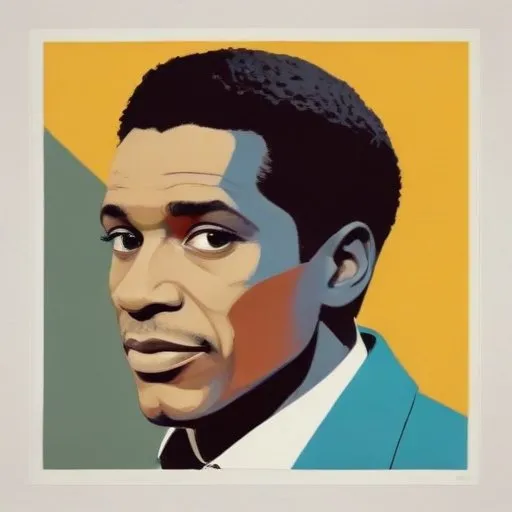
French cabaret singer and actor known for his provocative performances and iconic songs about Parisian life, influencing the development of French chanson.
Aristide Bruant, a French cabaret singer, comedian, and nightclub owner, is renowned for being the iconic figure in Henri de Toulouse-Lautrec's posters, donning a red scarf and black cape. He is also credited with creating the Chanson Réaliste musical genre, a style that would go on to revolutionize the French music scene.
Born Louis Armand Aristide Bruand on May 6, 1851, in the village of Courtenay, Loiret, France, Bruant's life took a dramatic turn when his father passed away in 1866. The 15-year-old left his home to find employment, eventually making his way to the Montmartre Quarter of Paris. It was here that he discovered his musical talents, performing in working-class bistros and adopting the earthy language of his surroundings, which would later become a hallmark of his songs.
Bruant's big break came when he began performing at café-concerts, eventually getting signed to appear at the Le Chat Noir club. His unique stage presence, complete with a red shirt, black velvet jacket, high boots, and a long red scarf, captivated audiences and earned him the admiration of Henri de Toulouse-Lautrec, who would go on to immortalize him in his posters.
In 1885, Bruant opened his own Montmartre club, Le Mirliton, where he developed a vaudeville-inspired mix of song, satire, and entertainment. This innovative style, which he termed Chanson Réaliste, focused on the struggles of the poor and working class, resonating deeply with the French people. As the master of ceremonies, Bruant used his sharp wit and humor to poke fun at the upper-class guests who frequented his club, creating a truly immersive experience.
Aristide Bruant's influence on French music and culture cannot be overstated. He is remembered as a true original, a trailblazer who dared to challenge the status quo with his unapologetic and raw style. His creation of Chanson Réaliste paved the way for future generations of French musicians, including the likes of Édith Piaf and Georges Brassens. Today, Bruant's legacy continues to inspire, with his music remaining a testament to his innovative spirit and his unwavering commitment to telling the stories of the marginalized.
Bruant passed away on February 11, 1925, in Paris, and was buried in Subligny's cemetery, near his birthplace in the department of Loiret. Although he left behind a lasting impact on the music world, Bruant's personal life remains somewhat of an enigma, with few details known about his relationships and personal struggles.
Aristide Bruant's image, as immortalized by Toulouse-Lautrec, has become an iconic symbol of Montmartre's bohemian era. His influence can be seen in the works of later artists, including the French New Wave filmmakers, who drew inspiration from his avant-garde style and commitment to social commentary.
Aristide Bruant's life was a testament to his unwavering dedication to his craft and his unrelenting passion for telling the stories of the marginalized. As a visionary behind Chanson Réaliste, he left an indelible mark on French music and culture, inspiring generations to come. Today, Bruant's legacy serves as a reminder of the power of art to challenge, provoke, and inspire.
Born in 1849
A French literary figure who wrote poetry, novels, and plays that often explored themes of love, nature, and social justice, leaving a mark on French literature.
Born in 1844
A leading figure of the French Symbolist movement, known for his sensual and emotive poetry that explored themes of love, beauty, and the human condition.
Born in 1854
A rebellious and visionary poet who abandoned literature at 21 to become an African explorer and trader, known for his vivid and expressive poetry that influenced modern literature.
Born in 1821
A 19th-century literary mastermind who crafted exquisite poetry and art criticism, exploring the beauty and darkness of human experience.
Born in 1839
A post-Impressionist pioneer, he's famous for his still-life compositions and landscapes that laid the groundwork for Cubism, influencing 20th-century art.
