


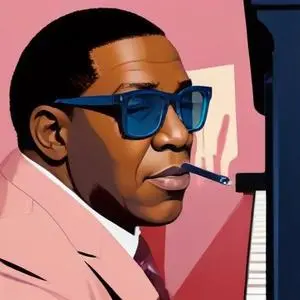
A virtuosic pianist who redefined jazz with intricate, lightning-fast solos and innovative harmonies, pushing the boundaries of musical expression.
Art Tatum is widely regarded as one of the greatest jazz pianists of all time, known for his breathtaking technical ability, innovative playing style, and unparalleled mastery of harmony and rhythm. With a career spanning over three decades, Tatum left an indelible mark on the jazz world, extending the piano's vocabulary and pushing the boundaries of what was thought possible.
Born on October 13, 1909, in Toledo, Ohio, Art Tatum Jr. grew up in a musical family and began playing piano at the age of three. By his early teens, he was already playing professionally and had his own radio program, rebroadcast nationwide. In 1932, he left Toledo and embarked on a journey to major urban centers, including New York, Chicago, and Los Angeles, where he established himself as a solo pianist and began to develop his unique style.
Tatum's playing style was characterized by his incredible technical facility, harmonic sophistication, and rhythmic complexity. He was known for his use of reharmonization, voicing, and bitonality, techniques that allowed him to rework standards and create new, innovative arrangements. His ability to play rapid arpeggios, chromatic runs, and intricate melodies with ease earned him the admiration of his peers and the awe of his audiences.
Tatum's performances were often divided between paid gigs and long, after-hours playing sessions, where he would explore new ideas and push the limits of his creativity. These sessions, often fueled by prodigious consumption of alcohol, allowed him to tap into a level of spontaneity and creativity that was unmatched by his contemporaries. In the 1940s, Tatum led a commercially successful trio and began playing in more formal jazz concert settings, including Norman Granz-produced Jazz at the Philharmonic events.
Art Tatum's influence on modern jazz is immeasurable. He has inspired generations of pianists, from Oscar Peterson to Herbie Hancock, and continues to be celebrated as a pioneer and innovator. Despite his untimely death from uremia at the age of 47, Tatum's legacy lives on through his extensive discography, which remains a testament to his unparalleled artistry and technical mastery.
"I'm not a pianist. I'm a musician who happens to play the piano." - Art Tatum
Born in 1925
A virtuosic jazz pianist and masterful composer, renowned for his dazzling technique, elegant style, and iconic trio performances.
Born in 1924
A virtuosic pianist and composer, known for his lightning-fast solos and innovative bebop style that transformed modern jazz.
Born in 1920
A pioneering jazz saxophonist and composer, known for his lightning-fast solos and innovative bebop style that revolutionized jazz music. 82
Born in 1917
A virtuosic trumpet player and composer who revolutionized jazz with his lightning-fast solos and iconic puffy cheeks, creating a new language for the instrument. He's synonymous with bebop and modern jazz.
Born in 1917
A jazz legend who revolutionized piano playing and composition with unorthodox techniques and harmonies, creating a unique, improvisational style that continues to inspire generations of musicians.
Born in 1917
A virtuosic jazz vocalist known for her pure, expressive tone, impeccable phrasing, and incredible scat singing abilities. She won 13 Grammy Awards and recorded over 200 albums.
Born in 1901
A legendary jazz musician who revolutionized the genre with his unique trumpet playing and raspy vocals, leaving an indelible mark on American music.
Born in 1904
A legendary jazz pianist and bandleader who led a iconic orchestra, blending swing and blues to create a unique sound that influenced generations of musicians. Known for his distinctive "less-is-more" style and hits like "April in Paris" and "One O'Clock Jump".
