


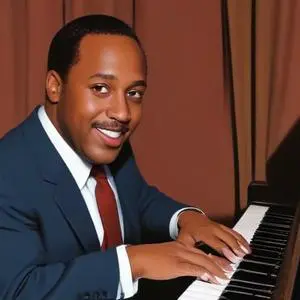
A virtuosic pianist and composer, known for his lightning-fast solos and innovative bebop style that transformed modern jazz.
Considered one of the most influential jazz pianists of all time, Earl Rudolph "Bud" Powell was a pioneer in the development of bebop and its associated contributions to jazz theory. His lightning-fast solos and complex phrasing revolutionized the piano, inspiring generations of musicians to come.
Born on September 27, 1924, in Harlem, New York, Powell grew up in a musical family during the vibrant era of the Harlem Renaissance. He began playing piano at the age of five and was largely self-taught, developing an attacking, right-handed approach that marked a break from the traditional left-handed stride and ragtime styles.
In 1943, Powell joined trumpeter Cootie Williams' band, where he received widespread attention for his fluency and advanced technique. His recordings and live performances with Charlie Parker, Sonny Stitt, and Max Roach during the late 1940s and early 1950s were instrumental in shaping modern jazz piano technique.
In 1945, Powell suffered a severe beating by police, which had a lasting impact on his mental health. He underwent years of electroconvulsive therapy, which further exacerbated his mental health issues. Despite these challenges, Powell continued to perform and record, albeit sporadically, throughout the 1950s.
In 1959, Powell relocated to Paris, where he joined a community of African American expatriates fleeing racism and seeking a higher standard of living. This period marked a resurgence in his career, with regular recording sessions and tours across Northern and Central Europe. However, his health began to decline in 1963, and he was diagnosed with tuberculosis.
Despite his untimely death in 1966, Powell's legacy continues to inspire and influence jazz pianists worldwide. His compositions, including "Un Poco Loco," "Bouncing with Bud," and "Parisian Thoroughfare," have become jazz standards. Many have been inspired by his life story, including films and written works, such as Bertrand Tavernier's "Round Midnight."
"I think the piano is the most perfect instrument for expressing the human emotion, because it is so versatile."
Bud Powell's life and career parallel the evolution of bebop and modern jazz. His contributions to jazz theory, along with those of Charlie Parker and Dizzy Gillespie, transformed the genre and paved the way for future generations of musicians.
Bud Powell's life was marked by both brilliant success and personal struggles, but his legacy as a true innovator and master of bebop piano remains unparalleled.
Born in 1920
A pioneering jazz saxophonist and composer, known for his lightning-fast solos and innovative bebop style that revolutionized jazz music. 82
Born in 1917
A virtuosic trumpet player and composer who revolutionized jazz with his lightning-fast solos and iconic puffy cheeks, creating a new language for the instrument. He's synonymous with bebop and modern jazz.
Born in 1917
A jazz legend who revolutionized piano playing and composition with unorthodox techniques and harmonies, creating a unique, improvisational style that continues to inspire generations of musicians.
Born in 1926
A legendary jazz musician who revolutionized the genre with his improvisational style and iconic albums like "Kind of Blue". He's synonymous with cool, jazzy sophistication.
99 Years Old
A legendary jazz saxophonist and composer who revolutionized the genre with his innovative, spiritually-driven improvisations and iconic albums like "A Love Supreme".
95 Years Old
A legendary jazz saxophonist and composer, renowned for his improvisational genius and iconic recordings that redefined the genre. His playing style is characterized by intense emotional expression and harmonic innovation.
Born in 1919
A legendary jazz drummer and leader of the Jazz Messengers, known for nurturing young talent and shaping the sound of modern jazz through his iconic band.
Born in 1915
Legendary jazz vocalist and actress known for her expressive, emotive singing style and iconic songs like "God Bless the Child" and "Strange Fruit".
