


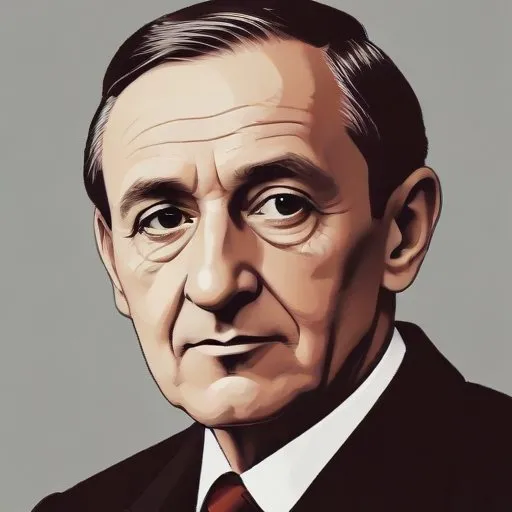
A British biochemist and academic who discovered the importance of phosphates in cellular respiration, earning him a Nobel Prize in Chemistry in 1929. His work laid the foundation for our understanding of cellular energy production.
Sir Arthur Harden, a British biochemist, made history in 1929 when he was awarded the Nobel Prize in Chemistry, along with Hans Karl August Simon von Euler-Chelpin, for his pioneering work on the fermentation of sugar and fermentative enzymes. This breakthrough discovery not only shed light on the complex processes of fermentation but also paved the way for significant advancements in biochemistry and medicine.
Born on October 12, 1865, to Scottish Presbyterian businessman Albert Tyas Harden and Eliza Macalister, Arthur Harden's early life was marked by a strong emphasis on education. He attended a private school in Victoria Park, where he was taught by Dr. Ernest Adam, before moving on to Tettenhall College in Staffordshire. In 1882, he enrolled at Owens College (now the University of Manchester), where he developed a passion for chemistry under the guidance of Professor Roscoe.
Harden's research career began in earnest when he was awarded the prestigious Dalton Scholarship in Chemistry in 1886. This led to a year-long stint working with Otto Fischer at Erlangen, where he synthesized nitrosonaphthylamine and studied its properties. Upon returning to Manchester, he took up a lecturer and demonstrator position, during which he also researched the life and work of John Dalton. His early research laid the foundation for his later work on fermentation.
In 1897, Harden's career took a significant turn when he was appointed chemist to the newly founded British Institute of Preventive Medicine (later renamed the Lister Institute). This move marked the beginning of his extensive research on fermentation, which would eventually earn him the Nobel Prize. During his tenure at the Lister Institute, Harden earned a Doctor of Science degree from the Victoria University in 1902 and was appointed Head of the Biochemical Department in 1907, a position he held until his retirement in 1930.
Sir Arthur Harden's contributions to biochemistry and medicine are immeasurable. His work on fermentation not only deepened our understanding of biological processes but also paved the way for significant advancements in fields such as medicine, agriculture, and industry. As a founding member of the Biochemical Society and editor of its journal for 25 years, Harden played a crucial role in shaping the discipline of biochemistry. His legacy continues to inspire scientists and researchers to this day.
Sir Arthur Harden's work on fermentation has had a profound impact on modern society. The discovery of fermentative enzymes has led to significant advancements in industries such as brewing, baking, and pharmaceuticals. His research has also paved the way for the development of new medicines and treatments, improving the lives of millions around the world.
Born in 1898
A high-ranking officer in the German Wehrmacht during World War II, known for his involvement in the July 20 plot to assassinate Adolf Hitler.
Born in 1918
Developed techniques for sequencing DNA and proteins, revolutionizing molecular biology and earning two Nobel Prizes in Chemistry.
Born in 1905
A pioneer in DNA research, this biochemist discovered the base pairing rules of DNA, leading to a fundamental understanding of genetic code.
Born in 1881
Discovered penicillin, a revolutionary antibiotic, and pioneered its use in medicine. This breakthrough has saved countless lives and transformed the field of healthcare.
Born in 1898
Developed penicillin as a medicine, revolutionizing the treatment of bacterial infections. This discovery has saved countless lives and transformed modern medicine.
Born in 1911
Developed methods to mass-produce penicillin, making it widely available to treat bacterial infections. Their work revolutionized the treatment of bacterial diseases and saved countless lives.
Born in 1917
A Nobel Prize-winning chemist who pioneered stereochemistry research, making significant contributions to our understanding of molecular structures and their interactions.
