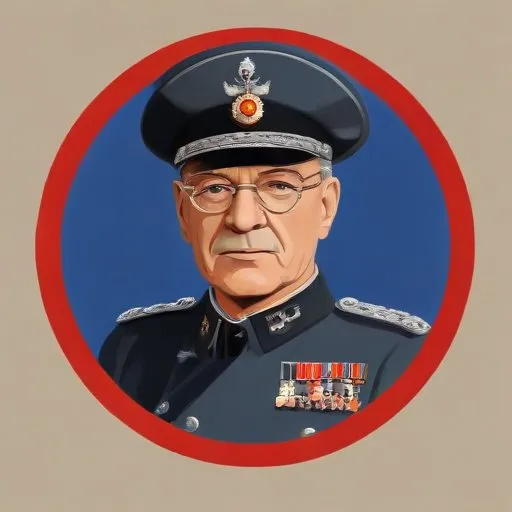
Hans Krebs: The Enigmatic German General of Infantry
A Career Soldier in the Trenches of War
Hans Krebs is famously known for serving as the last Chief of Staff of the Oberkommando des Heeres (OKH) during the final phase of World War II in Europe, from April 1 to May 1, 1945. His tumultuous career spanned across two world wars, marking him as a prominent figure in German military history.
Early Life and Education
Born on March 4, 1898, in Helmstedt, Germany, Krebs volunteered for service in the Imperial German Army in 1914, earning his commission as an officer in 1915. His early military career saw him serving in the Reichswehr and later in the Wehrmacht, where he maintained contacts with the Red Army in the context of joint military exercises conducted by the two countries.
Military Career: Rise to Prominence
In 1931, Krebs worked in the Defence Ministry, where his strong antisemitic and anti-Communist views became evident. He described the members of the Soviet military delegation that visited Berlin in 1932 as "a sly and cunning Jew" and "a Jewish half-breed...insincere, with a suspicious and treacherous nature, apparently a fanatic Communist." These views would later influence his military decisions.
In 1936, Krebs was posted to the German embassy in Moscow as a military attaché, a position he held until the invasion of the Soviet Union. His role in the Wehrmacht's faulty intelligence into the capabilities of the Red Army contributed to the German military's underestimation of Soviet strength.
World War II: Strategic Positions and Controversies
During World War II, Krebs held various staff positions, including Chief of Staff of the 9th Army in February 1942, and later, Chief of Staff of Army Group Centre in March 1943. His promotion to Generalleutnant in April 1943 solidified his position as a key military strategist.
Krebs' involvement in the war effort was not without controversy. His efforts to open surrender negotiations with the Red Army were met with resistance from
Adolf Hitler, leading to a tense standoff in the Führerbunker. On May 1, 1945, Krebs succeeded in negotiating a surrender, but not before Hitler had taken his own life.
A Desperate Final Stand
As the war drew to a close, Krebs found himself trapped in the Führerbunker, surrounded by the advancing Red Army. In a desperate bid to escape the inevitable, Krebs attempted to negotiate a surrender, but his efforts were in vain. On May 2, 1945, Krebs took his own life in the Führerbunker, leaving behind a legacy of controversy and complexity.
Legacy and Impact
Hans Krebs' military career was marked by controversy, strategic blunders, and a deep-seated hatred for Communism and Judaism. Despite his flawed judgments, Krebs remains an important figure in German military history, serving as a cautionary tale about the dangers of prejudice and poor decision-making in times of war.
Key Dates and Events
- March 4, 1898: Hans Krebs is born in Helmstedt, Germany
- 1914: Krebs volunteers for service in the Imperial German Army
- 1915: Krebs earns his commission as an officer
- 1931: Krebs works in the Defence Ministry
- 1936: Krebs is posted to the German embassy in Moscow as a military attaché
- 1942: Krebs becomes Chief of Staff of the 9th Army
- 1943: Krebs is promoted to Generalleutnant and becomes Chief of Staff of Army Group Centre
- April 1-May 1, 1945: Krebs serves as Chief of Staff of the Oberkommando des Heeres (OKH)
- May 2, 1945: Krebs takes his own life in the Führerbunker
FAQ
What was Hans Krebss role in World War II?
Hans Krebs was a German general who served as the Chief of the General Staff of the German Army during the final months of World War II.
What were Hans Krebss responsibilities as Chief of the General Staff?
Hans Krebs was responsible for overseeing the German Armys operations and strategy, including the defense of Berlin and the final battles of the war.
How did Hans Krebss military career evolve?
Hans Krebs began his military career in the Imperial German Army and rose through the ranks, serving in various staff positions and commanding units before becoming Chief of the General Staff.
What was Hans Krebss role in the final days of the war?
Hans Krebs was present in the Führerbunker during the final days of the war and was involved in the negotiations surrounding Germanys surrender.
Is Hans Krebs still studied today for his role in World War II?
Yes, Hans Krebs is still studied today for his role in World War II, particularly in the context of the final months of the war and the collapse of the German Army.