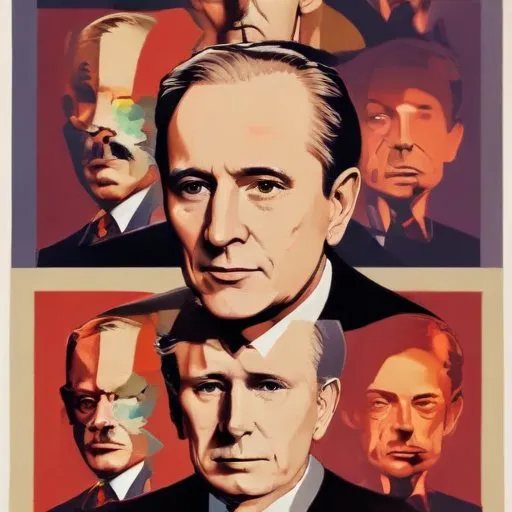
Arthur Meighen

Arthur Meighen

Arthur Meighen was born on June 16th, 1874

Full Name: Arthur Meighen
Nationality: Canadian
Occupation: Lawyer, Politician
Birth Date: June 16, 1874
Death Date: August 5, 1960
Prime Minister Of: Canada
Term: 1920-1921, 1926
Party: Conservative

A Canadian lawyer and politician who served as the 9th Prime Minister of Canada, known for his strong leadership during World War I and his role in shaping Canada's autonomy.

Written by: Victor Malone Victor Malone

Arthur Meighen: The Turbulent Tenure of Canada's Ninth Prime Minister

A Leader of Contrasts

Arthur Meighen is best known for his two non-consecutive terms as the Prime Minister of Canada, serving from 1920 to 1921 and again from June to September 1926. His tumultuous tenure was marked by periods of great success and crushing defeat, earning him a reputation as a polarizing figure in Canadian politics.

Early Life and Education

Born on June 16, 1874, in St. Marys, Ontario, Meighen's family hailed from County Londonderry, Ireland. He pursued higher education at the University of Toronto, where he studied mathematics. After completing his degree, Meighen went on to train as a lawyer, eventually qualifying to practice law.

Rise to Prominence

Meighen's entry into politics began in 1908, when he was elected to the House of Commons of Canada. His dedication and work ethic quickly earned him recognition, and in 1913, he was appointed to the Cabinet of Prime Minister Robert Borden. Meighen held various portfolios during his tenure, including Solicitor General, Minister of the Interior, and Superintendent-General of Indian Affairs.

First Term as Prime Minister (1920-1921)

In July 1920, Meighen succeeded Borden as Conservative leader and Prime Minister, becoming the first Canadian-born Prime Minister since Confederation. However, his first term was short-lived, as he suffered a heavy defeat in the 1921 election to Mackenzie King and the Liberal Party. Meighen lost his seat, but he re-entered Parliament through a 1922 by-election and remained Opposition leader.

The King-Byng Affair and Second Term (1926)

Meighen's second term as Prime Minister came about as a result of the King-Byng Affair, when Mackenzie King was refused an election request and resigned. Meighen was invited to form a ministry, but his second term lasted only briefly, as he soon lost a no-confidence motion and faced another federal election. Meighen lost his own seat, and the Conservatives lost 24 seats, allowing Mackenzie King's Liberals to retake power.

Life After Politics

After losing the 1926 election, Meighen resigned as party leader and quit politics to return to his law practice. In 1932, he was appointed to the Senate, and under Prime Minister R. B. Bennett, he served as Leader of the Government in the Senate and Minister without Portfolio until 1935. Meighen briefly returned to politics in 1941, becoming leader of the Conservative Party for a second time, but he resigned in 1942.

Legacy

Arthur Meighen's legacy is marked by his tumultuous tenure as Prime Minister, his periods of great success, and his crushing defeats. Despite his controversies, Meighen played a significant role in shaping Canada's political landscape, and his contributions to the country's development are undeniable.
Timeline
1874
Birth in Anderson, Ontario
Arthur Meighen was born on July 16, 1874, in Anderson, Ontario, Canada. He would go on to become a prominent lawyer and politician.
1903
Called to the Bar
Meighen was called to the bar in 1903 and began practicing law in Portage la Prairie, Manitoba.
1908
Elected to Canadian House of Commons
Meighen was first elected to the Canadian House of Commons in 1908, representing the riding of Portage la Prairie.
1920
Appointed Solicitor General
Meighen was appointed Solicitor General of Canada in 1920, serving in the cabinet of Prime Minister Arthur James Borden.
1926
Becomes Prime Minister of Canada
Meighen briefly served as the 9th Prime Minister of Canada in 1926, from June 29 to September 25.
Arthur Meighen

Arthur Meighen Quiz

What was Arthur Meighen's profession before entering politics?

Score: 0/5
FAQ
What was Arthur Meighens role in Canadian politics?
Arthur Meighen was a Canadian lawyer and politician who served as the 9th Prime Minister of Canada, leading the Unionist government during World War I.
What were Arthur Meighens achievements?
Meighens achievements include leading Canada through the final years of World War I, implementing conscription, and promoting Canadian autonomy within the British Empire.
What was Arthur Meighens relationship with Robert Borden?
Meighen served as Minister of the Interior under Robert Bordens government, and later succeeded him as Prime Minister.
What were Arthur Meighens views on Canadian autonomy?
Meighen was a strong advocate for Canadian autonomy within the British Empire, pushing for greater independence and self-governance for Canada.
What is Arthur Meighens legacy?
Arthur Meighens legacy is that of a skilled politician who played a key role in shaping Canadas role in World War I and promoting Canadian autonomy.

Related People:

William Lyon Mackenzie King

Born in 1874

The tenth Prime Minister of Canada, serving for a record 22 years, is most known for leading the country through significant periods of economic and social change, including the Great Depression and World War II.

Louis St. Laurent

Born in 1882

The 12th Prime Minister of Canada, a strong leader who played a crucial role in shaping the country's post-war economy and foreign policy, and is credited with establishing universal hospital insurance and old-age pensions.

John Diefenbaker

Born in 1895

The 13th Prime Minister of Canada, a champion of individual rights and freedoms, introduced the Canadian Bill of Rights, a precursor to the Charter of Rights and Freedoms. He's also known for his anti-apartheid stance and leadership during the Suez Crisis.

Lester B. Pearson

Born in 1897

A Canadian leader who served as Prime Minister and won the Nobel Peace Prize for resolving the Suez Canal Crisis, known for his diplomatic efforts and peacekeeping initiatives.

Pierre Trudeau

Born in 1919

The charismatic leader who championed Canadian unity and implemented progressive policies, known for his iconic style and influential legacy in shaping modern Canada.

Jean Chrétien

92 Years Old

The 20th Prime Minister of Canada, serving from 1993 to 2003, known for his leadership during the Quebec sovereignty movement and his role in shaping Canada's national unity. He implemented policies like the Clarity Act and the National Child Benefit.

Paul Martin

45 Years Old

American professional ice hockey player who won two Stanley Cup championships and was a four-time NHL All-Star. Known for his rugged defensive play and physical presence on the ice.

Stephen Harper

67 Years Old

The 22nd Prime Minister of Canada, a conservative leader who served from 2006 to 2015, known for his fiscal policies and controversial stances on social issues. He led the country through the 2008 financial crisis and implemented significant changes to Canada's tax system.