


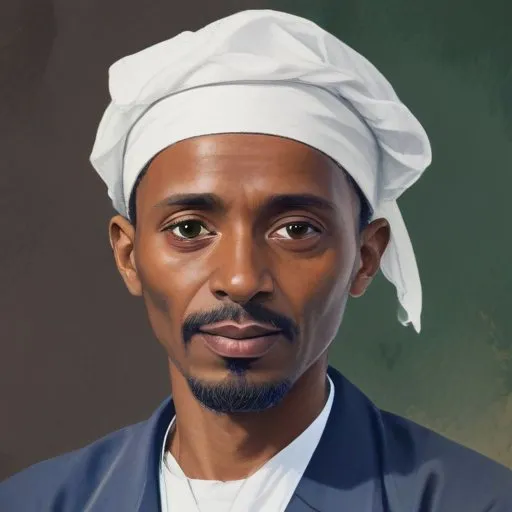
Pioneering Ethiopian surgeon and educator who introduced modern surgical practices to Ethiopia and trained many medical professionals. He's credited with establishing the country's first surgical residency program.
Asrat Woldeyes was a renowned Ethiopian surgeon, professor of medicine, and founder of the All-Amhara People's Organization (AAPO), who left an indelible mark on the country's medical and political landscape. He is remembered as a champion of Ethiopian unity and a fierce critic of the government, earning him the title of "Ethiopia's most distinguished surgeon, physician, and university dean" by The Guardian.
Born on June 20, 1928, in Ethiopia, Asrat Woldeyes pursued his passion for medicine at the University of Edinburgh, becoming the first Ethiopian to qualify as a surgeon in the West. This milestone marked the beginning of his illustrious career, which would take him from the operating room to the forefront of Ethiopian politics.
Asrat Woldeyes's medical expertise earned him the respect of Emperor Haile Selassie, who appointed him as his personal physician until the emperor's death in 1975. Throughout his career, Asrat continued to teach and practice medicine, even during the tumultuous rule of President Mengistu Haile Mariam. His dedication to the medical field made him a beloved figure in Ethiopian society.
In 1991, following the rise of Meles Zenawi to power, Asrat Woldeyes became an outspoken critic of the government, particularly its decision to form new autonomous regions in Ethiopia. This led him to form the AAPO, a political party dedicated to restoring Ethiopian unity. His activism, however, came at a great cost. In 1994, he was sentenced to two years in prison for planning violence against the state, a charge that sparked international outcry and earned him the title of "prisoner of conscience" from Amnesty International.
Asrat Woldeyes's imprisonment was marked by repeated trials and adjournments, keeping him behind bars indefinitely. In 1996, he faced a new trial, which was repeatedly delayed, further prolonging his imprisonment. Despite his struggles, Asrat remained resolute in his fight for Ethiopian unity and human rights.
Asrat Woldeyes's life was a testament to his unwavering commitment to his country and its people. His legacy extends beyond his remarkable medical achievements to his bravery in the face of oppression. He remains an inspiration to Ethiopians and human rights activists around the world. As The Guardian aptly put it, Asrat Woldeyes was "successively Ethiopia's most distinguished surgeon, physician and university dean, most controversial political party leader and best-known political prisoner."
Born in 1892
The last emperor of Ethiopia, who led the country through a period of modernization and was a symbol of African independence, and is also revered as a deity by the Rastafari movement.
41 Years Old
A dominant long-distance runner, winning multiple Olympic and World Championship titles, and holding multiple world records in the 5000m and 10,000m events.
44 Years Old
A dominant long-distance runner, holding multiple world records in the 5,000 and 10,000 meters, with a career spanning over two decades.
93 Years Old
First African to win an Olympic gold medal, winning two consecutive Olympic marathons in 1960 and 1964, running barefoot in the first one.
53 Years Old
A world-class long-distance runner who won numerous Olympic and World Championship titles, setting multiple records in the 10,000 meters and marathon events.
