


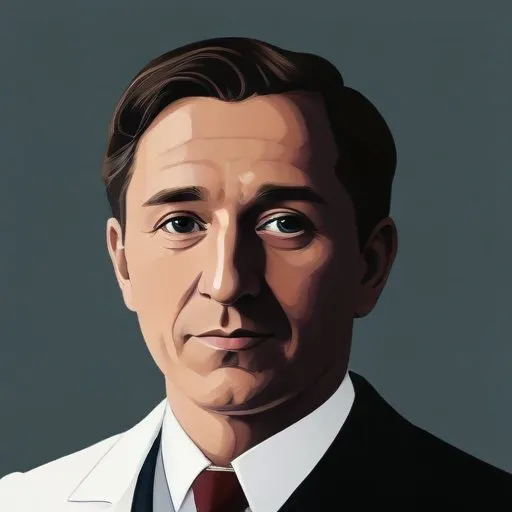
A Canadian physician and politician who served as the 24th Lieutenant Governor of Nova Scotia from 1988 to 1994, known for his contributions to the field of medicine and public service.
Augustus Rowe, a Canadian physician and politician, left an indelible mark on Newfoundland and Labrador's healthcare system through his tireless efforts to establish a regional hospital and his dedicated service as the province's Health Minister. As a champion of accessible healthcare, Rowe's legacy continues to inspire generations of medical professionals and policymakers alike.
Born on August 2, 1920, in Hearts Content, Dominion of Newfoundland, Rowe grew up with a sense of duty and purpose. During World War II, he enlisted in the Royal Newfoundland Regiment, serving his country with valor. After the war, he pursued his passion for medicine at St. Mary's Hospital Medical School in London, University of London.
In 1954, Rowe returned to Newfoundland, settling in Carbonear, where he began his medical career as a general practitioner. Recognizing the need for a local hospital, he spearheaded the efforts to establish Carbonear Community Hospital, raising an impressive $37,000 to fund the project. The hospital, which opened its doors in 1957, provided regional patients with a much-needed medical center, ending the need for lengthy journeys to St. John's or Old Perlican for treatment.
In 1971, Rowe entered the political arena, winning a seat in the Newfoundland and Labrador House of Assembly as a member of the Progressive Conservative Party of Newfoundland and Labrador. He was re-elected in 1972 and subsequently appointed Health Minister in Premier Frank Moores' cabinet, serving from 1972 to 1975. During his tenure, Rowe worked diligently to improve healthcare infrastructure and services throughout the province.
After retiring from politics in 1975, Rowe pursued a career in family medicine, joining the faculty of Memorial University of Newfoundland. He later became the university's chairman of Family Medicine from 1978 to 1985. In recognition of his outstanding contributions to healthcare and education, the university honored him with the Gus Rowe Teaching Award, which continues to inspire future generations of medical professionals.
Through his remarkable life, Augustus Rowe demonstrated an unwavering commitment to improving the lives of others, leaving an indelible mark on Newfoundland and Labrador's healthcare system. His legacy continues to inspire future generations, a testament to the power of dedication, perseverance, and vision.
Born in 1849
A renowned physician and author who revolutionized medical education and practice with his emphasis on bedside learning and humane patient care. He's also known for his witty writings and insightful essays on medicine and life.
Born in 1869
Pioneering neurosurgeon who developed innovative surgical techniques and identified Cushing's disease, a hormonal disorder. He is also credited with establishing the field of neurosurgery as a distinct medical specialty.
Born in 1872
A Canadian physician, soldier, and poet who wrote the iconic poem "In Flanders Fields," which became a symbol of World War I and is still widely recited today.
Born in 1891
Discovered insulin and pioneered its use to treat diabetes, revolutionizing the treatment of the disease.
Born in 1899
Co-discoverer of insulin, a hormone that regulates blood sugar levels, revolutionizing the treatment of diabetes. This breakthrough has saved countless lives and improved the quality of life for millions.
Born in 1861
A Canadian-American physician and educator who invented the sport of basketball, creating a global phenomenon that brings people together and promotes physical activity.
Born in 1897
A Canadian leader who served as Prime Minister and won the Nobel Peace Prize for resolving the Suez Canal Crisis, known for his diplomatic efforts and peacekeeping initiatives.
Born in 1887
The 18th Governor General of Canada, a lawyer and politician who played a significant role in shaping Canada's cultural and national identity, particularly through his efforts to promote Canadian autonomy and unity. He is also known for his contributions to the development of Canada's national broadcasting system.
