


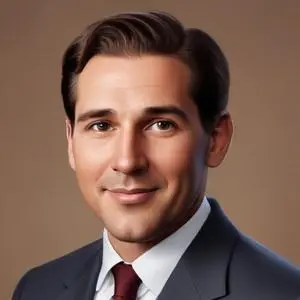
Co-discoverer of insulin, a hormone that regulates blood sugar levels, revolutionizing the treatment of diabetes. This breakthrough has saved countless lives and improved the quality of life for millions.
Charles Herbert Best, the trailblazing medical scientist, is best known for being one of the pioneering co-discoverers of insulin, revolutionizing the treatment of diabetes alongside Frederick Banting. This groundbreaking achievement has left an indelible mark on medical history, saving countless lives and paving the way for future medical breakthroughs.
Born on February 27, 1899, in Pembroke, Maine, to Luella Fisher and Herbert Huestis Best, Charles was exposed to the world of medicine from a young age. His father, a Canadian-born physician, and his mother, a talented musician, instilled in him a passion for learning and an appreciation for the complexities of human health.
Tragedy struck when Charles' aunt, Anna, succumbed to diabetes, leaving a lasting impact on the young man. This personal experience fueled his determination to pursue a career in medicine, driven by a desire to make a difference in the lives of others.
Charles began his academic journey at the University of Toronto in 1915, enrolling in the medical program. However, his studies were soon interrupted by the outbreak of World War I. He enlisted in the Canadian Army, serving with the 2nd Canadian Tank Battalion and rising through the ranks to become acting Sergeant Major.
After the war, Charles returned to university, completing his degree in physiology and biochemistry. His wartime experiences had instilled in him a sense of discipline and resilience, qualities that would serve him well in his future research endeavors.
In 1921, Charles joined forces with Frederick Banting, a renowned physician and researcher, to investigate the mysterious pancreatic hormone, insulin. Through tireless experimentation and collaboration, they successfully isolated insulin, paving the way for its use in the treatment of diabetes.
This monumental discovery earned Charles and Frederick the prestigious Nobel Prize in Physiology or Medicine in 1923, cementing their places in medical history.
Charles' contributions to medical science extended far beyond his work on insulin. He continued to research and make significant breakthroughs in the fields of choline and heparin, further solidifying his reputation as a pioneering medical scientist.
Through his work, Charles Best left an indelible mark on modern medicine, inspiring generations of researchers and medical professionals. His legacy serves as a testament to the power of human ingenuity and the boundless potential of scientific inquiry.
"The pursuit of knowledge is a never-ending journey, and the greatest rewards often lie just beyond the horizon of our understanding."
- Charles Best
Charles Best's groundbreaking work on insulin not only revolutionized the treatment of diabetes but also paved the way for future medical breakthroughs. His contributions to the field of medicine have saved countless lives and continue to inspire new generations of researchers and medical professionals.
As we reflect on the life and achievements of Charles Best, we are reminded of the profound impact that human ingenuity and scientific inquiry can have on the world. His legacy serves as a beacon of hope, illuminating the path forward for those who seek to make a difference in the lives of others.
Born in 1891
Discovered insulin and pioneered its use to treat diabetes, revolutionizing the treatment of the disease.
Born in 1876
Discovered insulin and its role in diabetes, leading to a life-saving treatment for millions. Pioneering work in physiology and medicine paved the way for future breakthroughs.
Born in 1892
Co-discoverer of insulin, a hormone that regulates blood sugar levels, revolutionizing diabetes treatment. This groundbreaking finding has saved countless lives and improved quality of life for millions .
Born in 1893
A pioneering scientist who discovered deuterium, a heavy isotope of hydrogen, and later contributed to the discovery of many other elements, revolutionizing our understanding of the universe.
Born in 1898
A high-ranking officer in the German Wehrmacht during World War II, known for his involvement in the July 20 plot to assassinate Adolf Hitler.
Born in 1896
A pioneering scientist who discovered how the body breaks down and uses carbohydrates, earning a Nobel Prize in Physiology or Medicine in 1947. Her groundbreaking work has led to a deeper understanding of diabetes and other metabolic disorders.
Born in 1887
A pioneering physiologist who discovered the role of pituitary hormones in regulating blood sugar levels, earning him a Nobel Prize in Physiology or Medicine. His work laid the foundation for modern endocrinology.
