


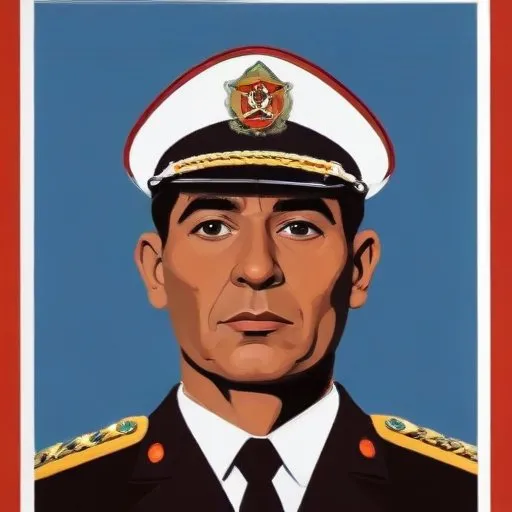
A key figure in Cuba's fight for independence from Spain, leading the Liberation Army and serving as president of the provisional government. He's revered for his bravery and strategic military mind.
Bartolomé Mas, a Cuban politician and military leader, is renowned for his unwavering dedication to the fight for Cuban independence from Spanish colonial rule. As the President of the República en Armas (Republic in Arms), Mas played a pivotal role in shaping the course of Cuba's struggle for independence.
Born on December 21, 1830, in Yara, Cuba, Mas was the son of a Catalan father and a Cuban-born mother. He was educated at the Convent of Santo Domingo, where he developed a passion for literature and poetry. However, it was the execution of Narciso López in 1851 that sparked Mas's involvement in the fight for independence. He publicly protested the event, which led to him being placed under surveillance by the colonial authorities.
In 1867, Mas joined the ranks of Cuban patriots, including Carlos Manuel de Céspedes and Francisco Vicente Aguilera, who conspired to free Cuba from Spanish rule. On October 10, 1868, Mas, along with his two brothers, participated in the unsuccessful uprising of Yara, marking the beginning of his military career.
After the death of Céspedes, Mas was elected as the representative of the department of Oriente. He later served as Secretary of War under Toms Estrada Palma, the delegate of the Cuban Revolutionary Party (PRC). However, following Estrada Palma's imprisonment, Mas returned to the armed forces as a brigadier general. His military activities eventually led to his imprisonment in 1879, first in Santiago de Cuba and later in Puerto Rico and Spain.
Bartolomé Mas's unwavering commitment to the Cuban independence movement has left an indelible mark on the country's history. His military victories, leadership, and unrelenting spirit have inspired generations of Cubans to fight for their freedom and self-determination. Today, Mas is remembered as a national hero, a symbol of resistance against colonial oppression, and a beacon of hope for a nation that continues to strive for liberty and justice.
Born in 1853
A Cuban journalist, poet, and theorist who led the Cuban independence movement against Spanish rule and is revered as a national hero, known for his literary and philosophical works.
Born in 1901
The authoritarian leader who ruled Cuba from 1933 to 1944 and again from 1952 to 1959, known for his corrupt and oppressive regime, which sparked the Cuban Revolution.
99 Years Old
The Cuban revolutionary who led the country from 1959 to 2008, implementing socialist policies and defying US opposition, becoming an iconic figure in modern history.
95 Years Old
The Cuban revolutionary leader who served as President of Cuba from 2008 to 2018, known for implementing economic reforms and improving relations with the US. He played a key role in shaping Cuba's socialist government and economy.
94 Years Old
A key figure in the Cuban Revolution, known for his bravery and radical ideals, who played a crucial role in overthrowing the authoritarian government. He's an iconic symbol of rebellion and social change.
