


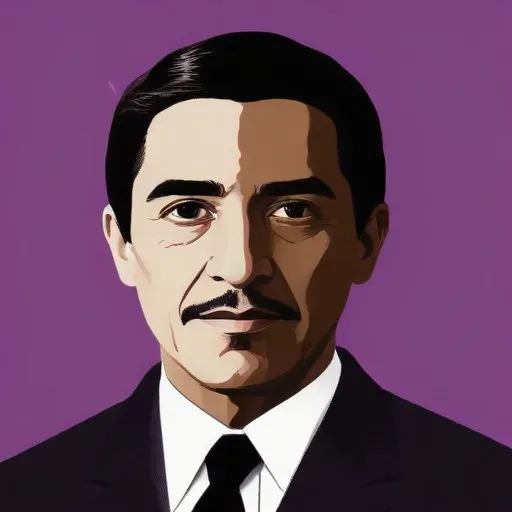
A Cuban lawyer and activist who led the country's first war of independence against Spain, known as the "Father of the Nation" for his role in shaping Cuba's struggle for freedom.
Carlos Manuel de Céspedes del Castillo, a Cuban revolutionary hero, is renowned for his courageous declaration of Cuban independence in 1868, sparking the Ten Years War and paving the way for Cuba's eventual freedom from Spanish rule. He is revered as the "Father of the Homeland" for his selfless efforts to liberate his native land and its people.
Born on April 18, 1819, in Bayamo, Spanish Cuba, to a wealthy family, Céspedes was exposed to the harsh realities of slavery and colonial rule from a young age. His progressive values and humanist ideals propelled him to become a lawyer and plantation owner, using his position to advocate for social justice and equality.
On October 10, 1868, Céspedes issued the historic "Grito de Yara" (Cry of Yara), proclaiming Cuban independence and calling upon his slaves to join him in the fight against Spanish oppression. This bold move not only freed his own slaves but also inspired others to do the same, sparking a chain reaction of liberation throughout the island.
In April 1869, Céspedes was elected President of the Republic of Cuba in Arms, leading the country's first serious attempt to achieve independence from Spain. The Ten Years War, fought between the Cuban rebels and Spanish forces, was a brutal conflict that ultimately ended in 1878 with the signing of the Pact of Zanjón. Although the war did not immediately grant Cuba its independence, it laid the foundation for future struggles and Céspedes' legacy as a champion of freedom.
Céspedes' commitment to human rights, equality, and democracy was unwavering. He believed that independence was not only a right but a moral obligation, and that the struggle for freedom was inseparable from the struggle against slavery and colonialism. His progressive ideals continue to inspire generations of Cubans and people around the world.
Céspedes' courageous actions and unwavering commitment to freedom have made him an iconic figure in Cuban history. His legacy extends beyond the island, inspiring people worldwide to strive for social justice, equality, and human rights. Today, he is remembered as a hero, a symbol of resistance against oppression, and a beacon of hope for a better future.
"¡Independencia o Muerte!" ("Independence or Death!") - Carlos Manuel de Céspedes
This powerful declaration, uttered during the Grito de Yara, became a rallying cry for the Cuban people and a testament to Céspedes' unwavering dedication to the cause of freedom.
Céspedes' struggle for Cuban independence was part of a broader Latin American movement against colonial rule and slavery. His efforts, along with those of other patriots, paved the way for Cuba's eventual independence in 1902. Today, his legacy is remembered and celebrated throughout Cuba, serving as a powerful reminder of the human spirit's capacity for courage, resilience, and determination.
Born in 1853
A Cuban journalist, poet, and theorist who led the Cuban independence movement against Spanish rule and is revered as a national hero, known for his literary and philosophical works.
Born in 1926
The Cuban revolutionary who led the country from 1959 to 2008, implementing socialist policies and defying US opposition, becoming an iconic figure in modern history.
95 Years Old
The Cuban revolutionary leader who served as President of Cuba from 2008 to 2018, known for implementing economic reforms and improving relations with the US. He played a key role in shaping Cuba's socialist government and economy.
Born in 1908
Led Venezuela's transition from dictatorship to democracy, serving as president from 1945 to 1948 and again from 1959 to 1964, implementing social and economic reforms.
Born in 1895
The authoritarian leader who ruled Argentina with his charismatic wife Eva, implementing populist economic policies and promoting nationalism, while suppressing opposition and civil liberties.
Born in 1919
A former actress who used her charisma and influence to advocate for women's suffrage and workers' rights, becoming a beloved and powerful figure in Argentine politics.
Born in 1783
Led the Latin American wars of independence against Spanish rule, unifying several countries under the Gran Colombia republic. He's revered as a national hero and symbol of freedom.
72 Years Old
The charismatic leader who transformed Venezuela through socialist reforms and anti-imperialist rhetoric, leaving a lasting impact on the country's politics and economy.
