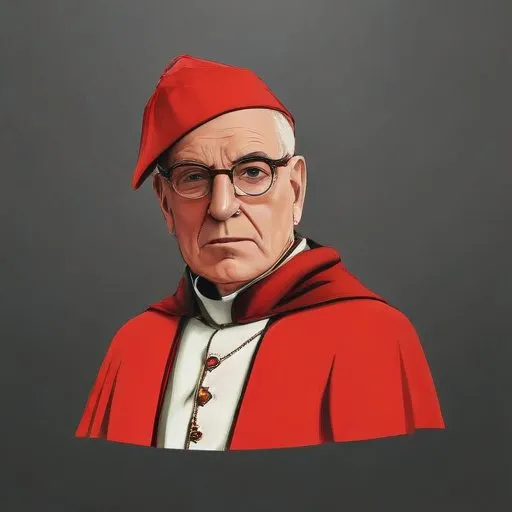
Basil Hume: The Respected Catholic Bishop and Monastic Leader
A Life of Devotion and Service
Cardinal Basil Hume was a prominent figure in the Catholic Church, renowned for his remarkable leadership and commitment to his faith. As the Archbishop of Westminster from 1976 until his passing in 1999, he played a pivotal role in shaping the Catholic community in England and Wales.
Early Life and Ministry
Born on March 2, 1923, in Newcastle upon Tyne, George Haliburton Hume was the son of a Protestant father and a Catholic mother. He was educated at Ampleforth College, where he developed a deep sense of spirituality and a desire to serve the Church. In 1941, he entered the novitiate of the Benedictine monastery at Ampleforth Abbey, where he received the habit and the monastic name of Basil.
Rise to Prominence
Hume's dedication and intellectual pursuits led him to study modern history at St. Benet's Hall, Oxford, and later, theology at the University of Fribourg, Switzerland. His exceptional leadership skills and commitment to his faith earned him the position of abbot of Ampleforth Abbey in 1963, a role he held for 13 years. In 1976, he was appointed Archbishop of Westminster, and later that year, he was elevated to the cardinalate.
Leadership and Reforms
As Archbishop of Westminster, Hume worked tirelessly to promote ecumenism and interfaith dialogue. He played a key role in the Catholic Bishops' Conference of England and Wales, serving as its president from 1979 until his death. Under his leadership, the Catholic Church in England and Wales underwent significant reforms, including the introduction of the New Rite of Mass and the promotion of lay involvement in the Church.
Respect and Recognition
Hume's remarkable leadership and commitment to his faith earned him widespread respect from the general public, transcending the Catholic community. In recognition of his services, a statue of him was erected in his home town of Newcastle upon Tyne, outside St. Mary's Cathedral, and was unveiled by Queen Elizabeth II.
Legacy
Cardinal Basil Hume's legacy is a testament to his unwavering dedication to his faith and his service to the Catholic Church. Through his leadership and reforms, he left an indelible mark on the Catholic community in England and Wales. His final resting place is in the Chapel of St. Gregory and St. Augustine at Westminster Cathedral, a fitting tribute to a life devoted to the service of others.
Notable Achievements
- Elevated to the cardinalate in 1976
- Served as Archbishop of Westminster from 1976 to 1999
- President of the Catholic Bishops' Conference of England and Wales from 1979 to 1999
- Leader of the Catholic Church in England and Wales during a period of significant reform
- Respected for his ecumenical and interfaith efforts
Personal Milestones
- Born on March 2, 1923, in Newcastle upon Tyne
- Entered the novitiate of the Benedictine monastery at Ampleforth Abbey in 1941
- Served as abbot of Ampleforth Abbey from 1963 to 1976
- Passed away on June 17, 1999, after a long battle with cancer
FAQ
What was Basil Humes role in the Catholic Church?
Basil Hume was an English cardinal who served as the Archbishop of Westminster from 1976 to 1999. He played a key role in promoting ecumenism and interfaith dialogue.
What were Basil Humes views on Catholic education?
Basil Hume was a strong advocate for Catholic education, believing it essential for the spiritual development of young people. He worked tirelessly to promote Catholic schools and education in the UK.
How did Basil Humes leadership impact the Catholic Church in England?
Under Basil Humes leadership, the Catholic Church in England experienced a period of renewal and growth. He worked to promote unity among Catholics and fostered greater cooperation with other Christian denominations.
What awards and recognition did Basil Hume receive?
Basil Hume received numerous awards, including the Order of the British Empire and the Freedom of the City of London, in recognition of his service to the Catholic Church and the community.
What was Basil Humes stance on social justice?
Basil Hume was a passionate advocate for social justice, speaking out on issues such as poverty, inequality, and human rights. He believed that the Catholic Church had a critical role to play in promoting social justice and human dignity.