


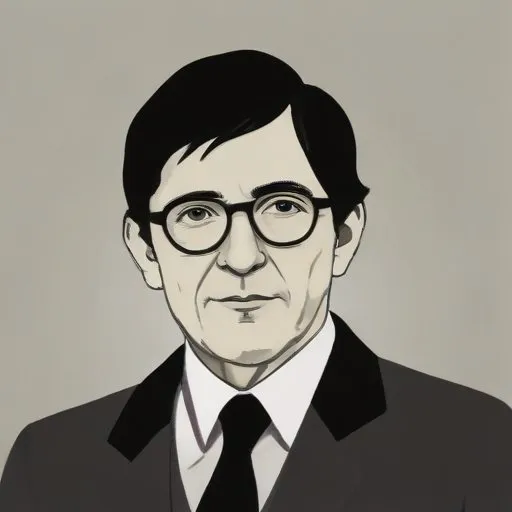
Developed the Federal Reserve's system of monetary policy and is known for his work on taxation and fiscal policy. He's also credited with creating the payroll tax withholding system.
Beardsley Ruml, a renowned American statistician, economist, and philanthropist, is best known for revolutionizing the U.S. tax system with his pioneering concept of withholding income taxes. His innovative idea, proposed in 1942, transformed the way Americans pay their taxes, making it more efficient and convenient for both citizens and the government.
Ruml was born on November 5, 1894, in Cedar Rapids, Iowa, to Wentzle Ruml, a country doctor, and Salome Beardsley Ruml, a hospital superintendent. He received his BA from Dartmouth College in 1915 and a Ph.D. in psychology and education from the University of Chicago in 1917.
Ruml's remarkable career spanned multiple fields, including academia, business, and government. As a statistician, he helped design aptitude and intelligence tests for the U.S. Army in 1918. Later, he directed the fellowship program of the Laura Spelman Rockefeller Memorial Fund from 1922 to 1929, focusing on quantitative social and behavioral science.
Ruml's most notable contribution came in 1942 when he proposed the idea of withholding income taxes through a "pay-as-you-go" system. This innovative approach involved collecting taxes throughout the year, rather than in a lump sum, making it more manageable for citizens and reducing the burden on the government. In 1943, Congress adopted the employer withholding system, revolutionizing the U.S. tax system.
Ruml's work had a profound impact on modern taxation, making it more efficient, convenient, and accessible. His ideas continue to shape the U.S. tax system, influencing generations of policymakers and economists. Ruml's legacy extends beyond taxation, with his contributions to quantitative research, education, and philanthropy leaving a lasting mark on American society.
Ruml married Lois Treadwell on August 28, 1917, and they had three children together. Despite his many accomplishments, Ruml remained humble and dedicated to his work, leaving behind a rich legacy that continues to inspire and influence future generations.
Born in 1883
A pioneering economist who revolutionized modern economic theory with his groundbreaking ideas on government intervention and fiscal policy, shaping global economic policies.
Born in 1912
A Nobel Prize-winning economist who championed free market capitalism and limited government intervention, known for his advocacy of laissez-faire economics and influential writings on monetary policy.
Born in 1899
Austrian economist and philosopher who championed free market capitalism and limited government intervention, warning of the dangers of socialism and totalitarianism. His work influenced economic policy and shaped modern libertarian thought.
Born in 1818
A 19th-century philosopher who developed the theory of communism, arguing that capitalism would eventually be replaced by a socialist society. He's known for his critique of capitalism and the concept of class struggle.
61 Years Old
A lawyer and politician who served in the U.S. House of Representatives from 1987 to 1997, known for his moderate Republican views and advocacy for environmental issues.
Born in 1772
A British economist and politician who developed the concept of comparative advantage, which revolutionized international trade and shaped modern economic theory.
Born in 1883
A pioneer of innovation theory, he's credited with coining the term "creative destruction" to describe how new technologies and businesses disrupt existing ones, driving economic growth and progress.
Born in 1892
A prominent economist and academic who made significant contributions to the field of international trade and economics, particularly in the areas of trade policy and economic development.
