


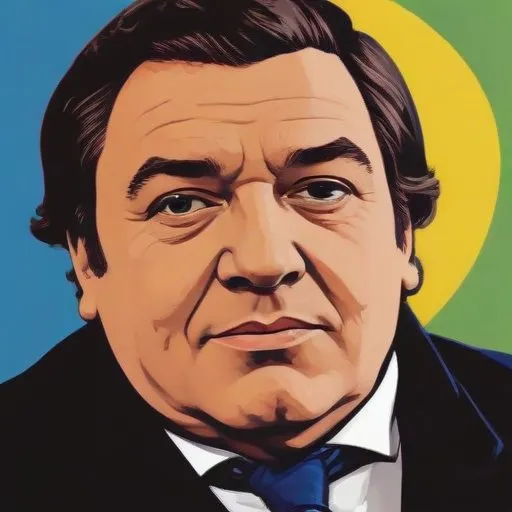
French author of historical novels that vividly depict rural life and social change in 20th-century France, often exploring themes of love, family, and social justice.
Bernard Clavel, a renowned French writer, was known for his simplistic yet powerful writing style that highlighted the struggles of ordinary people and advocated for humanist values. Through his works, he questioned the brutality of war and violence, leaving an indelible mark on French literature.
Clavel was born on May 29, 1923, in Lons-le-Saunier, France, to a humble family. He had to abandon his education at a young age to support his family, taking up various jobs, including working as a pastry cook apprentice at 14. It wasn't until the 1950s that he began his journalism career, which eventually led him to pursue writing full-time in 1964.
Clavel's literary career spanned over four decades, during which he wrote numerous novels, series, and works for young people. Some of his notable works include La Grande Patience (The Great Patience), a four-volume series, and Les Colonnes du ciel (Heavens Pillars), a five-volume series. His writing style was characterized by simplicity, sensitivity, and a focus on the struggles of ordinary people.
Clavel's contributions to French literature were recognized with several awards and honors. He received the prestigious Prix Goncourt in 1968 for his novel Les Fruits de l'hiver (The Fruits of Winter). He was also a member of the Académie Goncourt from 1971 to 1977 and later became a part of the Coordination française pour la Décennie de la culture de paix et de non-violence (French Coordination for the Decade of Culture of Peace and Non-Violence).
Several of Clavel's works were adapted into films, including Gods Thunder (1966) and Le Voyage du père (1966), both directed by Denys de La Patellière. These adaptations further cemented his reputation as a powerful storyteller.
Clavel's legacy extends beyond his literary contributions. He was a vocal advocate for humanist values, non-violence, and peace. Through his writing, he inspired generations to question the status quo and strive for a more compassionate world. He passed away on October 5, 2010, in Grenoble, France, leaving behind a rich literary heritage.
Born in 1905
Existentialist philosopher and playwright who argued that humans have complete freedom to choose their actions and create their own meaning in life, influencing modern thought on morality and individual responsibility.
Born in 1908
A pioneering feminist philosopher who wrote extensively on ethics, politics, and gender, famously arguing that "one is not born, but rather becomes, a woman."
Born in 1913
A French novelist, philosopher, and journalist who wrote influential works like "The Stranger" and "The Plague", exploring absurdism and the human condition.
Born in 1885
A French literary giant, celebrated for his novels and plays that probed the human condition, morality, and the complexities of faith. His works are known for their psychological depth and lyrical prose.
Born in 1901
A French historian, theorist, and author who wrote influential novels and essays on art, politics, and human condition, exploring the complexities of modern society.
Born in 1894
A French physician and writer, known for his novels that explored the human condition, often with dark humor and satire, influencing 20th-century literature. His works are considered classics of modernist fiction.
Born in 1910
A renowned French playwright and screenwriter, known for his poignant and thought-provoking works that often explored the human condition, morality, and the absurdity of life.
Born in 1911
A renowned French historian and author, best known for his meticulously researched biographies of famous figures like Tolstoy, Dostoevsky, and Catherine the Great. His works offer intimate portraits of these iconic individuals, shedding light on their personal lives and creative processes.
