


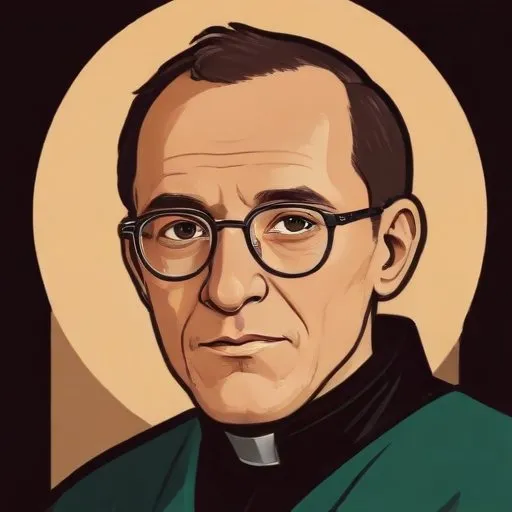
An Italian Jesuit priest who served as a spiritual director and confessor, known for his extraordinary virtues and miracles attributed to him after his death.
Bernardino Realino is revered as a saint of the Catholic Church, known for his unwavering commitment to the poor and his exceptional preaching abilities, earning him the title of the Apostle of Lecce.
Throughout his life, Realino dedicated himself to serving the people of Naples and Lecce, leaving an indelible mark on the lives of those he touched.
Born in Carpi on December 1, 1530, to a noble family, Realino's father was a collaborator of Cardinal Cristoforo Madruzzo.
Through his family's influence, Realino secured various positions in law and public service, including:
Realino gained recognition for his legal brilliance and learning, earning him a reputation as an honest and capable administrator.
In Naples, a Jesuit preacher's sermon profoundly moved Realino, leading him to seek out the priest and confess his doubts.
The priest, recognizing Realino's inclination towards the religious life, invited him to participate in a week-long spiritual retreat with the Jesuits in August 1564.
This retreat marked a turning point in Realino's life, as he discerned his call to join the Jesuit order.
In 1896, Pope Leo XIII beatified Realino, and later, in 1947, Pope Pius XII canonized him as a saint of the Catholic Church.
"The heart of the Christian is a pilgrim's heart, always ready to set out on new paths, to find new ways to reach the Lord."
"The poor are the Lord's treasure, and we must adore them as such."
Realino's dedication to the poor and his commitment to social justice continue to inspire modern-day initiatives and charitable organizations.
His legacy serves as a reminder of the importance of serving the marginalized and vulnerable, encouraging individuals to embark on their own path of devotion and service.
Born in 1491
Founded the Jesuit Order, a Catholic religious organization known for its missionary and educational work, and developed the Spiritual Exercises, a guide for spiritual growth and discernment.
Born in 1506
Co-founder of the Society of Jesus, a Catholic religious order, known for his missionary work in Asia, especially in India and Japan, and for his role in the Counter-Reformation. He's revered for his tireless efforts to spread Christianity and his compassion for the poor and marginalized.
Born in 1521
A 16th-century Jesuit priest and doctor of the church, he played a crucial role in counter-reformation efforts, and his writings helped shape Catholic theology.
Born in 1542
A 16th-century theologian and doctor of the Church, known for his writings on spirituality and his role in shaping Catholic doctrine. He was a key figure in the Counter-Reformation, defending Catholicism against Protestantism.
Born in 1568
This 16th-century Jesuit saint is revered for his selfless devotion to caring for plague victims, ultimately sacrificing his life to save others. He's a powerful symbol of compassion and charity.
Born in 1550
A 16th-century Jesuit novice who died at 18, known for his strong devotion and miraculous healings, becoming a patron saint of youth and Poland.
Born in 1599
A 17th-century Belgian Jesuit scholastic and saint, known for his piety, kindness, and devotion to his studies, becoming a model for young Jesuits. He's revered for his heroic virtues and miracles attributed to his intercession.
