


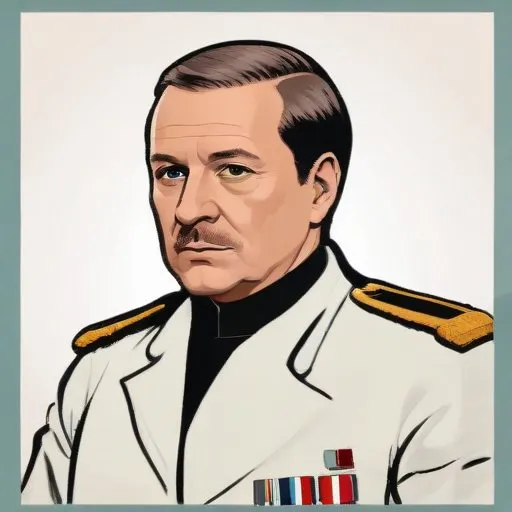
A 19th-century German general, surgeon, and academic who made significant contributions to the development of modern surgery, particularly in the fields of orthopedics and plastic surgery.
Bernhard von Langenbeck, a renowned German surgeon, is best known for developing the Langenbeck amputation, a groundbreaking surgical technique that revolutionized the field of military surgery. He is also credited with founding Langenbeck's Archives of Surgery, a prestigious medical journal that remains a cornerstone of surgical research to this day.
Born on November 9, 1810, in Padingbüttel, Germany, Bernhard von Langenbeck received his medical education at the University of Göttingen. His uncle, Konrad Johann Martin Langenbeck, a prominent surgeon, played a significant role in shaping his medical career. Bernhard earned his doctorate in 1835 with a thesis on the structure of the retina, laying the foundation for his future contributions to the field of surgery.
Bernhard von Langenbeck's illustrious career spanned over four decades, during which he made significant contributions to the field of surgery. He served as a professor of surgery and director of Friedrich's Hospital in Kiel, and later became the director of the Clinical Institute for Surgery and Ophthalmology at the Charité in Berlin. His expertise in military surgery earned him the position of general field surgeon of the army, and he served in several wars, including the First Schleswig War, the Second Schleswig War, the Austro-Prussian War, and the Franco-Prussian War.
Bernhard von Langenbeck's most notable contribution to surgery is the development of the Langenbeck amputation, a technique that involved the removal of a limb at the joint, rather than mid-bone. This innovation significantly reduced mortality rates and improved the overall outcome for soldiers suffering from severe injuries. His work in this area earned him international recognition and acclaim.
Bernhard von Langenbeck's impact on modern society extends beyond the realm of surgery. His work in military medicine paved the way for the development of modern emergency medicine and trauma care. His contributions to the field of surgery have saved countless lives and continue to inspire new generations of medical professionals.
Bernhard von Langenbeck was a strong advocate for the importance of compassionate care in medicine. He believed that surgeons had a moral obligation to prioritize the well-being of their patients and to use their skills to alleviate suffering. His humanitarian approach to medicine has inspired countless medical professionals to adopt a similar ethos.
Bernhard von Langenbeck's legacy extends far beyond his contributions to the field of surgery. He was a true pioneer, whose work continues to inspire new generations of medical professionals. His commitment to compassionate care and his dedication to improving the lives of others serve as a shining example of the highest ideals of the medical profession.
In conclusion, Bernhard von Langenbeck's remarkable life and career serve as a testament to the power of innovation, compassion, and dedication. His contributions to the field of surgery and military medicine continue to have a profound impact on modern society, making him one of the most significant figures in the history of medicine.
Born in 1821
A pioneer in modern medicine, he founded the field of social medicine, emphasizing the importance of social and environmental factors on health, and made significant contributions to cellular pathology.
Born in 1777
A pioneer in mathematics and physics, he made major contributions to number theory, algebra, and electromagnetism, shaping our understanding of the natural world.
Born in 1809
A renowned 19th-century musician who masterfully blended classical and romantic styles, creating iconic works like the "Wedding March" and "Elijah" oratorio. His compositions continue to inspire and influence generations of artists.
Born in 1803
Developed groundbreaking theories on organic chemistry and agriculture, revolutionizing farming practices and earning the title "Father of Fertilizers".
Born in 1800
German chemist and academic who synthesized urea, debunking the theory of vitalism, and made significant contributions to organic chemistry. He is considered one of the founders of modern organic chemistry.
Born in 1843
A pioneering microbiologist and physician who discovered the bacteria that cause tuberculosis, cholera, and anthrax, revolutionizing the field of microbiology and saving countless lives.
