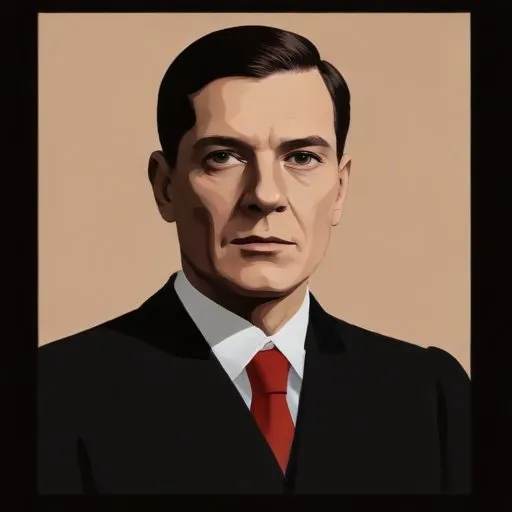
Bertold Schenk Graf von Stauffenberg: The Brave Aristocrat Behind the Foiled Assassination of Adolf Hitler
The Fateful Day: July 20, 1944
Berthold Schenk Graf von Stauffenberg is famously known for his crucial role in the daring plot to assassinate
Adolf Hitler on July 20, 1944, alongside his brother, Colonel Claus Schenk Graf von Stauffenberg. This audacious attempt on the Führer's life, although ultimately unsuccessful, cemented Berthold's place in history as a courageous symbol of resistance against the Nazi regime.
A Life of Distinction and Tradition
Born on March 15, 1905, into an esteemed aristocratic South German Catholic family, Berthold was the oldest of three brothers. His parents, Alfred Schenk Graf von Stauffenberg and Caroline von Üxküll-Gyllenband, were part of the nobility, with his father serving as the last Oberhofmarschall of the Kingdom of Württemberg. Berthold's family tree boasted notable ancestors, including August von Gneisenau, a prominent Prussian military leader.
Youth and Education
Berthold's formative years were immersed in the German Youth movement, where he and his brothers were members of the Neupfadfinder, a German Scout association. He pursued higher education in law at the University of Tübingen, later becoming an assistant professor of international law at the Kaiser Wilhelm Institute of Foreign and International Law in 1927.
Influence of Stefan George and the German Resistance
Berthold's life took a profound turn when he and his brother Claus were introduced to the mystical poet
Stefan George's circle by Albrecht von Blumenthal. This exposure to George's symbolism and mysticism had a significant impact on Berthold's philosophical outlook, ultimately influencing his involvement in the German Resistance against National Socialism.
Career and Family Life
Berthold's professional career saw him working at The Hague from 1930 to 1932, followed by his marriage to Maria-Classen in 1936. The couple had two children, Alfred Claus Maria Schenk Graf von Stauffenberg (1937-1987) and Elisabeth Caroline Margarete Maria Schenk Gräfin von Stauffenberg (b. 1939). Berthold served in the German Navy as a staff judge and advisor for international law during World War II.
The 20 July Conspiracy
Berthold's apartment in Berlin-Wannsee became a clandestine meeting place for the 20 July conspirators, including his brother Claus and cousin Peter Yorck von Wartenburg. The failed assassination attempt on Hitler's life led to Berthold's arrest, trial, and eventual execution by the Nazi regime on August 10, 1944.
Legacy and Impact
Berthold Schenk Graf von Stauffenberg's bravery and ultimate sacrifice have inspired generations, cementing his place as a remarkable figure in German history. His resistance against the Nazi regime serves as a testament to the power of courage and conviction in the face of overwhelming oppression. Berthold's story continues to captivate and motivate people around the world, ensuring that his legacy endures long after his untimely departure.
FAQ
What was Berthold Schenk Graf von Stauffenbergs role in the German resistance?
Berthold Schenk Graf von Stauffenberg was a key figure in the German resistance movement against the Nazi regime. He was a member of theircle of conspirators who plotted to assassinate Adolf Hitler in 1944.
What was Berthold Schenk Graf von Stauffenbergs relationship with his brother?
Berthold Schenk Graf von Stauffenberg was the brother of Claus Schenk Graf von Stauffenberg, who carried out the failed assassination attempt on Hitler in 1944. The two brothers were close and shared a strong sense of opposition to the Nazi regime.
What was Berthold Schenk Graf von Stauffenbergs education and training?
Berthold Schenk Graf von Stauffenberg studied law and economics at the University of Munich and later attended the Academy for German Law in Berlin. He went on to pursue a career as a lawyer and judge.
What was Berthold Schenk Graf von Stauffenbergs role in the post-war era?
After the war, Berthold Schenk Graf von Stauffenberg was involved in the denazification process and worked to rebuild the German legal system. He later became a prominent figure in the Christian Democratic Union (CDU) and served as a judge and politician.
What was Berthold Schenk Graf von Stauffenbergs legacy?
Berthold Schenk Graf von Stauffenbergs legacy is that of a brave and principled individual who risked his life to oppose the Nazi regime. His involvement in the resistance movement and his work in the post-war era helped to shape modern Germany and promote democracy and human rights.