


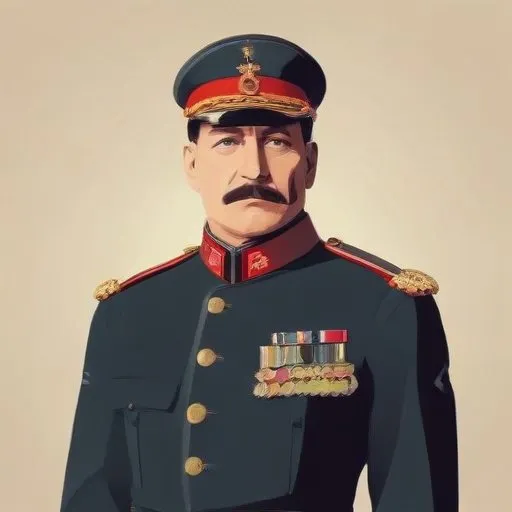
A German lieutenant who attempted to assassinate Adolf Hitler in the July 20 plot, and was executed for his role in the failed coup. He was a key figure in the German Resistance against the Nazi regime.
Werner von Haeften, a German army officer, is best known for his role in the 20 July plot, a daring attempt to assassinate Adolf Hitler and overthrow the Nazi regime. On that fateful day in 1944, Haeften risked everything to stand up against tyranny, ultimately giving his life for a cause he believed in.
Born on October 9, 1908, in Berlin, Haeften came from a family of proud military traditions. His father, Hans von Haeften, was an army officer and President of the Reichsarchiv (German National Archives). Werner studied law in Berlin before working at a bank in Hamburg.
When World War II broke out, Haeften joined the German Army, serving on the Eastern Front. In 1943, after recovering from a severe wound, he became adjutant to Oberst Claus Schenk Graf von Stauffenberg, a leading figure in the German Resistance. This fateful meeting would change the course of Haeften's life.
On July 20, 1944, Haeften accompanied Stauffenberg to the Wolf's Lair, Hitler's Eastern Front headquarters. Stauffenberg planted a briefcase bomb in a conference room, but unbeknownst to them, Hitler survived the explosion. The two men rushed back to Berlin, where they attempted to launch a coup d'état, which ultimately failed.
As the plot unraveled, Haeften, along with Stauffenberg, General Friedrich Olbricht, and Oberst Albrecht Mertz von Quirnheim, was arrested and sentenced to death by General Friedrich Fromm. In a final act of loyalty and defiance, Haeften placed himself in the path of the bullets meant for Stauffenberg, sacrificing his own life to protect his friend and comrade.
Haeften's bravery and selflessness inspired many Germans to resist the Nazi regime. His actions, along with those of the other conspirators, served as a beacon of hope for a nation trapped under Hitler's tyranny.
Today, Werner von Haeften is remembered as a hero who stood up against oppression, sacrificing everything for a chance to bring down the Nazi regime. His story serves as a powerful reminder of the importance of courage, loyalty, and moral conviction in the face of overwhelming evil.
In the end, Werner von Haeften's ultimate sacrifice will always be remembered as a testament to the power of human courage and conviction in the face of adversity.
Born in 1907
A German colonel who led the failed assassination attempt against Adolf Hitler in 1944, known as Operation Valkyrie, and is celebrated as a hero for his bravery in resisting the Nazi regime.
Born in 1891
A renowned World War II military strategist, known for leading the Afrika Korps and earning the respect of both allies and enemies with his tactical genius.
Born in 1880
A German general who served as Chief of the General Staff of the German Army during the early years of World War II, known for his opposition to Hitler's aggressive war plans. He played a key role in the July 20 plot to assassinate Hitler.
Born in 1888
A pioneering tank commander who revolutionized modern warfare with his innovative blitzkrieg tactics, earning him the nickname "Father of the Panzerwaffe".
Born in 1876
A German naval leader who played a key role in the Kriegsmarine during World War II, overseeing the German U-boat fleet and naval operations. He was a close advisor to Adolf Hitler and implemented the German naval strategy during the war.
Born in 1891
A German naval commander who led the U-boat fleet during World War II and briefly served as President of Germany after Hitler's death, known for his role in the war and its aftermath.
