


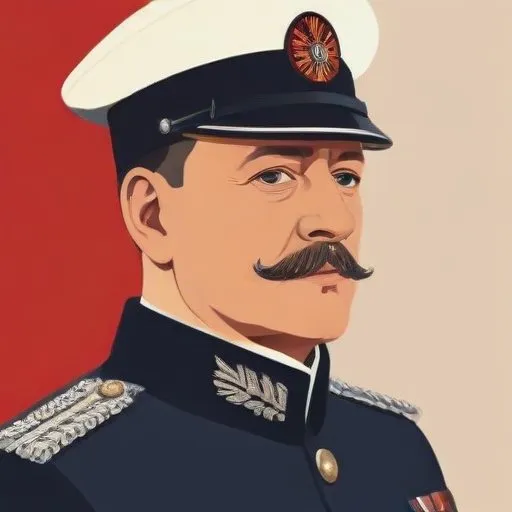
A German colonel who played a key role in the July 20 plot to assassinate Adolf Hitler in 1944, and is remembered for his bravery in the face of Nazi tyranny.
Albrecht Mertz von Quirnheim was a German Army colonel who played a pivotal role in the 20 July plot, a daring attempt to assassinate Adolf Hitler in 1944. As a key figure in the German resistance movement, Quirnheim risked everything to stand up against the brutal Nazi regime, ultimately sacrificing his life in the process.
Born on March 25, 1905, in Munich, Quirnheim was the son of Hermann Mertz von Quirnheim, a captain on the Bavarian General Staff. His family moved to Potsdam in Prussia when his father became the head of the Imperial Archive (Reichsarchiv). Quirnheim's childhood was marked by friendships with future fellow conspirators, including Hans-Jürgen von Blumenthal and the brothers Werner and Hans Bernd von Haeften.
Quirnheim joined the Reichswehr in 1923, following his Abitur. He became acquainted with Claus von Stauffenberg, the key conspirator in the 20 July plot, in 1925. However, it was not until 1943 that Quirnheim was introduced to the circle of conspirators by Blumenthal. As the Second World War broke out, Quirnheim was appointed a Staff Officer at the General Staff's organisational division. Initially, he welcomed Hitler's seizure of power, but as he became more aware of the government's brutality, he began to distance himself from the regime.
In 1941, Quirnheim's support for more humane treatment of civilians in Nazi-occupied Eastern Europe sparked a dispute between Alfred Rosenberg, the Reich Minister for the Occupied Eastern Territories, and Erich Koch, Reich Commissar for Ukraine. This marked a turning point in Quirnheim's involvement with the resistance movement. In 1942, he was promoted to lieutenant colonel and became the Head of Staff of the 24th Army Corps at the Eastern Front, where he strengthened his ties to the resistance through his brother-in-law Wilhelm Dieckmann.
By September 1943, Quirnheim had become deeply involved in the plot to assassinate Hitler. As a colonel, he played a crucial role in the conspiracy, working closely with Stauffenberg and other key figures. On July 20, 1944, the day of the fateful attempt on Hitler's life, Quirnheim was at the Bendlerblock, the headquarters of the German resistance movement, where he was arrested and eventually executed.
Albrecht Mertz von Quirnheim's bravery and sacrifice have inspired generations. His involvement in the 20 July plot serves as a powerful reminder of the importance of standing up against tyranny and oppression. Quirnheim's story is a testament to the human spirit's capacity for courage, loyalty, and selflessness in the face of overwhelming adversity.
Quirnheim's story serves as a beacon of hope and inspiration, reminding us of the importance of standing up for what is right, even in the face of overwhelming danger. His bravery and sacrifice will never be forgotten.
Born in 1880
A German general who served as Chief of the General Staff of the German Army during the early years of World War II, known for his opposition to Hitler's aggressive war plans. He played a key role in the July 20 plot to assassinate Hitler.
Born in 1881
A high-ranking German officer who played a key role in the July 20 plot to assassinate Adolf Hitler, and was subsequently executed for treason. He was a strong opponent of the Nazi regime and its atrocities.
Born in 1907
A German colonel who led the failed assassination attempt against Adolf Hitler in 1944, known as Operation Valkyrie, and is celebrated as a hero for his bravery in resisting the Nazi regime.
Born in 1900
Leading the SS and Gestapo, he oversaw the Nazi regime's brutal security apparatus and implemented the "Final Solution," orchestrating the genocide of six million Jews during World War II.
Born in 1889
The dictator of Nazi Germany, responsible for the genocide of six million Jews and millions of other people during World War II, and infamous for his extreme nationalist and anti-Semitic ideology.
Born in 1903
Austrian-German lawyer and general who served as the highest-ranking leader of the Nazi police forces, responsible for overseeing the Gestapo, SS, and concentration camps during World War II. He was a key figure in the Holocaust and other atrocities committed by the Nazi regime.
