


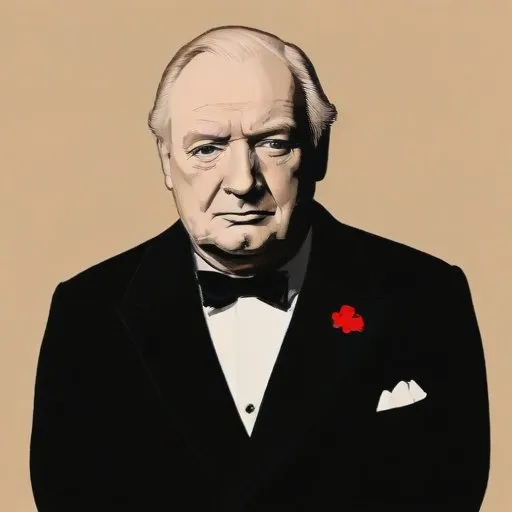
A versatile performer who appeared in over 125 films and Broadway shows, known for his distinctive voice and authoritative presence.
Berton Churchill was a Canadian-born actor who made a lasting impact on the film industry, appearing in over 125 films during his career, with a record-breaking 34 films in 1932 alone. He was known for his versatility, playing a wide range of roles, often typecast as the stern, pompous, or authoritative figure.
Born on December 9, 1876, in Toronto, Ontario, Churchill grew up in a family that moved to New York City, where he graduated from high school. His early interest in theater led him to participate in the William J. Florence Dramatic Society in Jersey City, and he later studied law at night. However, his passion for acting prevailed, and he began performing in stock companies as early as 1903.
Churchill's breakthrough came when E.F. Albee discovered him performing in Boston, leading to his inclusion in Albee's summer stock company at Pawtucket. He continued to perform almost every summer for over two decades, honing his craft and eventually making his Broadway debut in The Barber of New Orleans in 1909. His last Broadway performance was in Five Star Final in 1930.
As one of the earliest members of Actors' Equity, Churchill sat on the union's council and played a key role in the 1919 Equity strike, leading the New York headquarters during the strike. His dedication to the actors' union was a testament to his commitment to the craft.
In 1929, Churchill made the transition to film, capitalizing on the advent of sound in cinema. He moved to Hollywood, California, where he quickly established himself as a sought-after character actor, often playing stern, pompous, or authoritative figures. He worked with some of the greatest directors of the time, including Otto Preminger, John Ford, and Frank Capra, and shared the screen with legendary stars like Bette Davis and Jeanette MacDonald.
Berton Churchill's remarkable career spanned over four decades, with his film credits reading like a who's who of Hollywood's Golden Age. He was a true character actor, bringing depth and nuance to every role he played. His influence can be seen in the many actors who followed in his footsteps, and his legacy continues to inspire new generations of actors and filmmakers.
Churchill's contributions to the film industry were recognized with a star on the Hollywood Walk of Fame, a testament to his enduring legacy.
Berton Churchill passed away on October 10, 1940, leaving behind a body of work that continues to inspire and delight audiences to this day.
Born in 1886
A legendary performer who charmed audiences with his powerful voice and charismatic stage presence, starring in the first "talkie" film, The Jazz Singer, and popularizing jazz and blues music.
Born in 1892
A popular entertainer of the 1920s-1940s, known for his charismatic stage presence, catchy songs, and comedic timing, starring in films, Broadway shows, and radio programs.
Born in 1878
A legendary entertainer who wrote and performed iconic patriotic songs, including "You're a Grand Old Flag" and "Over There," and was a pioneer of American musical theater.
Born in 1888
A legendary composer and pianist who wrote over 1,500 songs, including iconic American standards like "God Bless America" and "White Christmas", shaping the Great American Songbook.
Born in 1867
Pioneering Broadway producer and director behind the iconic Ziegfeld Follies, showcasing lavish revues featuring top performers and setting the standard for American entertainment.
Born in 1880
A legendary comedian and actor who brought laughter to millions with his witty one-liners, sarcastic humor, and iconic film roles, leaving a lasting impact on American comedy.
65 Years Old
A renowned guitarist, songwriter, and producer, he is most known for his work with the psychedelic rock band Ozric Tentacles, creating a unique blend of space rock and electronic music.
Born in 1899
A legendary performer who dazzled audiences with his smooth dance moves, charming on-screen presence, and iconic song-and-dance numbers in classic Hollywood musicals.
