


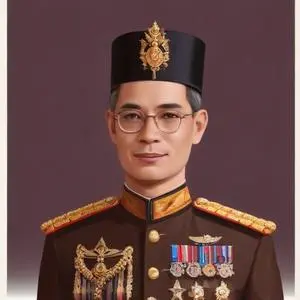
The monarch who ruled Thailand for over 70 years, earning reverence for his humanitarian work, economic development, and cultural preservation. He was a unifying figure, stabilizing the country during turbulent times.
Known as King Bhumibol Adulyadej the Great, he was the ninth king of Thailand from the Chakri dynasty, titled Rama IX, reigning from 1946 until his death in 2016. His remarkable 70-year reign makes him the longest-reigning monarch in Thai history, the longest-reigning Asian sovereign, and the third-longest verified reign of any monarch of a sovereign state in history.
Born on December 5, 1927, in Cambridge, Massachusetts, USA, Bhumibol spent his early life in Switzerland, where his family had settled after the 1932 Siamese revolution. He ascended to the throne in June 1946, following the mysterious death of his brother King Ananda Mahidol Rama VIII.
During his reign, King Bhumibol oversaw Thailand's transformation from an agricultural society to a modern, industrialized nation. He played a crucial role in guiding the country through the Cold War as an important US ally, and his leadership coincided with the Thai economic boom of the late 20th century. Between 1985 and 1994, Thailand was the world's fastest-growing economy, earning the nickname "the next Asian Tiger."
King Bhumibol was deeply devoted to his people and worked tirelessly to improve their lives. He established the Crown Property Bureau, which managed the royal assets and investments, using the revenue generated to benefit the Thai people. His philanthropic efforts focused on education, healthcare, and rural development, earning him the affection and respect of the Thai people.
The king was a strong advocate for the sufficiency economy philosophy, which emphasized self-sufficiency, moderation, and resilience. He believed that Thailand's development should be grounded in its own cultural and economic strengths, rather than solely relying on external influences.
Forbes estimated King Bhumibol's fortune, including property and investments managed by the Crown Property Bureau, to be around $30 billion in 2010. He topped the magazine's list of the world's richest royals from 2008 to 2013.
King Bhumibol's reign saw the emergence of a Thai urban middle class and the growth of mass political participation in Thai electoral politics. He played a crucial role in shaping Thailand's modern identity and fostering national unity.
King Bhumibol Adulyadej's remarkable life and reign have left an indelible mark on Thailand's history, politics, and culture. He will be remembered as a champion of the Thai people, a devoted leader, and a symbol of national unity and stability.
As the longest-reigning monarch in Thai history, King Bhumibol's legacy will continue to inspire and guide future generations, ensuring his impact on Thailand will be felt for years to come.
Born in 1918
A South African lawyer and politician who fought against apartheid, becoming the country's first black president and a symbol of racial reconciliation, earning a Nobel Peace Prize. He's a beacon of hope and freedom.
Born in 1923
The founder of modern Singapore, who transformed the country from a poor post-colonial state to a thriving economic powerhouse through visionary leadership and pragmatic policies. He is revered for his role in shaping Singapore's identity and prosperity.
Born in 1925
A Malaysian physician-turned-politician who served as Prime Minister twice, implementing economic reforms and promoting national unity. He's known for his strong leadership and nation-building efforts.
Born in 1921
The authoritarian leader who ruled Indonesia for three decades, known for his iron-fisted governance and economic development, but also accused of human rights abuses and corruption.
Born in 1926
The Cuban revolutionary who led the country from 1959 to 2008, implementing socialist policies and defying US opposition, becoming an iconic figure in modern history.
