


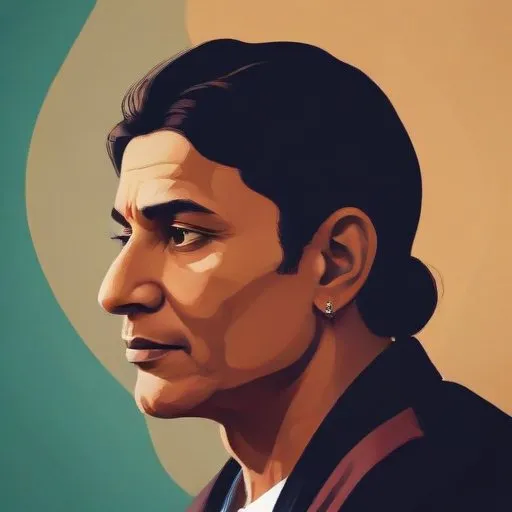
A renowned Bengali poet, critic, and academic, celebrated for his unique blend of modernist and traditional styles, and his influential role in shaping Indian literary criticism.
Bishnu Dey was a trailblazing Bengali poet, writer, essayist, academician, art appreciator, and connoisseur who revolutionized modern Bengali poetry in the era of modernism and postmodernism. Known for his unique style that blended Indian traditions with Western influences, Dey's works had a profound impact on the literary world.
Born on July 18, 1909, in Bengal, India, Dey grew up in an era of rapid social change and nationalist movements. His early life was marked by a deep appreciation for Indian classical music and literature, which would later influence his writing style.
Dey's literary career began in the 1930s, a time when Bengali poetry was undergoing a significant transformation. He, along with other prominent writers like Jibanananda Das and Buddhadeb Basu, sought to create a new style of poetry that was both modern and rooted in Indian traditions.
Dey's seminal work, Smriti, is considered a masterpiece of modern Bengali poetry. The collection of poems showcased his unique style, which blended Indian folklore with Western literary influences.
In addition to his poetry, Dey was a prolific essayist and writer. He wrote extensively on Indian classical music, art, and literature, and his works introduced readers to Western classical music, mythology, and art.
Dey was also a champion of progressive ideas and was deeply drawn to the social analysis of Marxism. His writing reflected his commitment to social justice and his critique of societal ills.
Dey's contributions to Bengali literature were recognized with numerous awards and honors. He was awarded the Rabindra Puraskar, one of the highest literary honors in Bengal, for his collection of poems, In the Sun and the Rain.
Dey's influence on modern Bengali literature cannot be overstated. He, along with his contemporaries, created a new style of poetry that was both modern and rooted in Indian traditions. His works inspired a generation of writers and poets, and his legacy continues to be felt in Bengali literature today.
Dey's personal life was marked by a deep commitment to social justice and progressive ideas. His philosophy was rooted in his belief in the power of literature to bring about social change. He was known for his humility and simplicity, and his life was a testament to his commitment to his craft.
Bishnu Dey's legacy is a testament to the power of literature to bring about social change. His works continue to inspire readers and writers today, and his commitment to progressive ideas remains a beacon of hope for a more just and equitable society.
Born in 1861
A Bengali polymath who wrote extensively on love, nature, and humanity, creating a unique blend of Indian and Western literary styles, and was the first non-European to win the Nobel Prize in Literature.
Born in 1876
A renowned Bengali novelist celebrated for his poignant and thought-provoking works that explored the complexities of Indian society, particularly the lives of women and the rural poor.
Born in 1838
A pioneering Bengali writer and poet who played a significant role in shaping Indian literature, known for his iconic novel "Anandamath" that inspired India's freedom movement.
Born in 1908
A renowned Bengali writer, poet, and playwright, celebrated for his contributions to Indian literature, particularly in the genre of magic realism. His works often explored the human condition, blending fantasy and reality.
Born in 1887
A renowned Bengali writer, humorist, and playwright, celebrated for his whimsical and nonsensical creations, blending fantasy and satire to entertain and critique society.
Born in 1899
A Bengali poet and writer who explored themes of love, nature, and the human condition through his unique and innovative style, leaving a lasting impact on Bengali literature.
