


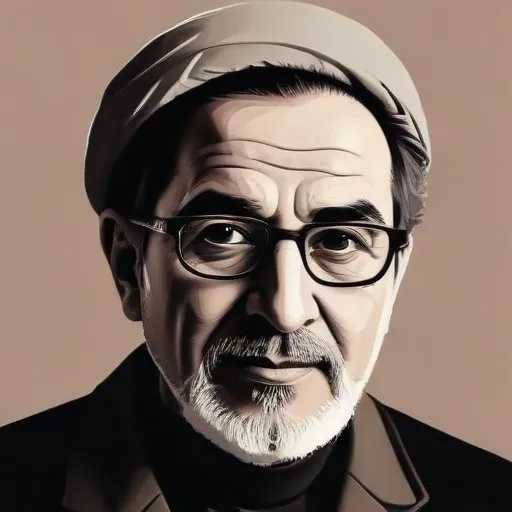
A prominent Iranian writer and social reformer, known for his influential novels and short stories that explored themes of social justice, politics, and human rights. His works often critiqued the ruling elite and advocated for democracy and freedom.
Bozorg Alavi, a renowned Iranian writer, novelist, and political intellectual, left an indelible mark on his country's literary landscape. His influential works, often infused with psychological and philosophical insights, continue to captivate readers and inspire writers to this day.
Born Seyyed Mojtaba Alavi on February 2, 1904, in Tehran, Iran, Bozorg Alavi was destined to make a significant impact on his country's cultural and intellectual heritage. His father, Seyyed Abol Hassan Alavi, was a prominent figure in the 1906 Constitutional Revolution, and his paternal grandfather, Seyyed Mohammad Sarraf, was a wealthy banker and merchant who played a key role in the country's constitutional movement.
Alavi's early life was marked by a deep passion for literature and politics. He was drawn to the works of prominent writers such as Friedrich Nietzsche and Sigmund Freud, whose ideas greatly influenced his writing style and philosophical outlook. In the 1940s, he became a founding member of the communist Tudeh Party of Iran, a decision that would shape his life and career in the years to come.
One of Alavi's most celebrated works is his novel Cheshmhyash Her Eyes, published in 1952. This masterpiece of Iranian literature was banned soon after its release, but its impact on the country's literary landscape was already cemented. Her Eyes is a poignant exploration of human relationships, love, and the complexities of the human psyche.
Following the 1953 coup against Premier Mohammad Mossadegh, Alavi was forced into exile in East Germany, where he spent the remainder of his life. During this period, he continued to write prolifically, producing works that reflected his deep understanding of human nature and the complexities of Iranian society.
Bozorg Alavi's contributions to Iranian literature are immeasurable. His works have inspired generations of writers and intellectuals, and his influence can be seen in the country's modernization movement. His novels, such as Chamedan, Mirza, Fifty Three Persons, and Gilemard, are still studied in Iranian high school textbooks.
Alavi's close friendship with Sadegh Hedayat, another prominent Iranian writer, led to the creation of the "Sabe" literary group in Paris. This group played a significant role in shaping the country's literary landscape and promoting modernist ideals.
Bozorg Alavi's literary achievements were recognized with numerous awards and honors. He was awarded the prestigious Persian Literary Prize in 1969, a testament to his enduring impact on Iranian literature.
Alavi returned to Tehran after the 1979 revolution, but his stay was short-lived. He eventually returned to Germany, where he continued to write until his passing on February 18, 1997.
Throughout his life, Bozorg Alavi remained committed to his art, his politics, and his people. His legacy continues to inspire generations of writers, intellectuals, and activists, cementing his place as one of Iran's most beloved and respected literary figures.
Born in 1921
A pioneering female writer and educator who broke literary ground with her Persian novels and short stories, exploring themes of social justice and women's rights.
Born in 1903
A pioneering Iranian writer and translator who blended Persian folklore with European modernism, creating a unique literary style that explored themes of identity, alienation, and social critique.
85 Years Old
Renowned Iranian literary figure, celebrated for his poignant and thought-provoking novels that delve into the human condition, exploring themes of love, identity, and social justice.
