


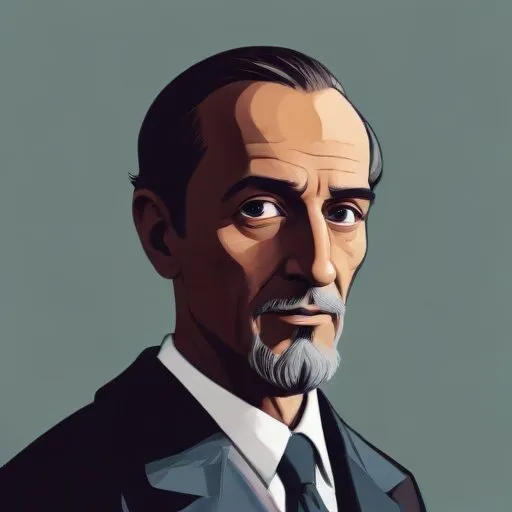
A prominent figure in British broadcasting and education, known for his philosophical debates and popularizing complex ideas through radio and television programs.
Cyril Edwin Mitchinson Joad, affectionately known as C. E. M. Joad, was a renowned English philosopher, author, teacher, and broadcasting personality who rose to fame during the early 20th century. He is best remembered for his appearances on the BBC Radio wartime discussion program, The Brains Trust, where he popularized philosophy and became a household name.
Joad was born on August 12, 1891, in Durham, England, to Edwin and Mary Joad (née Smith). His father, an Inspector of Schools, relocated the family to Southampton in 1892, where Joad received a strict Christian upbringing. He began his education at the age of five, attending Oxford Preparatory School (later known as the Dragon School) and later Blundells School in Tiverton, Devon.
In 1910, Joad was admitted to Balliol College, Oxford, where he developed his philosophical skills and became an accomplished debater. During his time at Oxford, he was influenced by various ideologies, including Syndicalism, Guild Socialism, and Fabianism.
Joad's academic achievements were impressive, with a first-class degree in Honour Moderations in Literae Humaniores (1912) and a first in Greats (a combination of philosophy and ancient history) in 1914. He was also awarded the John Locke Scholarship in mental philosophy in 1914.
After completing his education, Joad entered the civil service, working at the Board of Trade (1914) and later at the Ministry of Labour (1916). During this period, he socialized with fellow Fabians, including Agnes Harben and her husband, and was involved in the Labour Exchanges Department.
In 1941, Joad joined the BBC Radio panel discussion program, The Brains Trust, where he discussed various topics alongside other intellectuals. His wit, humor, and ability to explain complex philosophical concepts in simple terms made him an instant hit with the audience. He became a household name, and his popularity soared.
In 1948, Joad's career was marred by a scandal involving an unpaid train fare, which led to public outrage and his eventual downfall. This incident marked a turning point in his life, and he subsequently moved away from the public eye.
Joad was a staunch advocate for socialism and humanism, believing that philosophy should be accessible to everyone, not just the intellectual elite. His philosophical views were shaped by his admiration for George Bernard Shaw and his involvement with the Fabian Society.
C. E. M. Joad's contributions to philosophy, education, and broadcasting are still remembered today. His ability to make complex ideas accessible to a wide audience helped popularize philosophy and paved the way for future generations of thinkers and broadcasters.
Despite his personal controversies, Joad's legacy continues to inspire, and his work remains a testament to the power of philosophy to shape our understanding of the world and ourselves.
Born in 1872
A renowned thinker who made significant contributions to mathematics, philosophy, and social commentary, known for his influential writings on logic, ethics, and politics. He's a prominent figure in shaping modern intellectual thought.
Born in 1806
A prominent 19th-century thinker who championed individual liberty, free speech, and women's rights, and is best known for his influential book "On Liberty".
Born in 1748
Developed the concept of utilitarianism, which aims to maximize overall happiness and well-being, and is considered the founder of modern welfare economics.
Born in 1909
A Latvian-English historian and philosopher who explored the intersection of philosophy, history, and politics, and is renowned for his work on the Enlightenment, liberty, and the nature of humanity.
Born in 1910
A prominent logical positivist, he championed the idea that only verifiable statements are meaningful, and his book "Language, Truth, and Logic" remains a seminal work in 20th-century philosophy.
Born in 1900
A philosopher who challenged traditional views on the mind-body problem, proposing a more holistic approach to understanding human behavior and consciousness. He's known for his concept of "category mistake."
Born in 1889
A philosopher who challenged traditional philosophy by emphasizing the importance of language and its limits, and is famous for his philosophical ideas on logic, reality, and the nature of meaning.
