


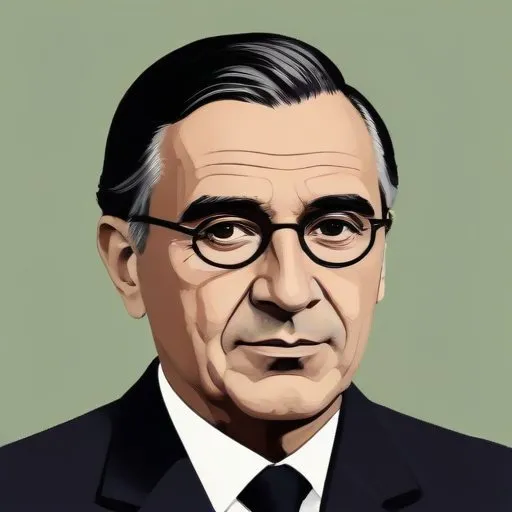
The 10th President of Italy, a renowned economist and politician, served as the head of state from 1999 to 2006, guiding the country through significant economic and political reforms. He's also remembered for his efforts to strengthen the European Union.
Ciampi was born on December 9, 1920, in Livorno, Italy. He pursued his academic interests in ancient Greek literature and classical philology at the prestigious Scuola Normale Superiore di Pisa, where he defended his thesis, "Favorino d'Arelate e la consolazione," under the guidance of the esteemed Hellenist Augusto Mancini.
During World War II, Ciampi served as a lieutenant in Albania before joining the Italian resistance movement after the armistice with the Allies. His commitment to public service continued as he began working at the Banca d'Italia in 1946, where he rose through the ranks to become Secretary General in 1973, Vice Director General in 1976, and eventually Director General in 1978.
In 1979, Ciampi was appointed Governor of the Bank of Italy and President of the national Bureau de Change, positions he held until 1993. During his tenure, he played a vital role in shaping Italy's economic policies, earning him widespread recognition and respect.
In 1993, Ciampi became the first non-parliamentarian Prime Minister of Italy in over 100 years, leading a technical government until 1994. This groundbreaking appointment marked a significant shift in Italian politics, as Ciampi brought a fresh perspective to the nation's leadership.
As Treasury Minister from 1996 to 1999, Ciampi was instrumental in Italy's adoption of the euro currency. He personally selected the Italian design for the 1-euro coin, cementing his legacy as a champion of European integration and economic cooperation.
Ciampi's presidential tenure from 1999 to 2006 was marked by his commitment to strengthening Italy's role in the European Union and promoting national unity. He worked tirelessly to address the country's pressing issues, including economic growth, social reform, and civic engagement.
Ciampi's remarkable career has had a profound impact on modern Italy, shaping the country's political landscape, economy, and social fabric. His commitment to public service, his vision for European integration, and his leadership have left an indelible mark on Italian history.
Ciampi's legacy extends beyond his own country, as his contributions to European integration and economic cooperation have had far-reaching implications for the global community. As a statesman, he embodied the values of integrity, dedication, and vision, inspiring future generations of leaders and citizens alike.
Carlo Azeglio Ciampi's extraordinary life and career serve as a testament to the power of public service, leadership, and vision. His enduring legacy continues to shape modern Italy, a nation forever grateful for his tireless efforts and dedication to its people.
89 Years Old
A billionaire media mogul who dominated Italian politics for decades, known for his flamboyant personality and numerous scandals.
87 Years Old
The 52nd Prime Minister of Italy, an academic and politician, led the country's government and played a key role in shaping the European Union. He's known for his economic reforms and EU integration efforts.
Born in 1919
A dominant figure in Italian politics, serving as Prime Minister seven times, known for his cunning and controversial leadership style. He was a key player in shaping Italy's post-war politics.
98 Years Old
An Italian academic and politician who served as the 8th President of Italy, known for his role in shaping the country's politics and foreign policy during the Cold War era. He was a key figure in Italy's transition from a monarchy to a republic.
Born in 1918
The 9th President of Italy, a lawyer and politician who played a key role in shaping the country's post-war politics and served as a senator for life. He's remembered for his strong stance against organized crime and corruption.
Born in 1925
A prominent Italian journalist and politician who served as Prime Minister of Italy, known for his leadership during a tumultuous period in the country's history. He played a key role in shaping Italy's post-war politics and economy.
Born in 1908
Italian journalist and politician who served as Prime Minister of Italy six times, playing a key role in shaping the country's post-war politics and economy. He was a dominant figure in Italian politics for over three decades.
