


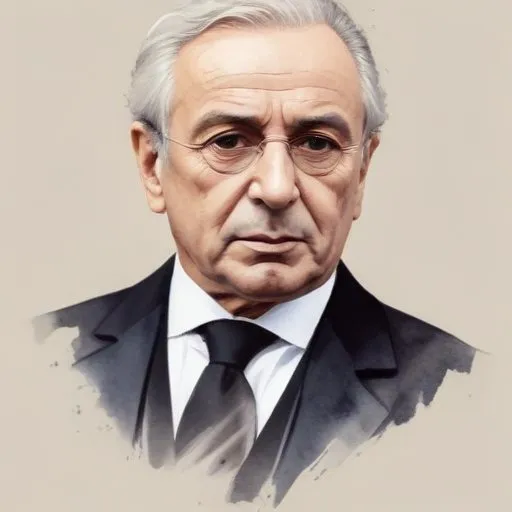
An Italian academic and politician who served as the 8th President of Italy, known for his role in shaping the country's politics and foreign policy during the Cold War era. He was a key figure in Italy's transition from a monarchy to a republic.
Francesco Cossiga, the Italian politician who served as Prime Minister of Italy from 1979 to 1980 and President of Italy from 1985 to 1992, is widely regarded as one of the most influential politicians of the First Italian Republic. He is known for his repressive approach to public protests, earning him the nickname "Iron Minister," and his restructuring of the Italian police, civil protection, and secret services.
Francesco Cossiga was born on July 26, 1928, in Sassari, Italy, to a middle-class family with republican and antifascist values. His parents, Giuseppe Cossiga and Maria Mariuccia Zanfarino, instilled in him a strong sense of social responsibility. He graduated from the classical lyceum Domenico Alberti at the age of 16, three years ahead of his peers.
Cossiga's political career spanned over four decades, during which he held various ministerial positions, including Minister of the Interior. As Interior Minister, he restructured the Italian police, civil protection, and secret services, earning him both praise and criticism. His tenure was marked by several high-profile events, including the kidnapping and murder of Aldo Moro by the Red Brigades in 1978 and the Bologna station massacre in 1980.
He resigned as Interior Minister in 1978, following the discovery of Aldo Moro's body, and later became Prime Minister of Italy from 1979 to 1980. Cossiga's presidency, which lasted from 1985 to 1992, was marked by several significant events, including the collapse of the Soviet Union and the end of the Cold War.
Cossiga's repressive approach to public protests and his handling of the Aldo Moro kidnapping earned him significant criticism. He was often at odds with the Italian left-wing and was accused of being authoritarian and heavy-handed. Despite this, he remains a significant figure in Italian politics, and his legacy continues to be debated among historians and politicians.
Francesco Cossiga's legacy is complex and multifaceted. While he was criticized for his repressive approach to public protests, he is also credited with restructuring the Italian police and secret services, which significantly improved their effectiveness. His presidency saw significant changes in Italian politics and society, and he remains an important figure in Italian history.
Cossiga passed away on August 17, 2010, leaving behind a legacy that continues to be debated and evaluated by historians and politicians. Despite the controversies surrounding his political career, Francesco Cossiga remains an important figure in Italian politics, and his impact on the country's history cannot be overstated.
Born in 1925
A prominent Italian journalist and politician who served as Prime Minister of Italy, known for his leadership during a tumultuous period in the country's history. He played a key role in shaping Italy's post-war politics and economy.
Born in 1916
The 39th Prime Minister of Italy, a prominent figure in post-war Italian politics, known for his efforts to establish a historic compromise between Christian Democrats and Communists. He was kidnapped and murdered by the Red Brigades in 1978.
Born in 1908
Italian journalist and politician who served as Prime Minister of Italy six times, playing a key role in shaping the country's post-war politics and economy. He was a dominant figure in Italian politics for over three decades.
Born in 1920
The 40th Prime Minister of Italy, a lawyer-turned-politician who led the country from 1970 to 1972, known for his efforts to stabilize the economy and implement social reforms.
Born in 1918
The 9th President of Italy, a lawyer and politician who played a key role in shaping the country's post-war politics and served as a senator for life. He's remembered for his strong stance against organized crime and corruption.
Born in 1919
A dominant figure in Italian politics, serving as Prime Minister seven times, known for his cunning and controversial leadership style. He was a key player in shaping Italy's post-war politics.
