


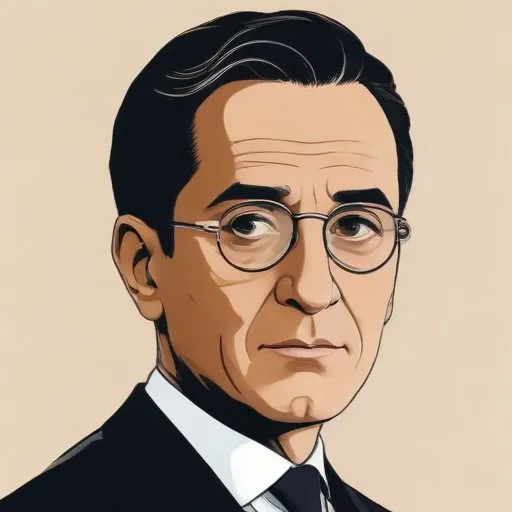
The 40th Prime Minister of Italy, a lawyer-turned-politician who led the country from 1970 to 1972, known for his efforts to stabilize the economy and implement social reforms.
Emilio Colombo, a stalwart of Italian politics, is remembered for his unwavering commitment to the country's development and his remarkable tenure as Prime Minister from 1970 to 1972. As a dedicated member of the Christian Democracy party, Colombo left an indelible mark on Italy's political landscape, shaping the nation's future through his numerous ministerial roles and international engagements.
Born on April 11, 1920, in Potenza, Basilicata, Emilio Colombo grew up in a middle-class family with six brothers. His father, Angelo Colombo, was a public administration official, while his mother, Rosa Tordella, was a homemaker. Colombo's early life was marked by his involvement in Catholic Action, a widespread Catholic association, which he joined in 1935.
In 1937, he became the president of Potenza's Catholic Action and a member of the National Council of Catholic Action's youth wing. Colombo obtained his classical lyceum diploma from the high school Quintus Horatius Flaccus in Potenza in the same year. He later graduated in law from the Sapienza University of Rome in 1941, with a thesis on canon law.
Colombo's political career spanned several decades, during which he held various ministerial positions. He served as Minister of Agriculture from 1955 to 1958, Minister of Foreign Trade from 1958 to 1959, Minister of Grace and Justice from 1970 to 1972, and Minister of Treasury from 1963 to 1970, among others.
One of his most notable achievements was his appointment as President of the European Parliament from 1977 to 1979, a testament to his dedication to European integration. Colombo was also a strong advocate for Christian democratic values, which guided his decision-making throughout his political career.
Colombo's outstanding contributions to Italian politics and European integration earned him numerous awards and honors. In 2003, he was appointed Senator for Life, a position he held until his passing in 2013.
Throughout his life, Colombo was driven by his passion for public service and his commitment to creating a better future for Italy and Europe. His legacy serves as a beacon of inspiration for generations to come.
Emilio Colombo's remarkable career and dedication to public service have left a lasting impact on Italian politics and European integration. As a staunch Europeanist, he played a pivotal role in shaping the continent's future, working tirelessly to promote unity and cooperation among nations.
As a testament to his enduring legacy, Colombo's name continues to be revered in Italy and beyond, serving as a reminder of the importance of political commitment, public service, and international cooperation.
In conclusion, Emilio Colombo's remarkable life and career serve as a shining example of dedication, perseverance, and commitment to public service. His legacy will continue to inspire generations to come, reminding us of the importance of working towards a better future for all.
Born in 1916
The 39th Prime Minister of Italy, a prominent figure in post-war Italian politics, known for his efforts to establish a historic compromise between Christian Democrats and Communists. He was kidnapped and murdered by the Red Brigades in 1978.
Born in 1925
A prominent Italian journalist and politician who served as Prime Minister of Italy, known for his leadership during a tumultuous period in the country's history. He played a key role in shaping Italy's post-war politics and economy.
98 Years Old
An Italian academic and politician who served as the 8th President of Italy, known for his role in shaping the country's politics and foreign policy during the Cold War era. He was a key figure in Italy's transition from a monarchy to a republic.
Born in 1919
A dominant figure in Italian politics, serving as Prime Minister seven times, known for his cunning and controversial leadership style. He was a key player in shaping Italy's post-war politics.
Born in 1908
Italian journalist and politician who served as Prime Minister of Italy six times, playing a key role in shaping the country's post-war politics and economy. He was a dominant figure in Italian politics for over three decades.
98 Years Old
Led Italy's government during a tumultuous period, implementing economic reforms and navigating international relations. He's also known for his role in shaping the country's European integration policies.
