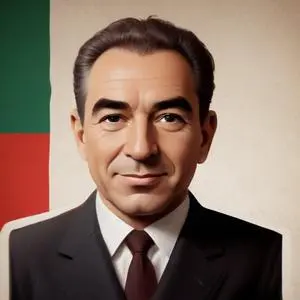
Aldo Moro: The Visionary Statesman of Italy
The Architect of Modern Italy
Aldo Moro was a renowned Italian statesman and a prominent member of the Christian Democracy party, serving as the Prime Minister of Italy for five terms from 1963 to 1968 and again from 1974 to 1976. He is widely recognized for his significant contributions to modernizing Italy, implementing a series of social and economic reforms that transformed the country.
Early Life and Education
Born on September 23, 1916, in Maglie, near Lecce, Italy, Aldo Moro was raised in a family of educators. His father, Renato Moro, was a school inspector, and his mother, Fida Sticchi, was a teacher. Moro's early life was marked by frequent relocation, eventually settling in Bari, where he studied law at the University of Bari and graduated in 1939.
Academic and Political Career
Moro began his academic career as a professor of philosophy of law and colonial policy at the University of Bari in 1941 and later became a professor of criminal law in 1942. His academic pursuits laid the foundation for his entry into politics. In the 1950s, Moro served as Italy's Minister of Justice and Minister of Public Education, demonstrating his commitment to social reform and education.
Prime Minister of Italy
Aldo Moro's tenure as Prime Minister of Italy was marked by significant reforms and accomplishments. During his first term, he implemented policies aimed at modernizing Italy's economy and infrastructure. He also played a crucial role in shaping Italy's foreign policy, particularly in the Mediterranean region. Moro's pro-Arab policy and diplomatic efforts earned him recognition as a skilled statesman.
The Historic Compromise
One of Moro's most notable achievements was the Historic Compromise, a political agreement with the Italian Communist Party leader,
Enrico Berlinguer. This groundbreaking compromise aimed to bring together Italy's center-left parties, paving the way for a more stable and collaborative political environment.
Kidnapping and Tragic End
On March 16, 1978, Aldo Moro was kidnapped by the Red Brigades, a far-left armed group. After 55 days of captivity, he was tragically killed, leaving a profound impact on Italian politics and society.
Legacy and Impact
Aldo Moro's legacy extends far beyond his political achievements. He is remembered as a visionary statesman who worked tirelessly to modernize Italy, promote social reform, and foster international cooperation. His commitment to education and his role in shaping Italy's center-left wing have left an indelible mark on Italian politics.
Awards and Honors
Moro was awarded the Honorary Degree in Law from Harvard University in 1963, and the University of Bari established the Aldo Moro Chair in Philosophy of Law in his honor.
Quotes and Memorabilia
"I am convinced that the future of our country depends on our ability to understand and to respect the diversity of others." - Aldo Moro
Moro's legacy continues to inspire generations of politicians, scholars, and citizens around the world. His commitment to social reform, education, and international cooperation serves as a testament to his enduring impact on modern Italy.
FAQ
What is Aldo Moros legacy in Italian politics?
Aldo Moros legacy in Italian politics is one of dedication to democracy, social justice, and European integration. He played a crucial role in shaping Italys post-war political landscape, earning him recognition as one of the countrys most influential leaders.
What were Aldo Moros accomplishments as Prime Minister of Italy?
As Prime Minister of Italy, Aldo Moro implemented significant reforms, including the nationalization of key industries, the establishment of a national health service, and the strengthening of labor rights. His government also played a key role in European integration, fostering stronger ties with the European Community.
How did Aldo Moro impact Italian foreign policy?
Aldo Moros foreign policy was characterized by a strong commitment to European integration, Atlanticism, and Mediterranean cooperation. He played a key role in shaping Italys relationships with the European Community, the United States, and other Mediterranean countries, promoting peace, stability, and economic cooperation.
What was Aldo Moros role in the Italian Christian Democratic Party?
Aldo Moro was a prominent figure in the Italian Christian Democratic Party, serving as party leader and Prime Minister. He played a crucial role in shaping the partys policies and platform, promoting a centrist, pro-European agenda that appealed to a broad range of Italian voters.
What awards did Aldo Moro receive for his contributions?
Aldo Moro received numerous awards and honors for his contributions to Italian politics, including the Golden Medal of the Italian Parliament and the Robert Schuman Prize. His legacy continues to be celebrated and recognized internationally, ensuring his place as one of Italys most influential leaders.