


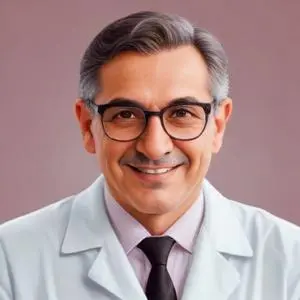
A renowned expert in cancer genetics, he discovered the first human oncogene, a gene that contributes to cancer development, and has made significant contributions to our understanding of the disease.
Carlo M. Croce is a prominent Italian-American professor of medicine, distinguished for his groundbreaking work in oncology and the molecular mechanisms underlying cancer. He has made significant contributions to the field, including the discovery of the role of microRNAs in cancer pathogenesis and progression.
Born on December 17, 1944, Croce graduated summa cum laude in medicine from La Sapienza University of Rome in 1969. He began his research career in the United States the following year at the Wistar Institute of Biology and Anatomy in Philadelphia.
Croce's academic career has been marked by numerous milestones and achievements. He was named Wistar Professor of Genetics at the University of Pennsylvania and associate director of the Wistar Institute in 1980. He later became the director of the Fels Institute for Cancer Research and Molecular Biology at Temple University School of Medicine from 1988 to 1991.
In 1991, Croce was appointed as the Director of the Kimmel Cancer Center at Jefferson Medical College at the Thomas Jefferson University in Philadelphia. He remained in this position until 2004, when he joined Ohio State University (OSU) as a professor of medicine.
Croce's research has been instrumental in advancing our understanding of cancer. His team's discovery of the role of microRNAs in cancer pathogenesis and progression has been recognized as a significant breakthrough in the field. However, his research has also been surrounded by controversy, with allegations of scientific misconduct and criticism for his involvement with the tobacco industry.
Croce has received numerous awards and honors for his contributions to the field of oncology. He has been awarded the American Cancer Society's Research Professor Award and the National Cancer Institute's MERIT Award, among others.
Despite the controversies surrounding his research, Croce's work has had a significant impact on our understanding of cancer and its treatment. His legacy continues to influence the field of oncology, and his contributions will be remembered for years to come.
"The most exciting phrase to hear in science, the one that heralds new discoveries, is not 'Eureka!' but 'That's strange...'" - Carlo M. Croce
79 Years Old
Pioneering geneticist who sequenced the human genome and created the first self-replicating synthetic cell, revolutionizing our understanding of life and its potential. 82
76 Years Old
Led the Human Genome Project, decoding human DNA and paving the way for genetic medicine. Currently directs the National Institutes of Health, shaping biomedical research and policy.
98 Years Old
Discovered the structure of DNA, revolutionizing our understanding of genetics and earning a Nobel Prize. Pioneering work in molecular biology has far-reaching implications for medicine and beyond.
Born in 1916
Pioneering scientist who discovered the structure of DNA, revolutionizing our understanding of genetics and life itself.
Born in 1920
A British scientist who contributed significantly to the discovery of the structure of DNA, providing high-quality X-ray crystallography images that helped James Watson and Francis Crick develop their famous model.
Born in 1901
Pioneering chemist and peace activist who won two unshared Nobel Prizes, one for chemistry and one for peace, for his groundbreaking work on the nature of the chemical bond and his tireless efforts to promote nuclear disarmament.
