


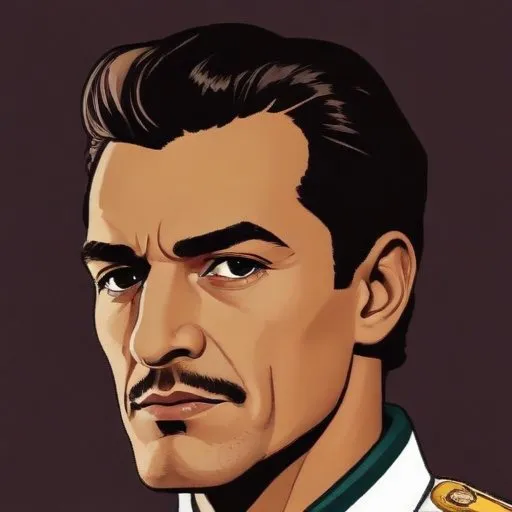
A Brazilian army captain who defected to lead a guerrilla movement against the military dictatorship, known for his bravery and rebellion.
Carlos Lamarca is known for his daring desertion from the Brazilian Army to join the armed resistance against the country's military dictatorship in the 1960s and 1970s. As a captain, he stole a truck full of military equipment and joined the Popular Revolutionary Vanguard (VPR), becoming one of the leaders of the armed struggle against the regime.
Born on October 23, 1937, in Rio de Janeiro, Lamarca joined the Preparatory School of Military Cadets in Porto Alegre in 1955. He later transferred to the Military Academy of Agulhas Negras in Resende, Rio de Janeiro, where he graduated as one of the lower-ranking cadets of his class in 1960.
Lamarca's military career took him to Gaza, where he was part of the United Nations Peacekeeping forces during the Suez War. He later returned to Brazil and supported the military coup. In 1967, he was promoted to Captain.
In 1969, Lamarca deserted from the Army, taking with him a truck full of military equipment. This daring move was orchestrated by him and Sergeant Darcy Rodrigues, who convinced Lamarca to join the VPR. Also participating in this operation were Corporal Mariani and Private Roberto Zanirato, who was later murdered under torture in DOICODI.
Lamarca became one of the most active militants of the opposition to the 1964 regime. He participated in several operations, including kidnappings to free comrades suffering brutal torture in Brazil's prisons.
On September 17, 1971, Lamarca was killed in a shootout with police in the state of Bahia. His death marked the end of an era in Brazil's armed struggle against the military dictatorship.
Lamarca's actions inspired many Brazilians to join the fight against the regime. His bravery and conviction in the face of overwhelming odds have made him a legendary figure in Brazil's history.
In conclusion, Carlos Lamarca's remarkable journey from a Brazilian Army Captain to a guerrilla fighter is a testament to his unwavering commitment to fighting for a just and free society.
Born in 1926
The Cuban revolutionary who led the country from 1959 to 2008, implementing socialist policies and defying US opposition, becoming an iconic figure in modern history.
72 Years Old
The charismatic leader who transformed Venezuela through socialist reforms and anti-imperialist rhetoric, leaving a lasting impact on the country's politics and economy.
81 Years Old
A Brazilian union leader and politician who served as President of Brazil, known for his efforts to reduce poverty and inequality, and for being a key figure in the country's economic growth.
78 Years Old
Brazil's first female president, a key figure in the country's economic development and a symbol of female empowerment in Latin American politics.
Born in 1918
A Brazilian lawyer and politician who served as the 24th President of Brazil, known for his left-wing policies and nationalization of industries, leading to a military coup that ousted him.
Born in 1882
A dominant leader who ruled Brazil from 1930 to 1945 and again from 1951 until his suicide in 1954, known for implementing reforms and promoting nationalism.
