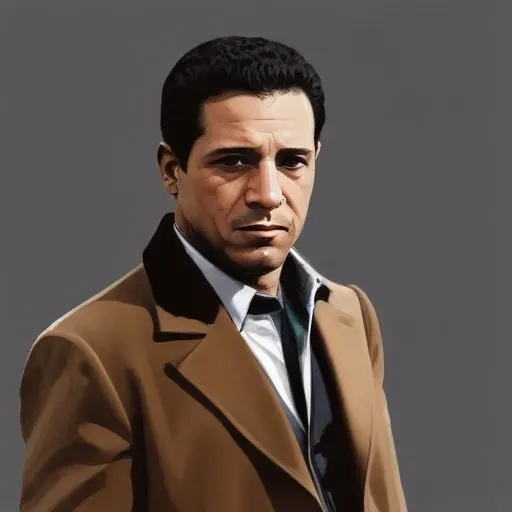
Carlos Marcello: The Notorious New Orleans Crime Boss
A Life of Crime and Controversy
Carlos Marcello, a notorious Italian-American crime boss, is best known for his alleged involvement in the assassination of U.S. President
John F. Kennedy in 1963. As the head of the New Orleans crime family from 1947 to 1983, Marcello was a powerful figure in organized crime, with a reputation for ruthlessness and cunning.
Early Life and Criminal Beginnings
Born Calogero Minacore on February 6, 1910, in Tunis, French Tunisia, Marcello immigrated to the United States with his family in 1911. They settled in a decaying plantation house near Metairie, Louisiana, where his father, Giuseppe, worked on a sugar plantation. The family later changed their surname to Marcello to avoid confusion with their supervisor.
Marcello turned to petty crime in the French Quarter, eventually masterminding a crew of teenage gangsters who carried out armed robberies in surrounding towns. He was imprisoned for this crime, but the conviction was later overturned. However, in 1929, Marcello was convicted of assault and robbery and sentenced to nine years in the Louisiana State Penitentiary.
Rise to Power
After serving five years, Marcello was released from prison and began to build his criminal empire. He became known for his cunning and ruthlessness, earning the respect and fear of his peers. By the 1940s, Marcello had established himself as a major player in organized crime, and by 1947, he had become the head of the New Orleans crime family.
Alleged Involvement in the Assassination of JFK
Marcello's reputation for ruthlessness and cunning led many to believe that he was involved in the assassination of President John F. Kennedy in 1963. G. Robert Blakey and others have alleged that Marcello, along with Santo Trafficante Jr. and Sam Giancana, conspired to kill Kennedy in retaliation for federal investigations that threatened their power and profits.
Legal Troubles and Later Life
Marcello faced numerous legal troubles throughout his life, including charges of racketeering, bribery, and fraud. In 1981, he was convicted of racketeering and sentenced to five years in prison, but was released in 1989.
Marcello died on March 3, 1993, at the age of 83, leaving behind a legacy of crime and controversy.
Legacy and Impact
Marcello's life and crimes have had a lasting impact on American history and popular culture. His alleged involvement in the assassination of JFK has been the subject of numerous books, films, and documentaries. He remains one of the most notorious figures in American organized crime, and his name is synonymous with corruption and violence.
- Notable Works: Marcello was featured in several books, including "The Plot to Kill the President" by G. Robert Blakey and " Carlos Marcello: The Man Behind the JFK Assassination" by Stefano Villabruna.
- Personal Life: Marcello was married to Jacqueline Georgianne "Jackie" Todaro, and had several children, including sons Carlos Jr. and Joseph.
- Fun Fact: Marcello was known for his love of horse racing and owned several thoroughbred horses throughout his life.
FAQ
Who was Carlos Marcello and what was his role in organized crime?
Carlos Marcello was a Tunisian-American gangster who rose to prominence in the American Mafia, becoming the boss of the New Orleans crime family and playing a significant role in organized crime throughout the 20th century.
What was Carlos Marcellos connection to the Kennedy assassination?
Marcello has been implicated in various conspiracy theories surrounding the assassination of President John F. Kennedy, with some suggesting that he had a motive to kill the President due to his efforts to combat organized crime.
How did Carlos Marcello build his criminal empire?
Marcello built his criminal empire through a combination of illegal activities, including gambling, extortion, and drug trafficking, as well as strategic alliances with other powerful Mafia families.
What was Carlos Marcellos relationship with the FBI?
Marcello had a complex and often contentious relationship with the FBI, which investigated him numerous times throughout his career, but he was able to avoid major convictions until his later years.
What happened to Carlos Marcello in his later years?
Marcello was eventually convicted of racketeering and conspiracy in 1981, and he died in 1993 while serving his sentence at a federal prison hospital.