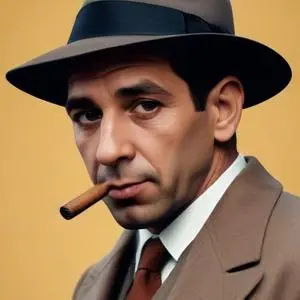
Meyer Lansky: The "Mob's Accountant" and Kingpin of Organized Crime
A Legacy of Financial Success and Criminal Enterprise
Meyer Lansky, born Maier Suchowljansky, was a American organized crime figure known for his instrumental role in the development of the National Crime Syndicate in the United States. With his associate Charles "Lucky" Luciano, Lansky built a gambling empire that spanned the globe, earning him the reputation as one of the most financially successful gangsters in American history.
Early Life and Immigration
Born on July 4, 1902, in Grodno, Russian Empire (now Belarus), Lansky was part of a Polish-Jewish family that faced antisemitism and pogroms from Imperial authorities. In 1911, he emigrated to the United States through the port of Odessa with his mother and brother Jacob, joining his father who had immigrated in 1909. The family settled in the Lower East Side of Manhattan, New York, where Lansky would eventually meet his lifelong friend and partner, Benjamin "Bugsy" Siegel.
Rise to Power and Criminal Enterprise
Lansky's rise to power began in the 1920s, when he and Siegel formed the "Bugs and Meyer Mob," a group of Jewish gangsters who controlled the bootlegging trade in New York City. Lansky's financial acumen and strategic thinking made him an invaluable asset to the criminal underworld, earning him the nickname "The Mob's Accountant." He played a key role in the consolidation of the criminal underworld, introducing money laundering and offshore banking in 1932, which would later be used to conceal profits from the heroin trade in the 1950s.
Global Gambling Empire
Lansky's gambling empire stretched from Las Vegas to Cuba, The Bahamas, and London, with him holding points or percentages in numerous casinos. His influence extended beyond the Jewish mob, as he formed alliances with the Italian-American Mafia, cementing his position as a powerful figure in organized crime.
Philosophical Contributions and Beliefs
Lansky's business acumen and strategic thinking were rooted in his philosophical beliefs. He believed in the importance of loyalty, honor, and respect within the criminal underworld, often citing the teachings of Jewish mysticism and the principles of the Talmud. These beliefs guided his decision-making and helped him navigate the complex web of organized crime.
Personal Milestones and Key Life Events
- 1911: Emigrated to the United States with his family
- 1920s: Formed the "Bugs and Meyer Mob" with Benjamin Siegel
- 1932: Introduced money laundering and offshore banking to the criminal underworld
- 1940s-1950s: Consolidated his power and influence in organized crime
- 1958: Fled Cuba after the rise of Fidel Castro
- 1983: Died on January 15, at the age of 80, with an estate worth around $57,000
Legacy and Impact on Modern Society
Meyer Lansky's legacy is a complex one, marked by both financial success and moral ambiguity. Despite being involved in organized crime for nearly 50 years, Lansky was never found guilty of anything more serious than illegal gambling. His influence on the criminal underworld and his innovative approaches to money laundering and offshore banking continue to shape the modern landscape of organized crime. Lansky's story serves as a cautionary tale, highlighting the dangers of unchecked power and the consequences of moral compromise.
Quotes and Memorable Sayings
- "We're all Jews here, we're all friends." - Meyer Lansky
- "I'm a gambler, not a gangster." - Meyer Lansky
Influence on Pop Culture
Meyer Lansky's life and legacy have been immortalized in popular culture, inspiring characters and storylines in films and television shows such as "The Godfather," "The Sopranos," and "Boardwalk Empire." His name has become synonymous with organized crime, cementing his place as one of the most infamous figures in American history.
FAQ
What was Meyer Lanskys role in organized crime?
Meyer Lansky was a notorious American gangster who played a key role in the development of organized crime in the United States. He was involved in illegal gambling, extortion, and other criminal activities.
How did Meyer Lansky rise to power?
Meyer Lansky rose to power through his involvement with notorious gangsters such as Lucky Luciano and Bugsy Siegel. He was known for his cunning and strategic thinking, which helped him navigate the complex world of organized crime.
What was Meyer Lanskys relationship like with the Cuban government?
Meyer Lansky had a close relationship with the Cuban government, particularly with dictator Fulgencio Batista. He invested heavily in Cuban casinos and Hotels, and was known to have bribed government officials to further his interests.
How did Meyer Lanskys life change after the Cuban Revolution?
After the Cuban Revolution, Meyer Lanskys life changed dramatically. He was forced to flee Cuba and lost much of his wealth and power. He spent the remainder of his life in the United States, where he continued to engage in illegal activities.
What was Meyer Lanskys legacy?
Meyer Lanskys legacy is that of a notorious gangster who played a significant role in shaping the world of organized crime. His life and exploits have been immortalized in popular culture, including in films and literature.