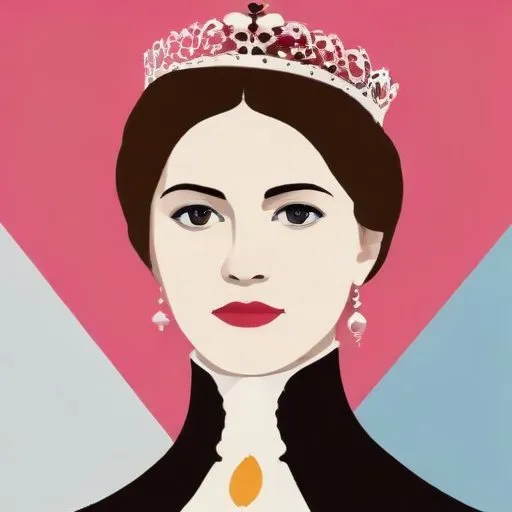
Caroline Augusta of Bavaria: The Illustrious Empress of Austria
A Life of Royalty and Resilience
Caroline Augusta of Bavaria is renowned as the Empress of Austria, having married Emperor Francis I of Austria, King of Hungary and Bohemia, in 1816. As the fourth wife of the emperor, she played a pivotal role in the royal court, leveraging her intelligence, diplomacy, and cultural refinement to foster harmony and prosperity during a tumultuous period in European history.
Early Life and Challenges
Born on February 8, 1792, in Mannheim, Electoral Palatinate, Caroline Augusta was the fourth child and third daughter of King
Maximilian I Joseph of Bavaria and Princess Augusta Wilhelmine of Hesse-Darmstadt. Her early life was marked by adversity, as she contracted smallpox at the tender age of two. This experience undoubtedly influenced her character, imbuing her with a sense of resilience and determination that would serve her well throughout her life.
A Marriage of Convenience
In 1808, Caroline Augusta married Crown Prince William of Württemberg, a union orchestrated to thwart a political marriage arranged by Napoleon. The marriage, however, proved to be unhappy and childless, ultimately leading to an annulment in 1814. During this period, Caroline Augusta devoted herself to learning Italian and English, as well as corresponding with her brother Ludwig, demonstrating her commitment to personal growth and intellectual pursuits.
The Empress of Austria
Following the annulment of her first marriage, Caroline Augusta caught the attention of Emperor Francis I of Austria, who was 24 years older than her. They married on October 29, 1816, and she became the fourth wife of the emperor, as well as the Empress of Austria. As empress, Caroline Augusta utilized her refined cultural sensibilities to promote the arts, commissioning artists, architects, and composers to create works that would enrich the imperial court.
A Life of Devotion and Duty
Throughout her reign, Caroline Augusta demonstrated unwavering dedication to her husband, her adopted country, and the people of Austria. She supported Francis I in his role as emperor, offering counsel and guidance during times of turmoil and upheaval. Her commitment to the Austrian people was evident in her extensive charitable work, as she actively supported various philanthropic organizations and initiatives.
A Legacy of Elegance and Refined Taste
Caroline Augusta's impact on Austrian culture and society cannot be overstated. She introduced the Viennese court to the works of German Romantic writers, such as Goethe and Schiller, and encouraged the development of Austrian art and music. Her refined taste and elegance inspired a new era of cultural sophistication in Vienna, earning her the respect and admiration of her contemporaries.
Personal Milestones and Key Life Events
- February 8, 1792: Born in Mannheim, Electoral Palatinate
- 1808: Married Crown Prince William of Württemberg
- 1814: Annulment of first marriage
- October 29, 1816: Married Emperor Francis I of Austria
- February 9, 1873: Passed away at the age of 81
In Conclusion
Caroline Augusta of Bavaria's remarkable life serves as a testament to her unwavering dedication, resilience, and cultural refinement. As the Empress of Austria, she left an indelible mark on the country's cultural landscape, promoting the arts, supporting her husband, and inspiring a new era of elegance and sophistication in Vienna. Her legacy continues to captivate historians and enthusiasts alike, solidifying her place as one of the most fascinating figures of the 19th century.
FAQ
What was Caroline Augusta of Bavarias role in European royalty?
Caroline Augusta of Bavaria was a princess of Bavaria and a princess of Austria through her marriage to Francis I, Emperor of Austria. She played a significant role in European royalty, serving as a mediator and diplomat during a time of great turmoil.
How did Caroline Augusta of Bavaria influence the development of Austrian politics?
Caroline Augusta of Bavarias marriage to Francis I, Emperor of Austria, helped to solidify the alliance between Bavaria and Austria, shaping the course of Austrian politics and diplomacy for generations to come.
What cultural achievements are attributed to Caroline Augusta of Bavaria?
Caroline Augusta of Bavaria was a patron of the arts, and her court attracted prominent artists, musicians, and writers. She encouraged the development of opera, theater, and music, fostering a vibrant cultural scene in Vienna.
What is Caroline Augusta of Bavarias legacy in European history?
Caroline Augusta of Bavarias legacy in European history lies in her role as a skilled diplomat and mediator, helping to broker peace agreements and strengthen alliances between European powers during a tumultuous period.
Did Caroline Augusta of Bavaria have any notable relationships with prominent figures?
Caroline Augusta of Bavaria corresponded with prominent figures, including Napoleon Bonaparte, and played a key role in negotiations between European powers during the Napoleonic Wars.