


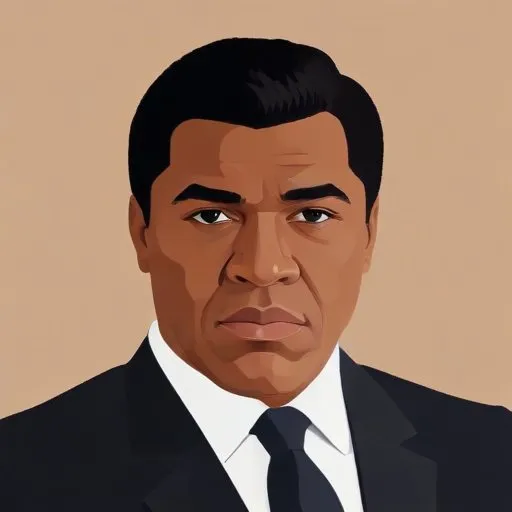
A prominent abolitionist and statesman who served as a diplomat in Russia, known for his strong anti-slavery stance and influential writings. He was a vocal advocate for the emancipation of slaves and played a key role in shaping public opinion on the issue.
Cassius Marcellus Clay, a renowned American planter, politician, and military officer, is most famously known for his unwavering commitment to the abolitionist cause, which led to his appointment as the United States ambassador to Russia from 1863 to 1869. This pivotal role enabled him to influence Russian support for the Union during the American Civil War, a crucial turning point in the nation's history.
Born on October 19, 1810, in Madison County, Kentucky, Clay was part of a wealthy planter family. His father, Green Clay, was a prominent politician and one of the wealthiest planters and slave owners in Kentucky. Clay was the fifth of seven children, with several siblings going on to become influential politicians in their own right. His older brother, Brutus J. Clay, and cousin, Henry Clay, were notable figures in Kentucky politics.
Clay's academic pursuits took him to Transylvania University and later to Yale College, where he graduated in 1832. It was during his time at Yale that he heard abolitionist William Lloyd Garrison speak, an experience that profoundly impacted his life and led him to join the antislavery movement. Garrison's passionate arguments resonated deeply with Clay, who became convinced of the need for gradual legal change to abolish slavery.
Clay's entry into politics began in the 1830s, and he quickly became a prominent figure in the abolitionist movement. As a founding member of the Republican Party in Kentucky, he worked tirelessly to promote the cause of freedom and equality. His dedication to the abolitionist movement did not go unnoticed, and in 1863, President Abraham Lincoln appointed him as the United States minister to Russia.
During his tenure as ambassador, Clay played a crucial role in securing Russian support for the Union during the American Civil War. His diplomatic efforts were instrumental in preventing Russia from recognizing the Confederacy, thereby maintaining a crucial alliance for the Union. Clay's commitment to the abolitionist cause and his diplomatic prowess made him a respected figure in both the United States and Russia.
In 1833, Clay married Mary Jane Warfield, with whom he had several children. His family life was marked by a deep sense of compassion and social responsibility, reflected in his activism and public service.
Throughout his life, Clay remained steadfast in his commitment to the abolitionist cause, earning him both admiration and criticism from his contemporaries. Despite the challenges he faced, Clay's legacy is one of courage, conviction, and a unwavering dedication to the pursuit of freedom and equality.
Cassius Marcellus Clay's life and work had a profound impact on modern society. His tireless efforts to promote the abolitionist cause contributed significantly to the eventual abolition of slavery in the United States. His diplomatic achievements during the American Civil War helped to shape the course of the conflict and secured a crucial ally for the Union.
Today, Clay's legacy serves as a powerful reminder of the importance of social activism, diplomacy, and commitment to the pursuit of human rights and dignity.
Cassius Marcellus Clay's life and work must be understood within the context of the tumultuous 19th century in the United States. His commitment to the abolitionist cause and his diplomatic achievements during the American Civil War place him among the ranks of the most important figures of his time.
As we reflect on Clay's legacy, we are reminded of the power of individual action and the importance of standing up against injustice. His life serves as a testament to the enduring power of courage, conviction, and dedication to the pursuit of human rights and dignity.
Born in 1809
Led the United States through its Civil War and ultimately abolished slavery, leaving a lasting legacy in American history.
Born in 1777
A skilled orator and compromiser who played a crucial role in shaping the country's early development, particularly through his "American System" economic plan. He's also known for his numerous presidential bids and influential leadership in the Senate.
Born in 1782
A renowned lawyer and politician who served as the 14th United States Secretary of State, known for his exceptional oratory skills and influential role in shaping the country's early development.
Born in 1782
A prominent figure in American politics, serving as Vice President and advocating for states' rights, particularly in regards to slavery. He played a significant role in shaping the country's early development.
Born in 1801
The 24th United States Secretary of State played a crucial role in shaping America's foreign policy, particularly in the acquisition of Alaska from Russia in 1867. He's also known for his strong anti-slavery stance.
Born in 1808
The 6th Chief Justice of the United States, a strong advocate for slavery abolition and a key player in shaping the country's financial system, particularly during the Civil War era.
Born in 1794
A 19th-century educator and politician who served as the 15th Governor of Massachusetts, known for his oratory skills and delivering the main speech at the Gettysburg National Cemetery dedication, overshadowed by Lincoln's Gettysburg Address.
Born in 1791
The 15th President of the United States, a northern Democrat who remained in office during the American Civil War, is infamous for his inaction in preventing the secession of 11 southern states. He's often regarded as one of the worst presidents in US history.
