


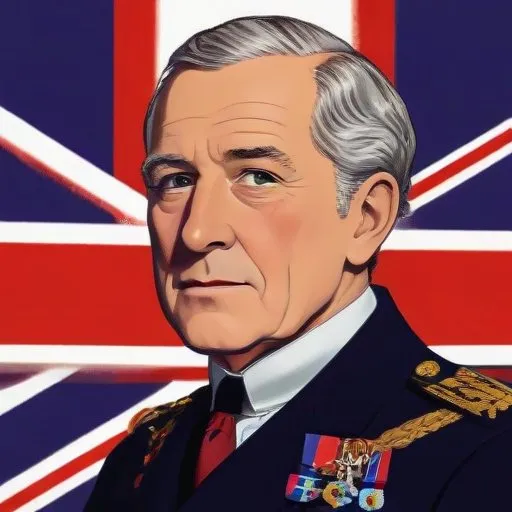
A British politician who served as the Governor-General of New Zealand from 1930 to 1935, known for his efforts to promote New Zealand's autonomy and his role in the country's transition to dominion status.
Charles Bathurst, 1st Viscount Bledisloe, was a prominent British Conservative politician and colonial governor, best known for his tenure as Governor-General of New Zealand from 1930 to 1935. His remarkable career spanned multiple fields, including law, politics, and governance, earning him numerous honors and recognition.
Born on September 21, 1867, in London, Bathurst was the second son of Charles Bathurst and Mary Elizabeth Hay. He received his education at Sherborne School, Eton College, and University College, Oxford, where he graduated with a law degree in 1890. He later studied law and was admitted to the Inner Temple in 1892, earning a Master of Arts from Oxford.
Bathurst began his political career as a barrister and conveyancer before entering parliament in 1910 as the Conservative MP for the South or Wilton division of Wiltshire. During the First World War, he served in the Royal Engineers Special Reserves and the War Office as Assistant Military Secretary. In 1917, he was appointed a Knight Commander of the Order of the British Empire (KBE) for his services.
In 1918, Bathurst was raised to the peerage as Baron Bledisloe of Lydney in the County of Gloucester. He continued to serve in parliament until 1928, holding positions such as Parliamentary Secretary to the Ministry of Agriculture and Fisheries from 1924 onwards.
In 1930, Bathurst was appointed Governor-General of New Zealand, a position he held until 1935. During his tenure, he worked to strengthen British-New Zealand relations and address issues pertaining to the country's economy and governance.
Bathurst received several honors for his services, including:
Charles Bathurst, 1st Viscount Bledisloe, left an indelible mark on British politics and colonial governance. His dedication to public service, leadership, and diplomacy have inspired generations of politicians and public figures.
Through his numerous roles and achievements, Bathurst demonstrated his commitment to the betterment of society, earning him a lasting legacy as a pillar of British politics and colonial governance.
Born in 1865
The second monarch of the House of Windsor, reigning from 1910 to 1936, known for leading the British Empire through World War I and modernizing the monarchy.
Born in 1865
The second monarch of the House of Windsor, reigning from 1910 to 1936, known for leading the British Empire through World War I and modernizing the monarchy.
Born in 1871
Prolific writer of historical novels and adventure stories, also a talented landscape painter.
Born in 1867
A conservative leader who served as Prime Minister three times, known for his role in navigating Britain through economic crises and advocating for imperial protectionism.
Born in 1866
A Scottish journalist and politician who served as the first Labour Party Prime Minister of the United Kingdom, leading the country through significant economic and social reforms. He is also known for his efforts to maintain peace in Europe during the interwar period.
Born in 1869
The Prime Minister who infamously appeased Nazi Germany with the Munich Agreement, hoping to avoid war, but ultimately contributing to its outbreak. He's a symbol of failed diplomacy and naivety in the face of aggression.
Born in 1897
A British politician who served as Prime Minister from 1955 to 1957, known for his role in the Suez Crisis and his diplomatic efforts during the Cold War.
