


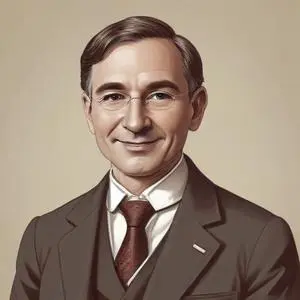
A pioneering physician and physiologist who discovered the role of hormones in prostate cancer, leading to the development of hormone therapy as a treatment.
Charles Brenton Huggins is renowned for his groundbreaking work on prostate function, prostate cancer, and breast cancer, leading to the development of hormone therapies that transformed the treatment of these diseases. His pioneering research earned him the 1966 Nobel Prize for Physiology or Medicine, cementing his legacy as a trailblazer in the field of cancer research.
Huggins was born on September 22, 1901, in Halifax, Nova Scotia, to Charles E. Huggins and Bessie Maria Spencer. He graduated from Acadia University with a BA degree at just 19 years old, showcasing his exceptional academic prowess.
Huggins was recruited to the University of Chicago Medical School in 1927, where he became one of the eight original staff members. He was tasked with leading the urology department, despite having no prior experience in the field. This challenge sparked his dedication to self-study and research, ultimately leading to his groundbreaking discoveries.
In 1931, Huggins took a paid research sabbatical in Europe, further broadening his expertise and laying the foundation for his future work.
Huggins' most significant contribution lies in his discovery of hormone therapies to treat prostate cancer. By understanding the relationship between sex hormones and prostate function, he developed a novel approach to battling this devastating disease.
Huggins' work was recognized with the 1966 Nobel Prize for Physiology or Medicine, a testament to his remarkable contributions to the field of cancer research.
Huggins continued to conduct research into his 90s, demonstrating his unwavering dedication to advancing medical knowledge. He passed away on January 12, 1997, leaving behind a legacy that continues to inspire and influence cancer research.
Through his tireless efforts, Huggins has left an indelible mark on the medical community, and his work will continue to shape the future of cancer treatment.
Born in 1891
Discovered insulin and pioneered its use to treat diabetes, revolutionizing the treatment of the disease.
Born in 1899
Co-discoverer of insulin, a hormone that regulates blood sugar levels, revolutionizing the treatment of diabetes. This breakthrough has saved countless lives and improved the quality of life for millions.
Born in 1892
Co-discoverer of insulin, a hormone that regulates blood sugar levels, revolutionizing diabetes treatment. This groundbreaking finding has saved countless lives and improved quality of life for millions .
Born in 1876
Discovered insulin and its role in diabetes, leading to a life-saving treatment for millions. Pioneering work in physiology and medicine paved the way for future breakthroughs.
Born in 1893
A pioneering scientist who discovered deuterium, a heavy isotope of hydrogen, and later contributed to the discovery of many other elements, revolutionizing our understanding of the universe.
Born in 1898
A high-ranking officer in the German Wehrmacht during World War II, known for his involvement in the July 20 plot to assassinate Adolf Hitler.
Born in 1896
A pioneering scientist who discovered how the body breaks down and uses carbohydrates, earning a Nobel Prize in Physiology or Medicine in 1947. Her groundbreaking work has led to a deeper understanding of diabetes and other metabolic disorders.
