


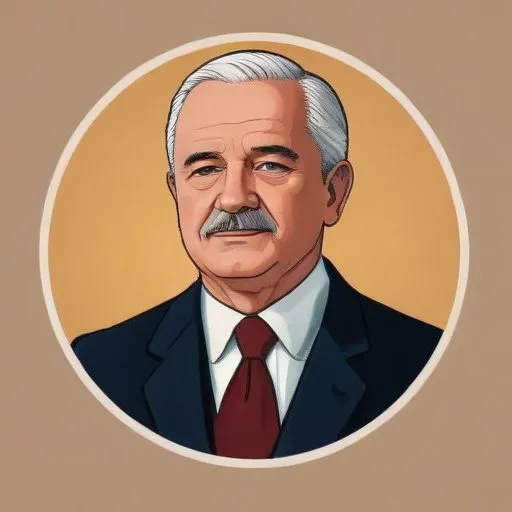
The first Native American to serve as Vice President, he played a key role in shaping US politics and policies during the Great Depression. He's also known for his advocacy for Native American rights.
Charles Curtis, a member of the Kaw Nation, made history by becoming the first Native American to hold the office of Vice President of the United States, serving from 1929 to 1933 under President Herbert Hoover. As a pioneering figure, Curtis broke down barriers, paving the way for future generations of Native Americans in politics.
Born on January 25, 1860, in the Kansas Territory, Curtis was the son of a Native American mother and a European-American father. He attended Topeka High School and later studied law at the University of Kansas, earning his degree in 1881.
Curtis entered politics at the age of 32, winning his first election to the U.S. House of Representatives in 1892. He served several terms, becoming a prominent figure in Kansas politics. In 1906, he was elected to the U.S. Senate, where he would serve for over two decades, including a stint as Republican Whip from 1915 to 1924 and Senate Majority Leader from 1924 to 1929.
Curtis sponsored and helped pass the Curtis Act of 1898, which extended the Dawes Act to the Five Civilized Tribes of Indian Territory. Although he was unhappy with the final version, the Act ultimately led to the ending of tribal land titles in Indian Territory, paving the way for Oklahoma's statehood in 1907.
In 1928, Curtis was elected as Vice President alongside Herbert Hoover, becoming the first Native American to hold the office. During his tenure, he focused on issues affecting Native Americans, advocating for mainstream education and assimilation. Curtis's legacy extends beyond his political accomplishments, inspiring future generations of Native Americans to pursue careers in politics and public service.
Curtis's trailblazing achievements have had a lasting impact on Native American representation in politics. His advocacy for education and assimilation continues to influence policies affecting Native American communities. As a symbol of hope and perseverance, Curtis inspires future generations to strive for greatness, regardless of their background or circumstances.
"A great deal of the trouble with the Indians is due to the fact that they are not citizens of the United States. It is a palpable fact that the Indians are not treated as citizens, and it is a palpable fact that they are treated as wards of the Government."
— Charles Curtis, speech to the U.S. Senate, 1916
Curtis's life and career serve as a testament to the power of perseverance and determination. As a Native American pioneer in politics, his legacy continues to inspire and empower communities across the United States. As we reflect on his accomplishments, we are reminded of the importance of diversity, inclusion, and representation in our political systems.
Born in 1874
The 31st President of the United States was a humanitarian and politician who led the country through the Great Depression and is known for his humanitarian efforts and infrastructure development. He's also infamous for his inability to mitigate the economic crisis.
Born in 1882
Led the United States through the Great Depression and World War II, implementing a series of reforms known as the New Deal and helping to establish the country as a global superpower.
Born in 1873
The 42nd Governor of New York was a prominent figure in American politics, known for being the first Catholic to run for President and a strong advocate for social justice and progressive reforms. He played a significant role in shaping the Democratic Party's platform during the 1920s and 1930s.
Born in 1858
A pioneering leader who championed progressive reforms, trust-busting, and conservation, earning a Nobel Peace Prize for mediating the Russo-Japanese War. He's also famous for his rugged outdoorsmanship and "big stick" diplomacy.
Born in 1872
The 30th President of the United States, a lawyer and politician, led the country through a period of economic prosperity and limited government intervention, earning the nickname "Silent Cal" for his frugal and humble nature. He's most known for his minimalist approach to governance and tax cuts.
Born in 1865
The 29th President of the United States, a journalist-turned-politician, led the country through a period of post-war prosperity and scandalous corruption. He's infamous for his administration's numerous scandals and his own extramarital affairs.
Born in 1857
The 27th President of the United States was a lawyer and jurist who served as the only person to hold the offices of President and Chief Justice of the United States. He's known for his significant contributions to the country's judicial system.
Born in 1856
The 28th President of the United States, a Nobel Peace Prize winner, and a historian who played a key role in shaping international relations and global governance after World War I. He's most known for his idealistic vision of a League of Nations and his efforts to promote peace and diplomacy.
