


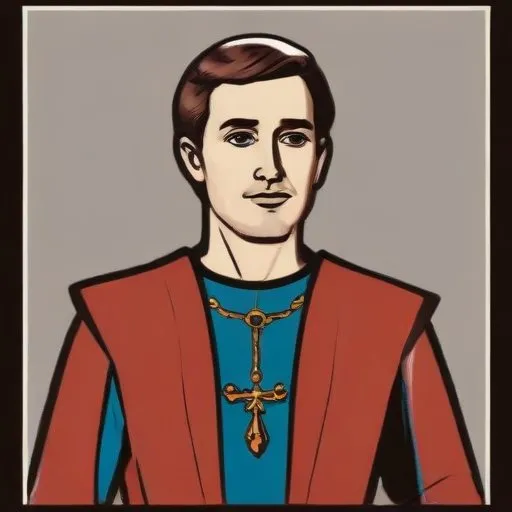
A French nobleman and poet, known for his lyrical ballads and imprisonment in the Tower of London after being captured during the Hundred Years' War.
Charles, Duke of Orléans, is renowned for his remarkable literary prowess, penning over 500 poems in French and English during his 25-year imprisonment, earning him the reputation as one of the most accomplished medieval poets. His literary legacy, infused with themes of love, chivalry, and patriotism, continues to captivate readers to this day.
Born on November 24, 1394, in Paris, Charles was the son of Louis I, Duke of Orléans, and Valentina Visconti, daughter of Gian Galeazzo Visconti, Duke of Milan. Following his father's assassination in 1407, Charles acceded to the duchy at the tender age of 13. The young duke was expected to avenge his father's death and lead the Orléans faction against the Burgundians, a powerful French faction that supported John the Fearless, Duke of Burgundy.
During the early years of his reign, Charles was heavily influenced by his father-in-law, Bernard VII, Count of Armagnac, and his faction came to be known as the Armagnacs. Despite receiving a pension from King Charles VI, his uncle, Charles's fortunes took a drastic turn when he was captured by the English at the Battle of Agincourt in 1415. He spent the next 25 years in English captivity, where he devoted himself to writing poetry.
Charles's poetic output during his imprisonment is a testament to his resilience and creative spirit. His poems, infused with themes of love, chivalry, and patriotism, showcase his mastery of language and form. His work not only reflects the cultural and literary landscape of medieval France but also provides a unique window into the experiences of a noble prisoner of war.
Charles's personal life was marked by tragedy and loss. His mother, Valentina Visconti, died soon after his father's assassination, and his first marriage to Isabella of Valois, widow of Richard II of England, ended with her death in 1409. He later married Bonne of Armagnac, with whom he had no children.
Charles, Duke of Orléans, left an indelible mark on medieval French literature and culture. His poetry, characterized by its lyricism and depth, continues to inspire readers and scholars alike. His legacy extends beyond literature, as he played a significant role in shaping the history of France during the tumultuous 15th century.
Today, Charles, Duke of Orléans, is recognized as a poet of remarkable talent and emotional depth, whose literary legacy continues to captivate audiences across the centuries.
Born in 1785
The last king of the French monarchy before the French Revolution, known for his tragic and mysterious life, including his imprisonment and disputed death.
Born in 1519
King of France from 1547 to 1559, known for his cultural and artistic patronage, and his role in the Italian Wars.
Born in 1319
King of France from 1350 to 1364, known for being captured by the English during the Hundred Years' War and later ransomed.
Born in 1403
King of France from 1422 to 1461, he played a crucial role in ending the Hundred Years' War by expelling the English from French territory. He also established a strong centralized government.
Born in 1710
The monarch who ruled France from 1715 to 1774, known as the "Sun King's" great-grandson, and remembered for his extravagance, absolutism, and the decline of the French monarchy.
Born in 1519
King of France from 1547 to 1559, known for his cultural and artistic patronage, and his role in the Italian Wars.
