


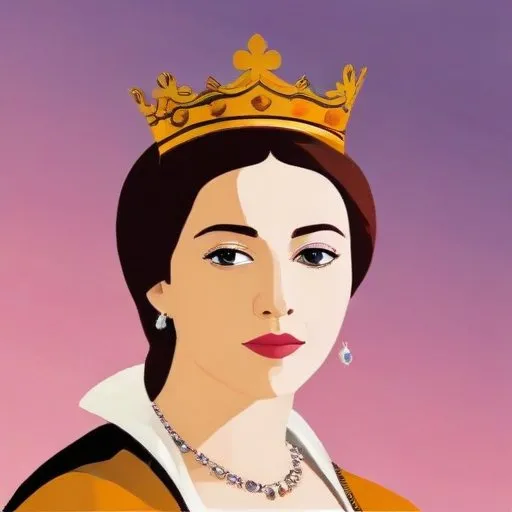
French princess who married King Richard II of England, known for her role in the Hundred Years' War and her tumultuous marriage.
Isabella of Valois is famously known as the Queen of England and Duchess of Orléans, having married not one, but two prominent monarchs in her lifetime. Born on November 9, 1389, Isabella was a princess of France and the daughter of King Charles VI and Isabeau of Bavaria.
As a child, Isabella was part of a large family, with nine younger siblings, seven of whom survived infancy. At the tender age of six, negotiations began for her to marry the 22-year-old widower Richard II, King of England, to ensure peace between France and England.
In 1396, Richard II traveled to Paris to collect his bride, where grand festivities were held in celebration. The wedding ceremony took place on October 31, 1396, in Calais, but was not consummated until Isabella's 12th birthday.
As Queen of England, Isabella was known for her beauty and charm. Despite being a child bride, she took her role seriously and began practicing for her new position. However, her time as Queen was short-lived, as Richard II was deposed in 1399 and Isabella was forced to return to France.
In 1406, Isabella married Charles, Duke of Orléans, and became the Duchess of Orléans. This marriage was a happier one, and Isabella found solace in her new life in Orléans. She died on September 13, 1409, at the age of 19, leaving behind no children.
Isabella's life was marked by her two high-profile marriages, but she also played a significant role in maintaining peace between France and England during a tumultuous period in history. Her story serves as a testament to the complex web of alliances and marriages that shaped the fate of European monarchies during the Middle Ages.
Despite her short life, Isabella of Valois left an indelible mark on history, and her story continues to fascinate historians and scholars to this day.
Born in 1367
The last king of the House of Plantagenet, deposed in a coup, known for his extravagance and tyranny, leading to his downfall and the rise of the Lancastrian dynasty.
Born in 1133
King of England from 1154 to 1189, known for establishing a strong centralized government, reforming the English church, and his tumultuous relationships with Thomas Becket and his sons.
Born in 1338
The King of France from 1364 to 1380, known for his military victories and rebuilding of Paris, earning him the nickname "Charles the Wise".
Born in 1371
A powerful and ambitious duke who ruled Burgundy in the 15th century, known for his military conquests and role in the Hundred Years' War.
Born in 1386
Led a victorious English army in the Battle of Agincourt, a major English victory in the Hundred Years' War, and was a popular king who strengthened the English monarchy.
Born in 1401
Queen of England from 1420 to 1422, married to King Henry V and mother of King Henry VI, playing a crucial role in the Hundred Years' War.
