


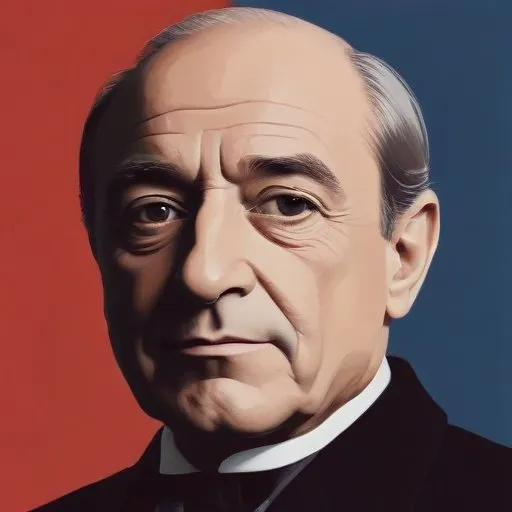
A French academic and politician who served as Prime Minister of France, known for his efforts to reform the French education system and resolve the Dreyfus Affair.
Charles Dupuy, a stalwart figure in French politics, is famously recognized as the three-time Prime Minister of France, serving from 1893 to 1895, 1898 to 1899, and 1902 to 1905. His unwavering commitment to public service and education earned him a reputation as a champion of progressive reforms.
Born on November 5, 1851, in Le Puyen-Velay, Haute-Loire, Auvergne, Dupuy's father held a minor official position, which instilled in him a sense of duty and responsibility from a young age. After completing his primary education, he pursued a career in academia, becoming a professor of philosophy in the provinces.
In 1885, Dupuy's passion for public service led him to enter politics, and he was elected to the Chamber of Deputies as an Opportunist Republican. His dedication to education culminated in his appointment as Minister of Public Instruction in Alexandre Ribot's cabinet in 1892. This marked the beginning of his tireless efforts to modernize France's educational system.
In April 1893, Dupuy formed his first ministry, assuming the role of Minister of the Interior. During this period, he demonstrated consummate bravery when an anarchist, Vaillant, threw a bomb at the Chamber of Deputies. Dupuy's calm response, "Messieurs, la séance continue," earned him widespread admiration.
In December 1894, the Dreyfus Affair cast a shadow over Dupuy's government, as Alfred Dreyfus was arrested and condemned. Although Dupuy's cabinet remained in office till January 1895, he later formed a cabinet of Republican concentration in November 1898, which ultimately led to the reopening of the Dreyfus case.
Dupuy's commitment to social welfare and education led to several groundbreaking reforms. In June 1894, he introduced a law providing social insurance through a mutual fund for miners' welfare and retirement. Additionally, a law passed in November 1894 established the Crédit Agricole mutualist savings bank for farmers.
Despite his impressive reforms, Dupuy faced criticism for his handling of the Dreyfus Affair and his initial support for Dreyfus's conviction. However, his commitment to social welfare and education ultimately redeemed his reputation, earning him a place in French history as a champion of progressive reforms.
Dupuy's philosophical background and commitment to education shaped his worldview. He believed in the importance of social welfare, mutual aid, and collective responsibility, which were reflected in his reforms.
In the annals of French history, Charles Dupuy stands as a testament to the power of dedication, perseverance, and a willingness to adapt to the needs of the time. His legacy serves as a reminder of the importance of social welfare, education, and collective responsibility.
Born in 1838
A French lawyer and politician who served as Prime Minister of France, known for his key role in the Franco-Prussian War and his efforts to modernize and unify France. He's a significant figure in French history, shaping the country's politics and identity.
Born in 1883
A renowned French actor and director, celebrated for his iconic performances in classic films like "Le Rouge et le Noir" and "Les Enfants du Paradis", showcasing his remarkable range and charisma.
Born in 1847
A short-lived president who served from 1894 to 1895 and is often overlooked in French history, known for his brief and uneventful term.
Born in 1841
The 7th President of France, known for his scandalous affair with a courtesan that led to his death, and his presidency marked by colonial expansion and labor reforms.
Born in 1846
A French lawyer and politician who served as Prime Minister of France from 1899 to 1902, known for resolving the Dreyfus Affair and reforming the French government.
Born in 1842
A French academic and politician who served as Prime Minister of France, known for his role in shaping the country's government and education system. He played a key part in reforming the French Senate and introducing secular education.
Born in 1835
A French lawyer and politician who served as Prime Minister of France during the early 20th century, known for his role in shaping the country's political landscape. He played a key part in the separation of church and state in France.
