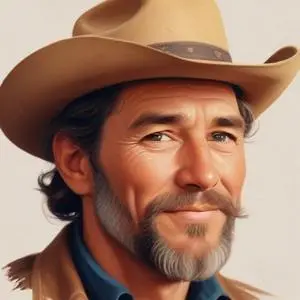
Charles Marion Russell: The Cowboy Artist of the American West
A Legacy of Art and Advocacy
Charles Marion Russell, affectionately known as the "Cowboy Artist," left an indelible mark on the American West through his captivating paintings, sculptures, and writings. With over 2,000 works of art to his name, Russell's legacy extends far beyond his brushstrokes, as he championed the rights of Native Americans and preserved the spirit of the Wild West.
Early Life and Inspirations
Born on March 19, 1864, in St. Louis, Missouri, Russell's fascination with art and the American West began at a young age. He spent hours sketching animals, reading about the Wild West, and observing explorers and fur traders who frequented his hometown. Russell's instructor, Col. William H. Fulkerson, taught him to ride horses on a famous Civil War horse named Great Britain, sparking a lifelong passion for the cowboy way of life.
The Move to Montana and Artistic Beginnings
At 16, Russell left school to work on a sheep ranch in Montana, where he immersed himself in the rugged landscape and Native American culture. This experience inspired his early artworks, which often featured cowboys, Native Americans, and the vast, open ranges of the American West.
A Career of Note
Russell's artistic talent flourished in the early 1900s, with his paintings and sculptures gaining popularity across the United States. He became a sought-after artist, illustrating books and magazines, including the iconic
The Virginian by Owen Wister. Russell's writing skills also came to the forefront, as he penned numerous articles and stories celebrating the American West.
Advocacy for Native Americans
Russell's experiences in Montana instilled in him a deep respect for Native American culture and a strong sense of social justice. He advocated tirelessly for the rights of Native Americans, supporting the bid for the Chippewa tribe to establish a reservation in Montana. In 1916, Congress passed legislation to create the Rocky Boy Reservation, a testament to Russell's dedication to the cause.
Major Works and Legacy
Some of Russell's most notable works include:
- Lewis and Clark Meeting Indians at Ross Hole, a 1912 mural hanging in the Montana Capitol's House chambers
- Piegans, a 1918 painting that sold for $5.6 million in 2005
- Over 2,000 paintings, sculptures, and artifacts housed in the C. M. Russell Museum Complex in Great Falls, Montana
Russell's legacy extends beyond his art, as he is remembered for his commitment to preserving the spirit of the American West and promoting the rights of Native Americans.
Awards and Honors
In 1955, Russell was inducted into the Hall of Great Westerners of the National Cowboy & Western Heritage Museum in Oklahoma City, Oklahoma, a testament to his enduring impact on the American West.
Personal Milestones and Key Life Events
- March 19, 1864: Born in St. Louis, Missouri
- 1882: Moved to Montana to work on a sheep ranch
- 1916: Congress passes legislation to create the Rocky Boy Reservation
- October 24, 1926: Passed away at the age of 62
Trivia and Fun Facts
- Russell was also known as "Kid Russell" and "Charlie Russell"
- He created over 2,000 works of art during his lifetime
- Russell's art can be found in prominent museums across the United States, including the Buffalo Bill Center of the West and the Amon Carter Museum of American Art
Russell's remarkable life and legacy serve as a testament to the power of art, advocacy, and the human spirit. As the Cowboy Artist of the American West, Charles Marion Russell continues to inspire generations with his captivating works of art and unwavering commitment to social justice.
FAQ
What style of art did Charles Marion Russell create?
Charles Marion Russell was a painter and sculptor known for his work in the Western art genre. He created vivid and detailed depictions of the American West, including cowboys, Native Americans, and landscapes.
What inspired Charles Marion Russells art?
Charles Marion Russells art was inspired by his experiences as a cowboy and rancher in Montana. He drew from his observations of the natural world and the people who lived and worked in the American West.
What is Charles Marion Russells most famous work?
Charles Marion Russells most famous work is probably his painting The Last of Five Thousand, which depicts a Native American warrior riding a horse in a vast, sweeping landscape. The painting is considered a masterpiece of Western art.
How did Charles Marion Russells art reflect his views on the American West?
Charles Marion Russells art reflected his romanticized view of the American West as a place of freedom, adventure, and rugged individualism. His work often celebrated the beauty and majesty of the West and the people who lived there.
What was Charles Marion Russells legacy in the art world?
Charles Marion Russells legacy in the art world is that of a pioneering figure in Western art. He helped to establish the genre and inspired generations of artists to explore the American West as a subject.