


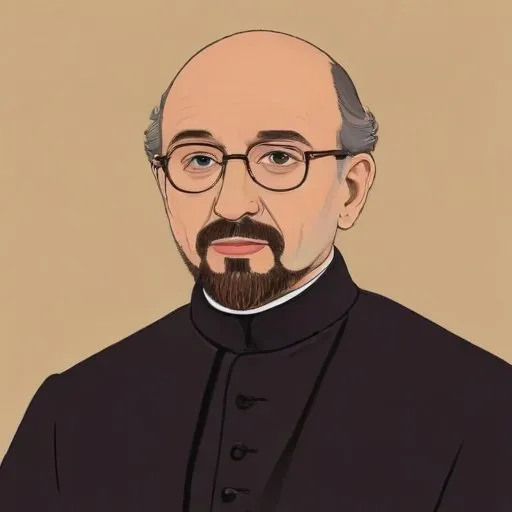
Developed the first systematic sign language, enabling communication between the hearing and deaf communities. His work laid the foundation for modern sign languages used worldwide.
Born on November 24, 1712, in Versailles, France, de l'Épée came from a wealthy family. He initially studied to become a Catholic priest, but later shifted his focus to charitable services for the poor. During one of his visits to the slums of Paris, he encountered two young deaf sisters who communicated using a sign language, which sparked his interest in their education and welfare.
De l'Épée's work was influenced by the emerging philosophical thought of the time, which emphasized the capacity of deaf individuals to learn and understand language. He developed a system of instruction that focused on teaching the French language and religion to the deaf, using a combination of sign language, writing, and lip-reading. This innovative approach enabled deaf people to defend themselves in court for the first time, thereby gaining legal recognition and rights.
In 1760, de l'Épée founded the Institution Nationale des Sourds-Muets de Paris, the world's first free school for the deaf, open to the public. This institution not only provided education but also served as a shelter and a community hub for the deaf. De l'Épée's school became a model for similar institutions worldwide, spreading his methods and ideology of inclusive education.
De l'Épée's contributions to the deaf community did not go unnoticed. In 1791, two years after his death, the National Assembly recognized him as a Benefactor of Humanity and declared that deaf people had rights according to the Declaration of the Rights of Man and of the Citizen. Today, the Institution Nationale des Sourds-Muets de Paris, now known as the Institut National de Jeunes Sourds de Paris, continues to thrive, a testament to de l'Épée's enduring legacy.
De l'Épée's pioneering work has had a profound impact on modern society, inspiring generations of educators, humanitarians, and advocates for the deaf community. His philosophy of inclusive education and social integration has paved the way for the recognition of deaf rights and the development of sign languages worldwide.
Born in 1694
A witty and insightful 18th-century writer and philosopher who used satire to critique societal norms and advocate for reason, tolerance, and human rights.
Born in 1712
A pioneering thinker who shaped modern democracy and education with his ideas on social contracts, general will, and the importance of early childhood education. His writings influenced the French Revolution and modern political thought.
Born in 1689
A French lawyer and philosopher who developed the concept of separation of powers, which divides a government into legislative, executive, and judicial branches to prevent abuse of power. His ideas greatly influenced modern democracy.
Born in 1717
A French Enlightenment thinker who made significant contributions to mathematics, physics, and philosophy, particularly in the fields of fluid dynamics and the study of vibrating strings. He's also known for his work on the Encyclopedia, a comprehensive reference work that aimed to compile all knowledge of the time.
Born in 1647
A 17th-century philosopher and writer who critiqued religious intolerance and advocated for reason, skepticism, and intellectual freedom. His works influenced the Enlightenment and modern critical thinking.
