


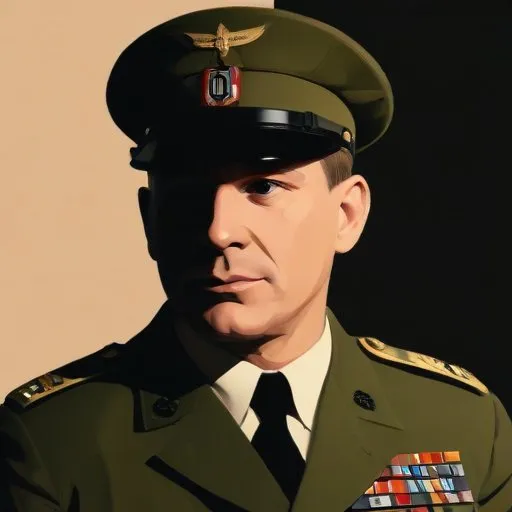
A decorated war hero and Chief of Staff of the US Army, known for leading troops in World War I and modernizing the military between wars.
General Charles Pelot Summerall is renowned for his distinguished military career, serving as the Chief of Staff of the United States Army from 1926 to 1930, and later, as the President of The Citadel from 1931 to 1953. During World War I, he commanded the 1st Infantry Division, earning him a reputation as a skilled and fearless leader.
Born on March 4, 1867, in Blounts Ferry, Columbia County, Florida, Summerall grew up in a world of hard work and discipline. He attended the Porter Military Academy in South Carolina from 1882 to 1885, and later worked as a school teacher for three years. In 1888, he enrolled in the United States Military Academy (USMA) at West Point, New York, graduating in June 1892.
Commissioned as a second lieutenant, Summerall was assigned to the 1st Infantry Regiment, transferring to the 5th Artillery Regiment in March 1893. He served in various capacities, including garrison duty in California, Fort Hamilton, New York, and later, as an engineer officer during the Spanish-American War. Summerall's military career took him to the Philippines, where he participated in the Philippine Insurrection, and later, to China, where he was part of the China Relief Expedition.
During World War I, Summerall commanded the 1st Infantry Division, earning him a reputation as a skilled and fearless leader. His division played a crucial role in several significant battles, including the Battle of Cantigny, the Battle of Château-Thierry, and the Battle of Soissons.
In 1926, Summerall became the Chief of Staff of the United States Army, serving until 1930. He later became the President of The Citadel, a position he held from 1931 to 1953. During his tenure, he worked tirelessly to modernize the institution, introducing new programs and curricula to prepare students for the changing world.
Summerall's personal life was marked by simplicity and humility. He married three times and had three children. Despite his many accomplishments, he remained humble and kind, earning the respect and admiration of his peers and students. Today, Summerall's legacy continues to inspire future generations of military leaders and educators.
Summerall once said, "The key to success is not in being the best, but in being better than you were yesterday."
His legacy continues to inspire future generations of military leaders and educators, reminding us that true greatness lies in our ability to learn, grow, and serve others.
Born in 1890
Led the Allied forces to victory in World War II and later served as President, maintaining peace and prosperity during the Cold War era. He's known for his strategic leadership and diplomatic skills.
Born in 1885
A renowned military leader who played a crucial role in World War II, particularly in the Allied victory in Europe, known for his bold tactics and unapologetic style.
Born in 1893
Led the US Army in World War II and became the last five-star general, playing a crucial role in shaping post-war American military strategy. He's also known for his humble and unassuming leadership style.
Born in 1880
A highly decorated war hero and master strategist who led troops to victory in World War I and II, and later became a prominent figure in the occupation of Japan.
Born in 1885
Led the U.S. Pacific Fleet to victory in World War II, playing a crucial role in defeating Japan and ending the war. He was a highly respected and decorated naval leader.
Born in 1880
A highly decorated military leader and statesman who played a crucial role in shaping post-WWII foreign policy and was awarded the Nobel Peace Prize for his efforts. He's most known for authoring the Marshall Plan, a massive economic aid program that helped rebuild war-torn Europe.
Born in 1886
Led the United States Army Air Forces during World War II, playing a crucial role in the Allied victory, and later became the first General of the Air Force. He's also known as the "Father of the US Air Force".
